
The Asana Compendium
Welcome to The Asana Compendium — a living, evolving space where yoga poses are gathered, studied, and understood with clarity and presence. This collection grows with my own practice. Each asana is explored slowly: through learning, teaching, filming, photographing, and returning to the mat again and again.
I created this compendium to bring everything into one place — alignment, anatomy, benefits, contraindications, variations, mistakes to avoid, breath cues, and mindful insights. A space where students, teachers, and curious practitioners can deepen their understanding of yoga, one pose at a time.
Every asana will eventually include:
- a clear description
- step‑by‑step guidance
- key anatomical actions
- benefits & risks
- common mistakes
- modifications & variations
- a short video demonstration
- my own practice notes and reflections
- a gentle, minimalist visual illustration
This is a long‑term project. A slow, steady unfolding. A place to return to — whether you’re learning your first Mountain Pose or refining the subtleties of Trikonasana.
How to Use This Compendium
This page is your starting point. From here, you can explore asanas by category, intention, or anatomical focus. Each category opens into a dedicated page with its own visuals and explanations, and each pose links deeper into its full article.
Think of this as a map of the practice — a way to navigate yoga with clarity and curiosity.
Asana Categories
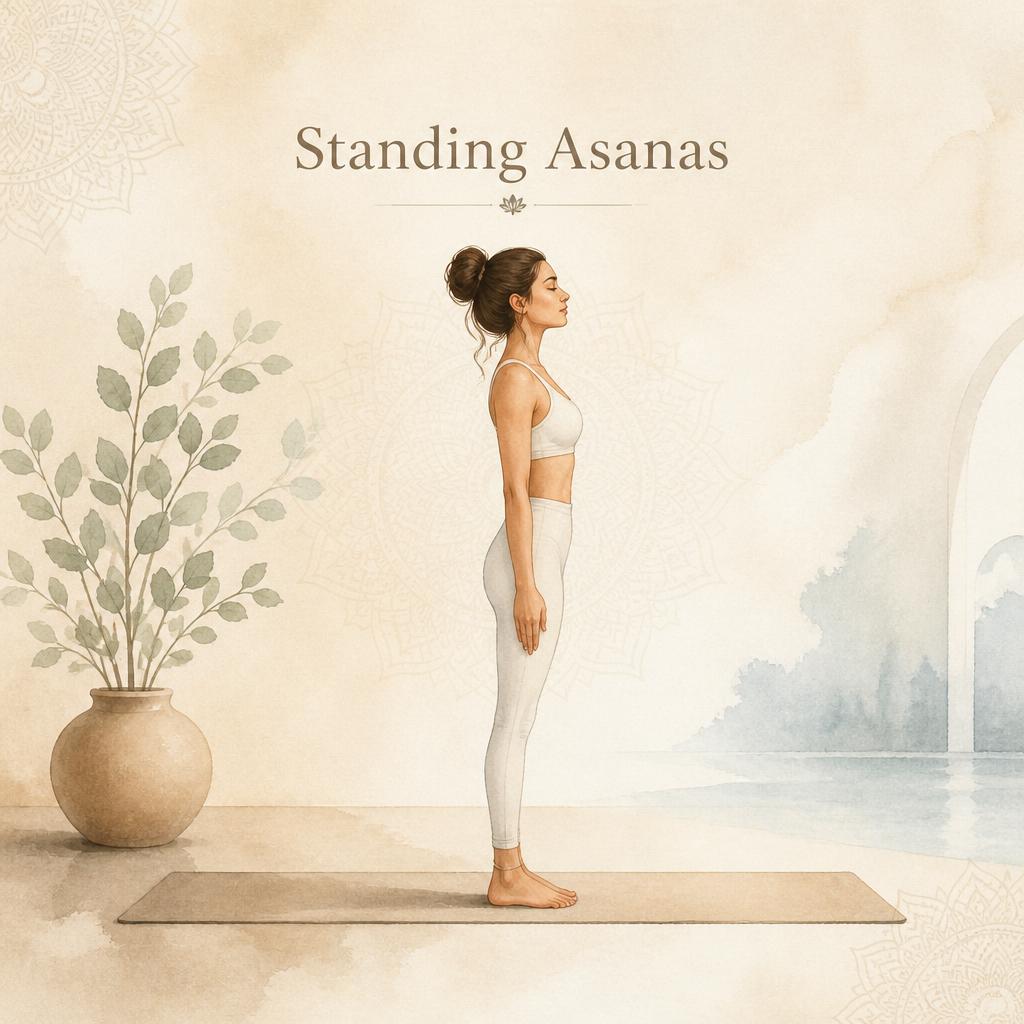
Standing Asanas
Standing Asanas form the stable ground of the entire yoga practice — the place where balance, alignment, and inner steadiness begin to take shape. These poses teach you how to root through the feet, organize the spine, and awaken the subtle strength of the legs and core. They cultivate presence: the quiet awareness of how the body meets the earth and how the breath supports each movement. Through standing shapes, you learn to distribute weight evenly, refine posture, and build the kind of foundational strength that carries into every other category of asanas. They are simple in appearance, yet endlessly rich in detail, offering a steady path toward grounding, stability, and embodied confidence.
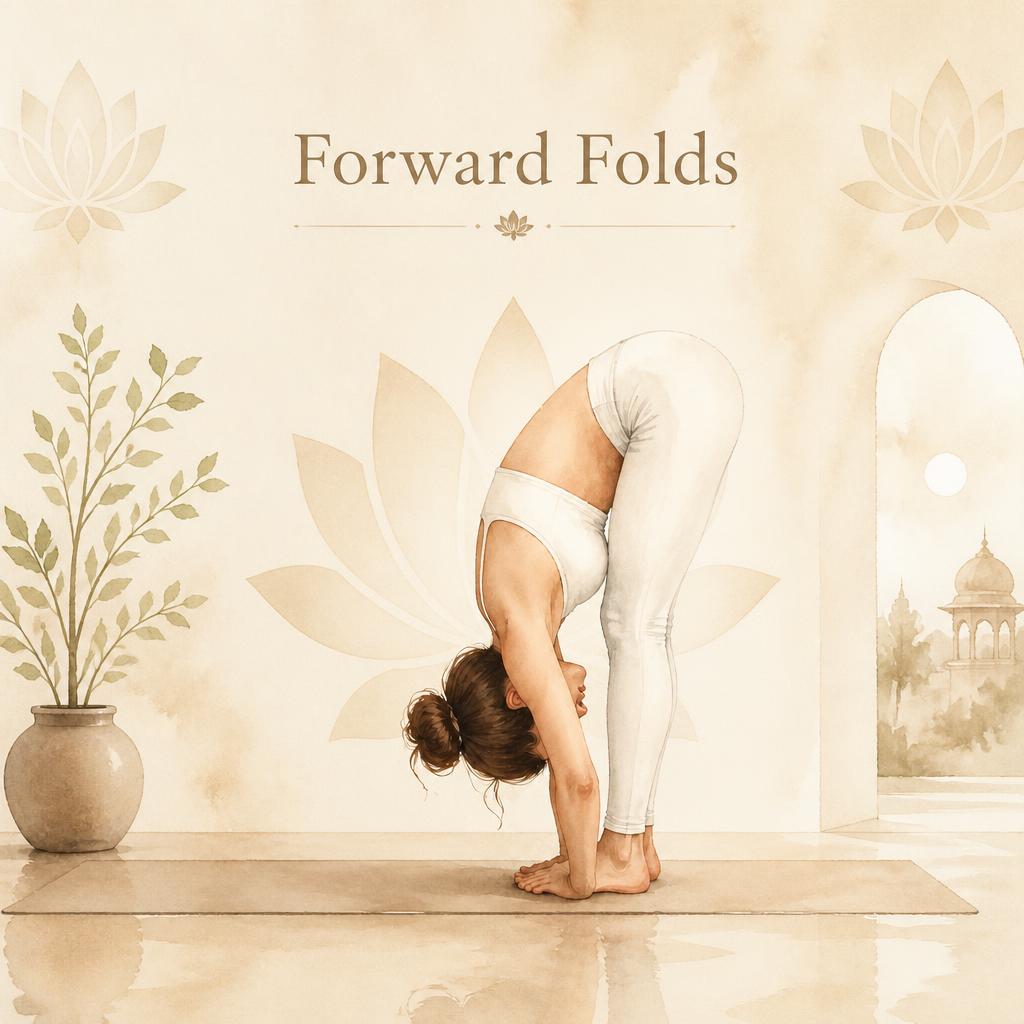
Forward Folds
Forward Folds invite the body into a quieter, softer space — a gentle surrender rather than an effort. These shapes lengthen the back body, release tension held in the hamstrings and spine, and naturally slow the breath. As you fold inward, awareness turns inward as well, creating a moment of introspection and calm. Forward bends soothe the nervous system, encourage patience, and offer a subtle invitation to let go. They are less about reaching the toes and more about meeting yourself with ease, allowing gravity to support the release.
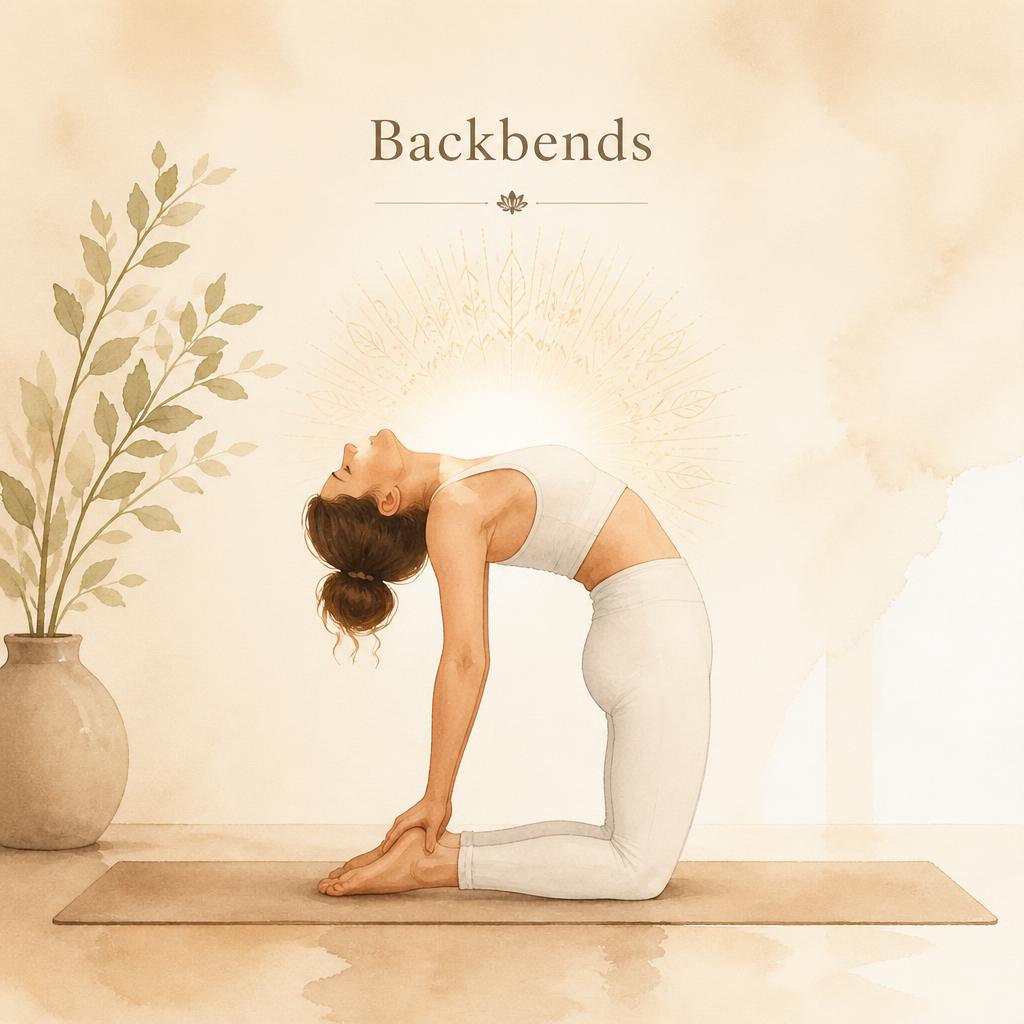
Backbends
Backbends open the front body with a sense of spaciousness and awakening. These poses strengthen the back, expand the chest, and invite a deeper, more vibrant breath. Practiced with steadiness and care, backbends energize the entire system — they counterbalance the forward‑folding patterns of daily life and help restore natural posture. As the heart space lifts, the spine lengthens and the body learns to support itself with integrity rather than force. Backbends are both grounding and uplifting: they build resilience, encourage courage, and create a gentle feeling of openness from the inside out.
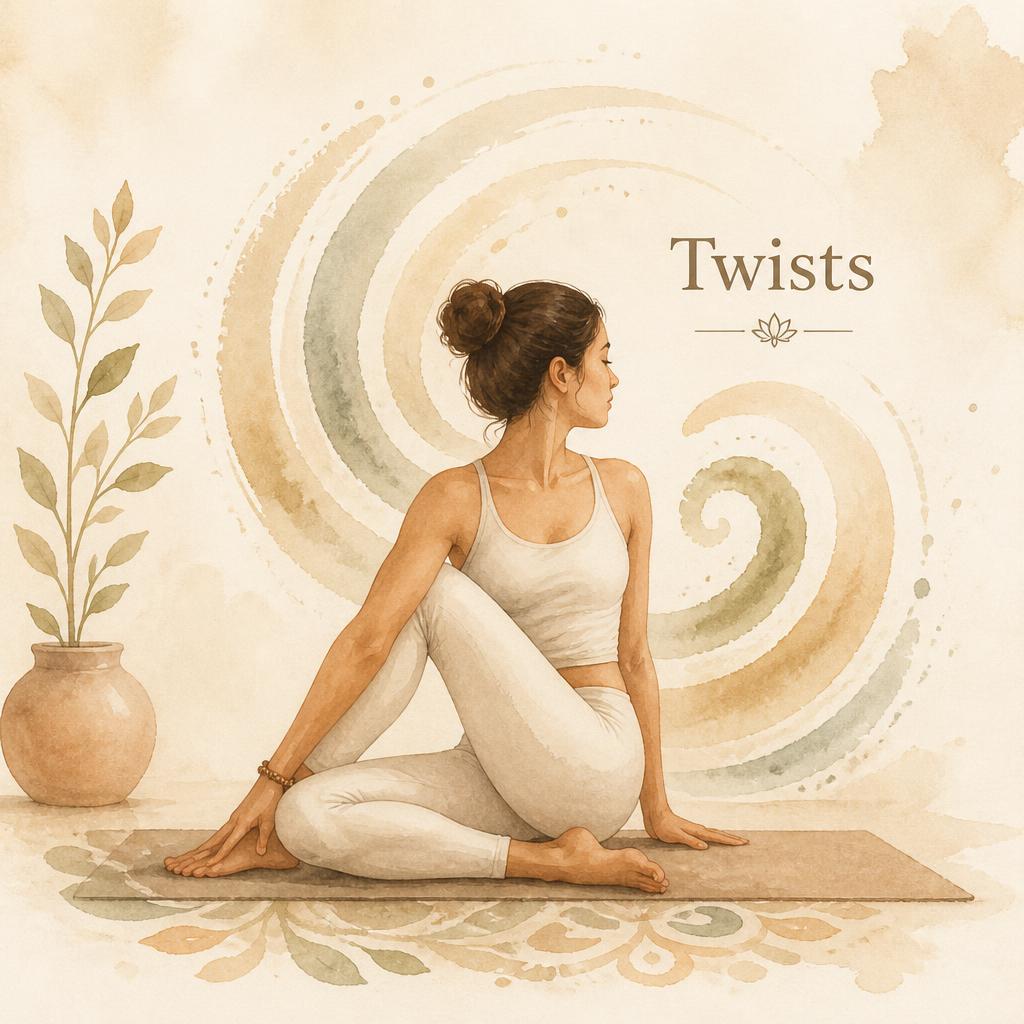
Twists
Twists create space where the body often feels compressed — they detoxify, mobilize, and gently reset the entire spine. As you rotate, the deep muscles along the back awaken, the ribs expand, and the breath naturally becomes more mindful and intentional. These poses support spinal health by encouraging fluid movement between the vertebrae and improving circulation around the core. Twists also help release tension in the shoulders, waist, and lower back, offering a sense of lightness and renewal. Practiced with steadiness and ease, they become a quiet invitation to wring out what feels stagnant and return to a clearer, more centered state.
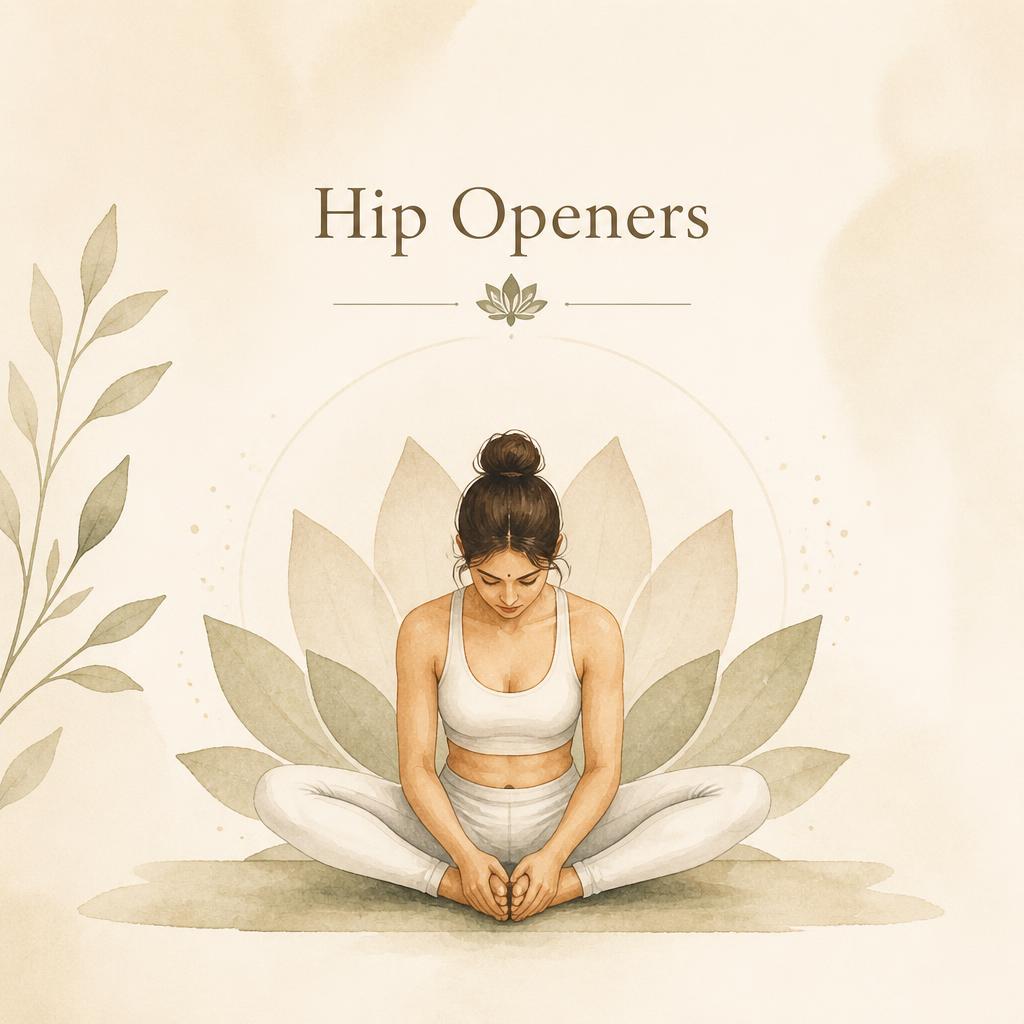
Hip Openers
Hip Openers create space where modern bodies need it most. Long hours of sitting, stress, and habitual tension often settle into the hips, making these poses essential for restoring natural mobility. By gently opening the hip joints and lengthening the surrounding muscles, these asanas ease tightness in the lower back, pelvis, and legs. They encourage a slower pace, a softer breath, and a deeper sense of release. Hip openers also support emotional unwinding — the hips often hold subtle patterns of holding and resistance, and these shapes offer a safe way to let some of that go. Practiced with patience and awareness, they bring freedom, grounding, and a renewed sense of ease to the whole body.
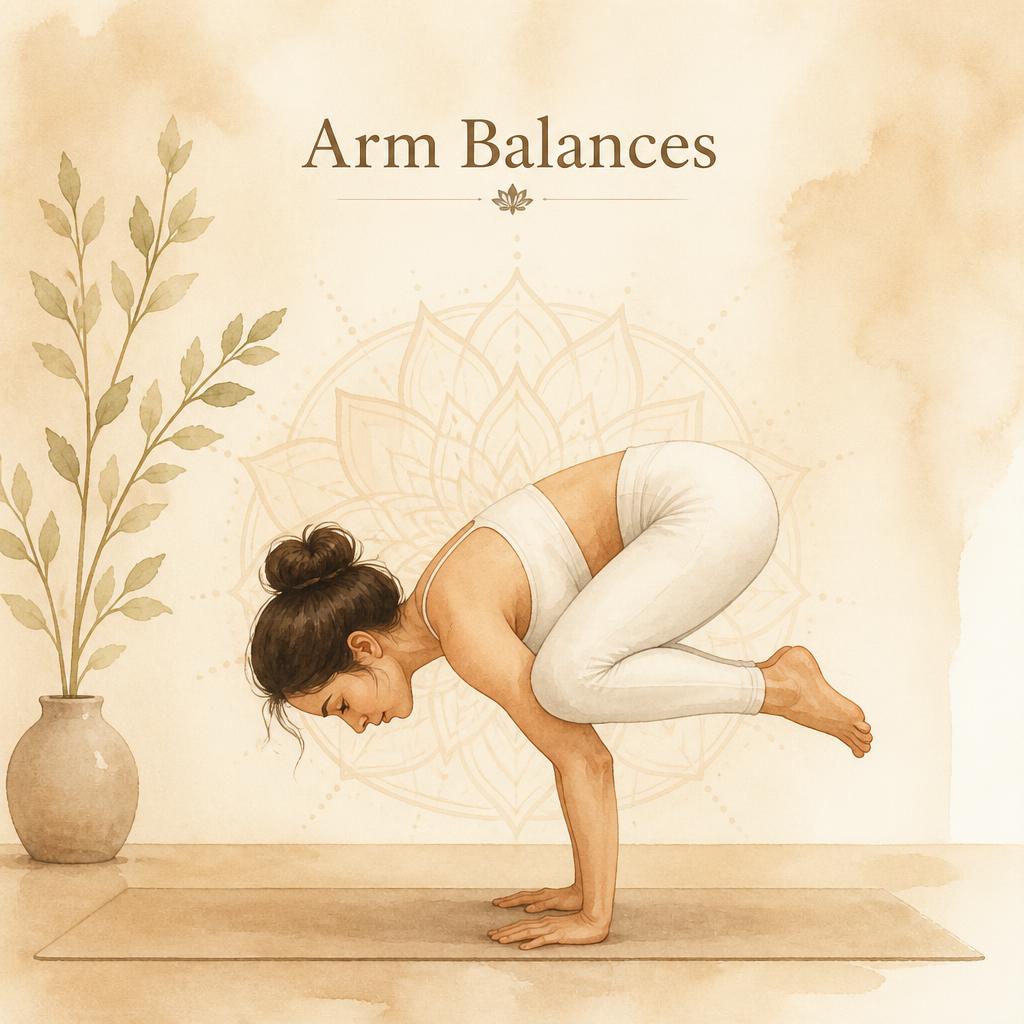
Arm Balances
Arm Balances cultivate steadiness from the inside out. These shapes ask for quiet focus, subtle engagement, and a calm, steady breath. When you balance, the body learns to organize itself around a clear center — the feet or hands root, the core awakens, and the mind becomes fully present. These poses strengthen not only the legs and stabilizing muscles, but also the capacity to stay composed in moments of wobble or uncertainty. Balancing teaches patience, concentration, and the art of returning to equilibrium, making it a powerful bridge between physical alignment and inner stillness.
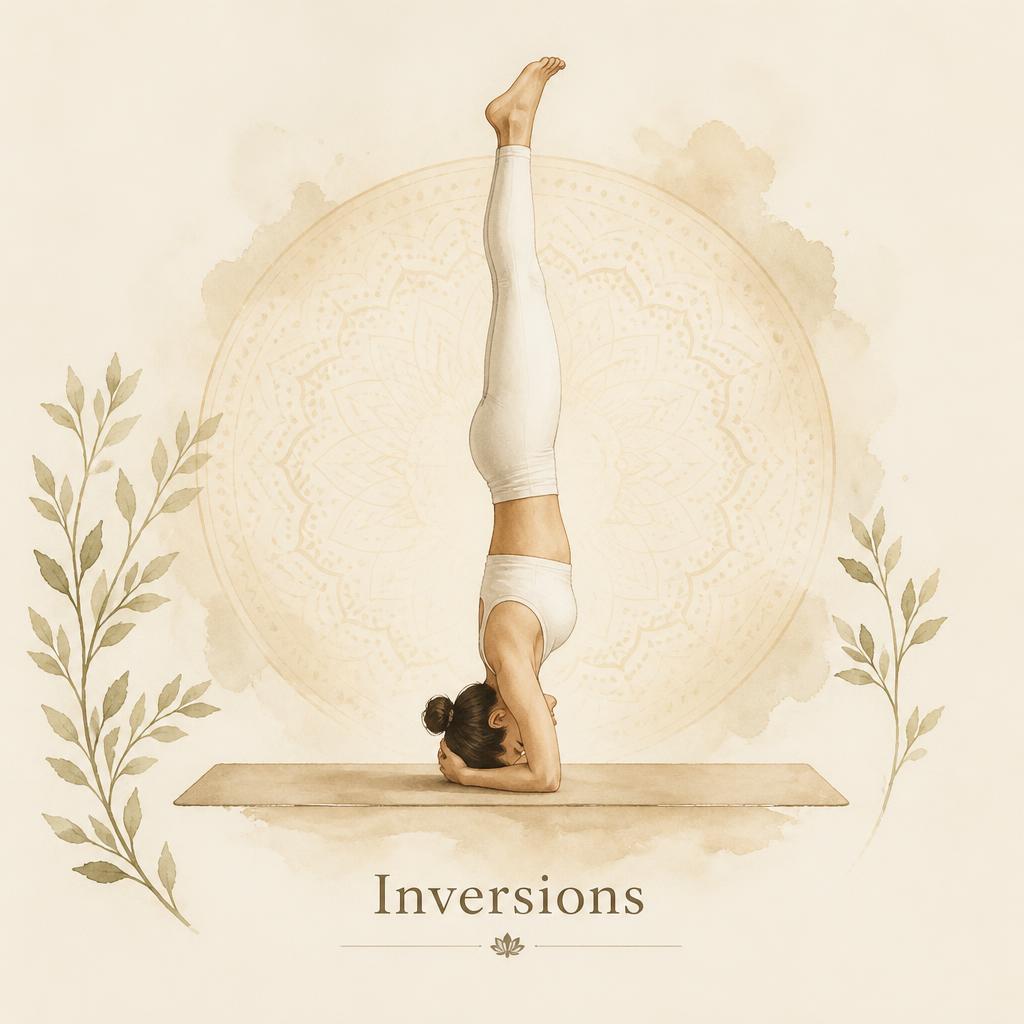
Inversions
Inversions shift your perspective — literally and energetically. By turning the body upside down, these poses encourage fresh circulation, awaken new lines of strength, and invite a deeper sense of calm. Inversions teach trust: in your foundation, in your breath, and in your ability to stay steady even when the world feels reversed. Practiced with awareness and respect for your limits, they support healthy blood flow, strengthen the shoulders and core, and help regulate the nervous system. Whether gentle or more advanced, inversions offer a unique opportunity to explore balance, clarity, and presence from an entirely new angle.
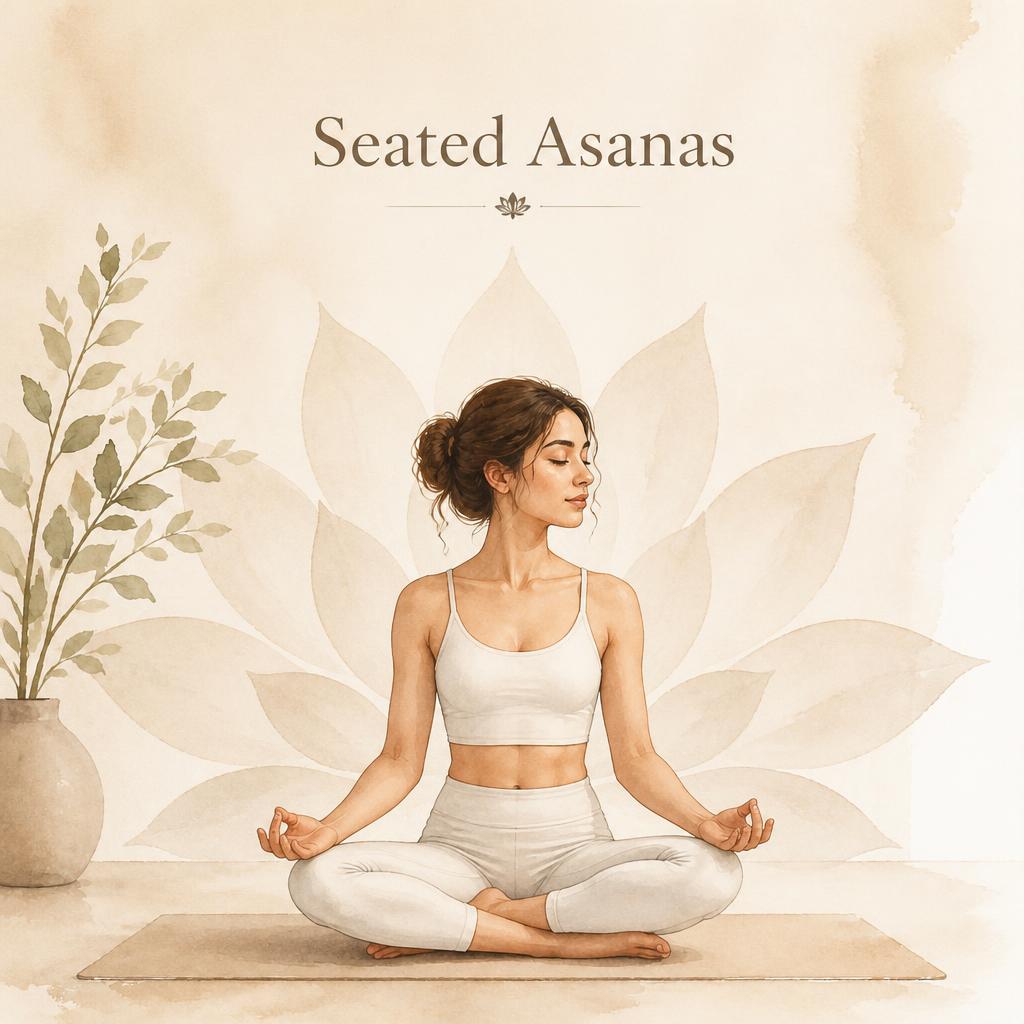
Seated Asanas
Seated Asanas bring the body into a place of stillness, grounding, and ease. These poses create a stable base for the spine, allowing the breath to deepen naturally and the mind to settle. They are ideal for meditation, pranayama, and gentle practice because they encourage a quiet, inward‑facing awareness. In seated shapes, the legs soften, the pelvis anchors, and the upper body can lengthen without strain. This combination of support and spaciousness makes seated asanas a sanctuary within the practice — a place to pause, listen, and reconnect with the subtle rhythms of breath and presence.
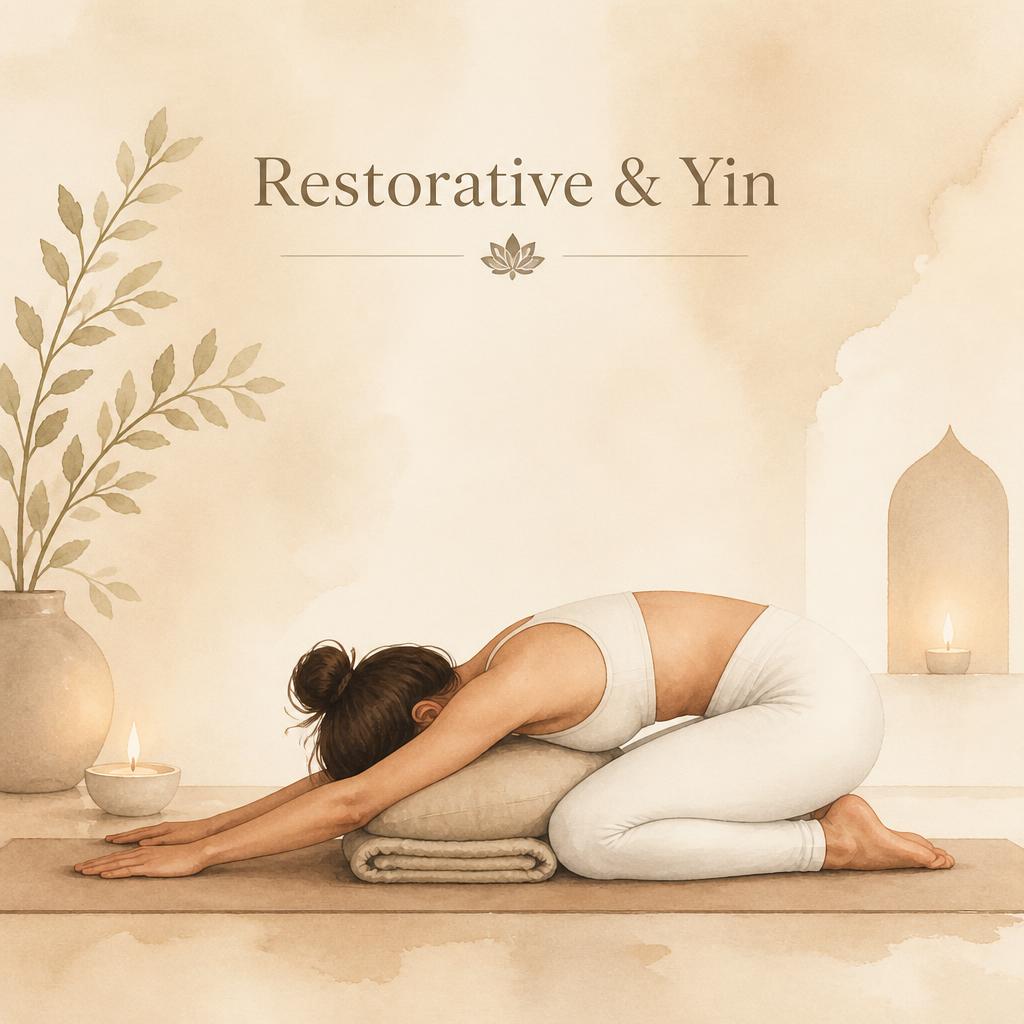
Restorative & Yin
Restorative & Yin Asanas offer a soft, slow, and deeply nourishing space within the practice — a place where the body can release effort and the nervous system can settle. These poses use support, stillness, and long holds to gently unwind layers of tension, inviting a sense of safety and deep rest. Instead of stretching through force, the body opens through time and ease, allowing the breath to become quiet and unhurried. Restorative and Yin shapes help regulate the nervous system, soothe stress, and create spaciousness in both body and mind. They are an antidote to the pace of modern life, offering a quiet return to balance, softness, and inner calm.
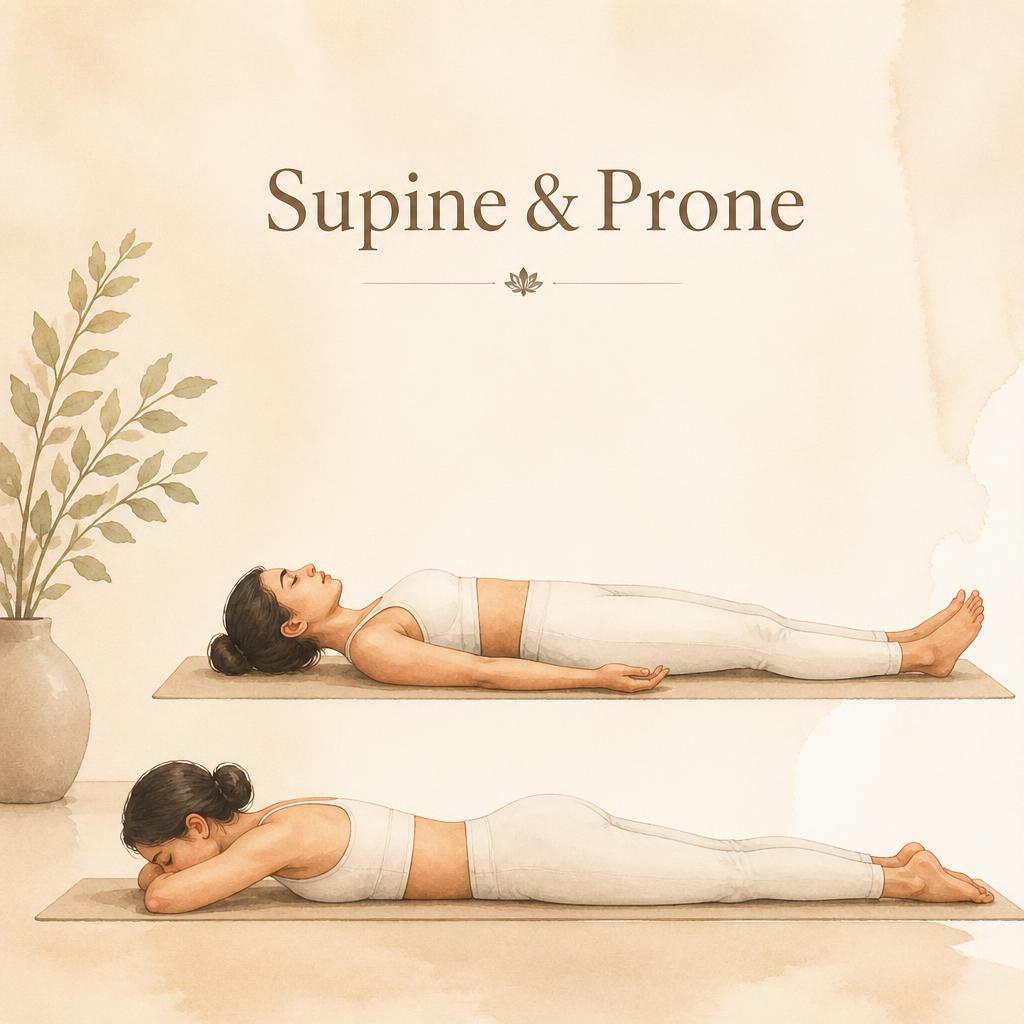
Supine & Prone Asanas
Supine & Prone Asanas offer a supportive, accessible foundation for practice — especially for beginners, gentle sessions, and therapeutic work. These poses allow the body to settle into the ground, creating a sense of safety and ease while still building awareness and strength. Practiced lying on the back or belly, they help release tension in the spine, stabilize the core, and reconnect with natural breathing patterns. Supine and prone shapes simplify alignment, reduce strain, and make space for mindful exploration without pressure. They are steady, grounding, and deeply restorative, forming the quiet base from which more complex asanas can grow.

Why This Compendium Exists
Yoga is a lifelong study. This compendium is my way of learning — and sharing — with intention.
I document each pose as I practice it, teach it, and understand it more deeply. Over time, this becomes not just a library of shapes, but a reflection of the journey itself.
A place to return to. A place to grow with.
What You Will Find for Each Asana
Every pose includes:
- Anatomy
- Benefits & contraindications
- Common mistakes
- Description
- Variations & modifications
- Mini-practice
- Eventually: my own photos & video demonstration
This structure stays consistent across all 200+ asanas.