Presence as a Daily Practice
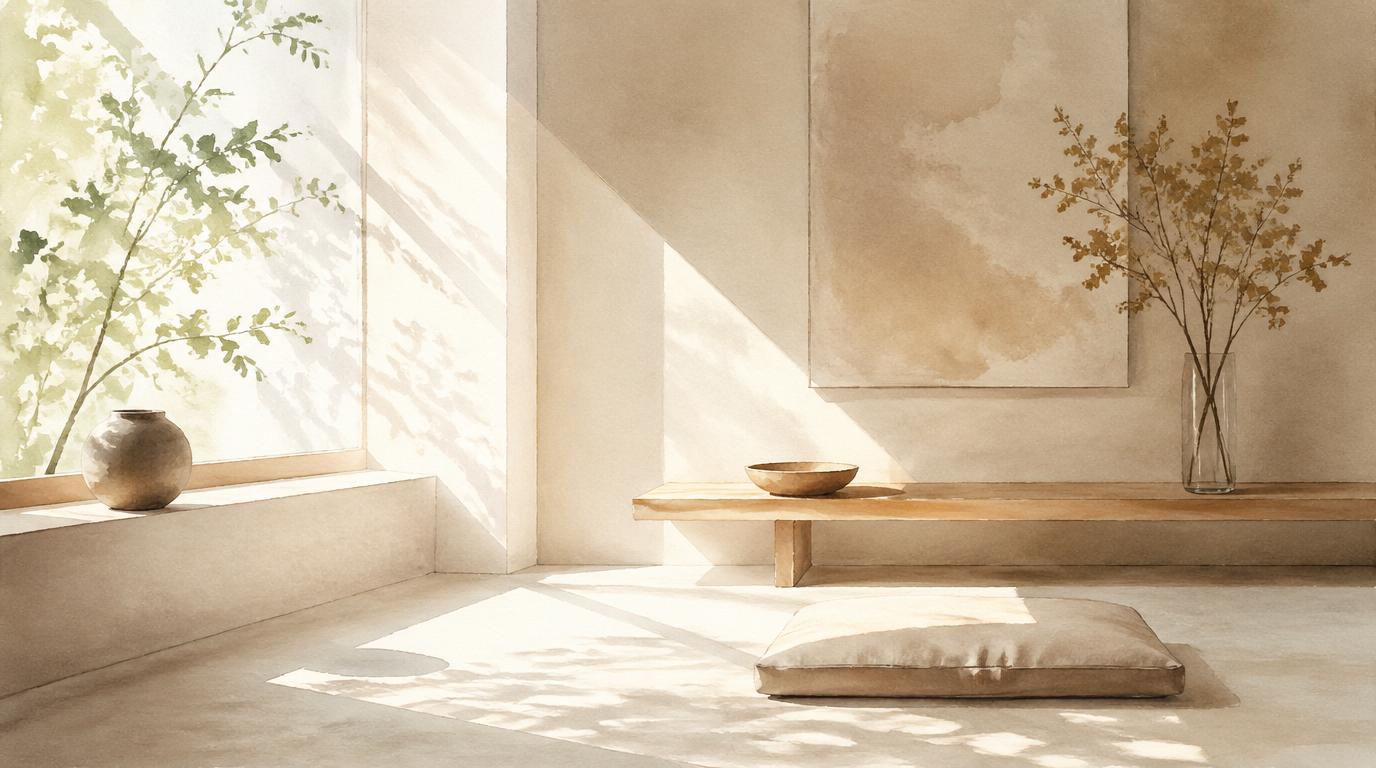
There is a moment — quiet, almost invisible — when you return to yourself.
It happens between one breath and the next. Between one thought dissolving and another forming. Between the impulse to rush and the choice to soften.
Presence is born in these small thresholds.
We often imagine presence as something dramatic: a deep meditation, a silent retreat, a perfect morning routine. But presence is not an achievement. It is not a performance. It is not a state you “reach” and then hold forever.
Presence is a way of relating to life.
It is the art of remembering yourself in the middle of everything — in the middle of noise, movement, uncertainty, joy, routine, and the quiet ordinariness of daily life.
Presence is not something you add to your day. It is something you uncover within it.
The Myth of the Perfect Moment
Many people wait for the “right” moment to be present.
“When I have more time.” “When things calm down.” “When I’m less stressed.” “When I finally go on retreat.” “When I feel ready.”
But presence is not waiting for you in some distant, idealized future. It is here — in the imperfect, unpolished now.
Presence is not a luxury. It is a return.
A return to the breath you already have. A return to the body you already inhabit. A return to the moment you are already living.
The perfect moment is the one you are in.
The Body as a Doorway
The mind is fast. The body is honest.
When you feel lost, overwhelmed, or disconnected, the body offers the simplest path back.
Feel your feet on the ground. Feel the weight of your shoulders. Feel the breath moving through your ribs.
These sensations are not random. They are anchors — gentle reminders that you are here.
The body doesn’t ask you to understand anything. It asks you to feel.
And feeling is the beginning of presence.
The Breath as a Bridge
The breath is the most intimate teacher you have.
It is always with you. It never leaves. It never judges. It never rushes you.
When the breath is shallow, the mind becomes narrow. When the breath deepens, the mind widens.
The breath is a bridge between the inner and outer world. Between the seen and the felt. Between the story in your head and the truth in your body.
One slow exhale can change the entire texture of a moment.
Try it now. Exhale softly. Feel the space that opens.
This is presence.
Presence in the Ordinary
Presence is not separate from daily life. It is daily life.
It is the warmth of water on your hands while washing dishes. The sound of your footsteps on the floor. The pause before answering a message. The softness of morning light. The weight of your body on a chair. The quiet between two thoughts.
Presence is not something you “practice” and then leave behind. It is something you weave into the fabric of your day.
You don’t need more time. You need to pay more attention.
The Nervous System and the Art of Slowing Down
When you slow your movement, your nervous system receives a signal:
“You are safe.”
This is why slow walking, slow breathing, slow transitions in yoga, and slow mornings feel so nourishing. Slowness is not laziness. Slowness is regulation.
When the body slows, the mind follows. When the mind slows, presence becomes natural.
You don’t have to force presence. You create the conditions for it.
Presence During Stress
Presence is not only for peaceful moments. It is especially for the difficult ones.
When stress rises, the mind contracts. Thoughts speed up. The breath becomes shallow. The body tightens.
Presence interrupts this spiral.
Not by fixing it. Not by fighting it. But by noticing it.
“I am breathing quickly.” “My chest feels tight.” “My thoughts are fast.”
This noticing is not passive. It is powerful.
It brings you back into a relationship with your experience instead of being swept away by it.
Presence doesn’t remove stress. It restores choice.
A Practice for Returning to Yourself
Here is a simple practice you can use anytime — in the morning, during work, before sleep, or in the middle of a difficult moment.
1. Pause. Just for a moment. Let the world continue without you.
2. Exhale slowly. Feel the breath leave your body. Let your shoulders soften.
3. Feel one point of contact. Your feet on the ground. Your hand on your chest. Your back against the chair.
4. Notice one sensation. Warmth. Tension. Softness. Movement.
5. Let the moment be enough. No fixing. No improving. Just being.
This is presence. Simple. Human. Available.
Presence as a Way of Living
Presence is not a technique. It is a relationship — with yourself, with your breath, with your body, with the world.
It is the choice to meet life with softness instead of speed. With curiosity instead of judgment. With awareness instead of autopilot.
Presence is not about becoming someone new. It is about remembering who you already are.
A human being.
Breathing.
Feeling.
Living.
Here.
Now.
If you want to explore the foundations of conscious living more deeply, you can download my free ebook Yama & Niyama. It’s a soft, practical introduction to presence, simplicity, and inner alignment.