Now is Yoga Time → Asana Compendium → Twisting Asanas
Twisting Asanas
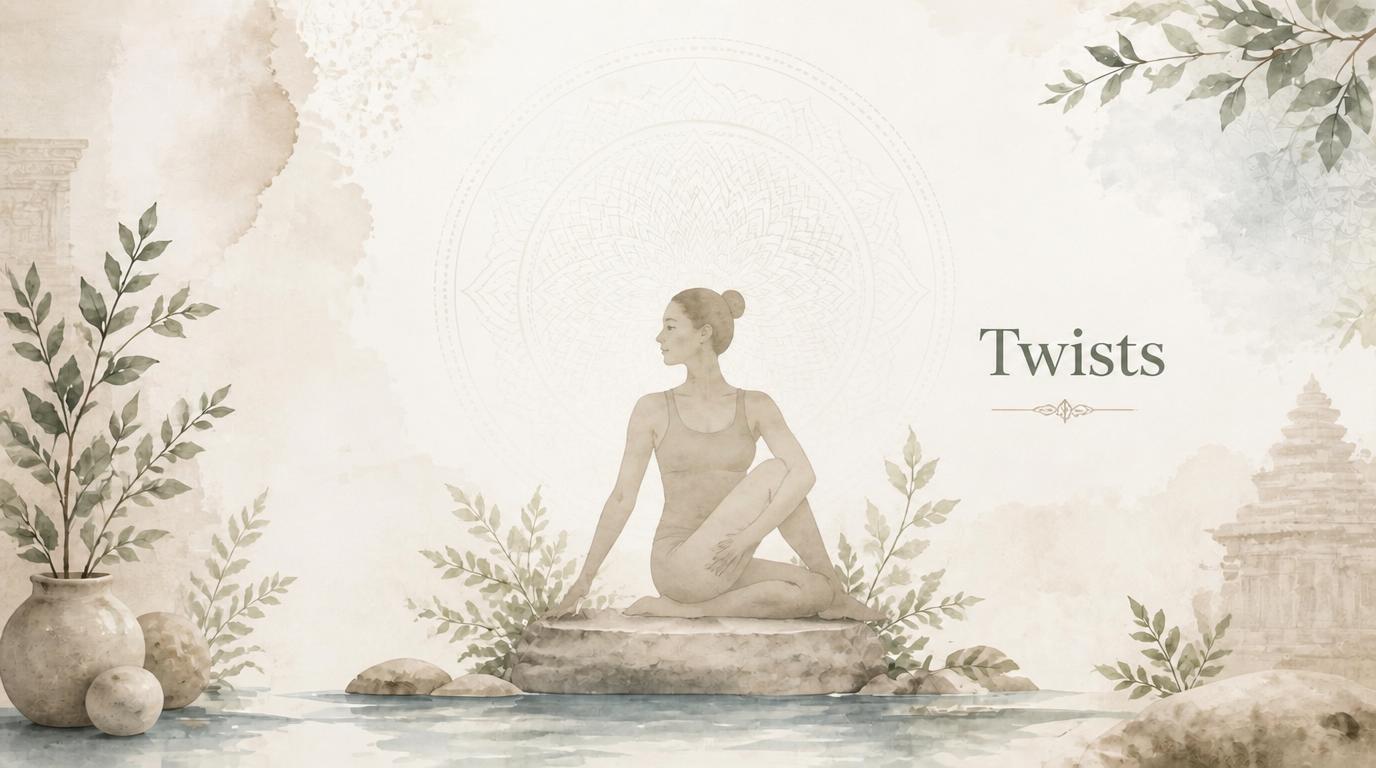
Twists create space where the body often feels compressed — a gentle unwinding that brings clarity to the spine, softness to the breath, and a sense of renewal to the entire system. These shapes invite you to rotate not through force, but through curiosity: a slow spiraling that begins at the base and rises upward, vertebra by vertebra. As the body turns, the deep muscles along the back awaken, the ribs expand, and the breath naturally becomes more mindful and intentional.
In Twists, you learn how to move from your center — how to stabilize the pelvis, lengthen the spine, and rotate with integrity rather than momentum. These poses reveal where tension hides and how release can happen gradually, through breath and awareness rather than effort. Twists also offer a subtle emotional reset: a quiet invitation to wring out what feels stagnant and return to a clearer, more centered state.
Over time, twisting becomes a practice of refinement — a way to explore depth without strain, to create space without forcing, and to reconnect with the natural fluidity of the spine.
This is the practice of renewal — spacious, steady, and quietly transformative.
What Twists Teach
Twists teach you how to lengthen before you turn, how to stabilize before you move, and how to breathe into the spaces that feel tight or resistant. They reveal the relationship between the spine, ribs, and core — how each supports the others in creating healthy rotation.
These shapes also cultivate subtle awareness. Twists encourage you to slow down, to sense the inner spiraling of the body, and to notice how breath can guide movement from the inside out. They teach patience, precision, and the art of doing less so the body can do more.
Key Benefits
- Improve spinal mobility and segmental rotation
- Release tension in the back, waist, and shoulders
- Stimulate circulation around the spine and core
- Support digestive health and internal organ mobility
- Enhance breath awareness and rib expansion
- Build core stability and postural integrity
- Create a sense of clarity, lightness, and renewal
Common Mistakes
- Twisting from the shoulders instead of the spine
- Collapsing the chest or rounding the back
- Forcing the twist instead of lengthening first
- Letting the knees or hips shift out of alignment
- Holding the breath during the rotation
- Using momentum rather than controlled movement
How to Approach Standing Twists
Begin with length — always.
Let the spine rise before it turns.
Keep the pelvis steady and grounded.
Use the breath to guide the rotation, not force.
Move slowly enough to feel each part of the twist.
Twists are not about how far you go; they are about how clearly you move.
Asanas in This Category
(Each name will be a link to an individual Asana page)
- Parivrtta Trikonasana — Revolved Triangle
- Parivrtta Parsvakonasana — Revolved Side Angle
- Ardha Matsyendrasana — Half Lord of the Fishes
- Bharadvajasana — Bharadvaja’s Twist
- Marichyasana C — Sage Marichi’s Pose
- Supta Matsyendrasana — Supine Twist
- Jathara Parivartanasana — Belly Twist
- Revolved Chair Pose — Parivrtta Utkatasana
- Revolved Lunge — Parivrtta Anjaneyasana
- Revolved Head‑to‑Knee Pose — Parivrtta Janu Sirsasana
Recommended Mini‑Sequences
Spinal Reset (3 minutes)
Supine Twist → Belly Twist → Knees‑to‑Chest
Standing Spiral Flow (5 minutes)
Revolved Lunge → Revolved Triangle → Forward Fold → Tadasana
Seated Clarity Sequence (4 minutes)
Bharadvajasana → Half Lord of the Fishes → Seated Forward Fold → Rest
Clips
A short video guide will be posted here in the future.
Twists
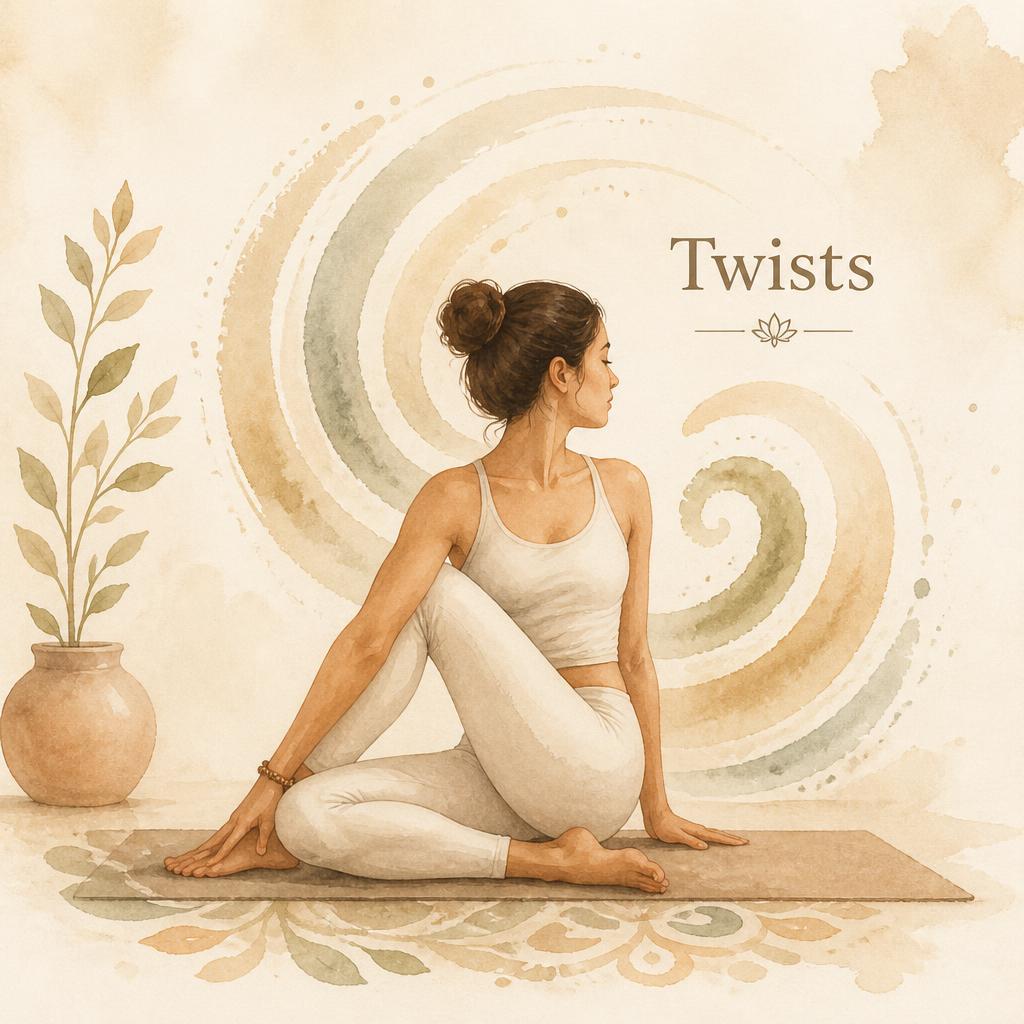
Twists create space where the body often feels compressed — they detoxify, mobilize, and gently reset the entire spine. As you rotate, the deep muscles along the back awaken, the ribs expand, and the breath naturally becomes more mindful and intentional. These poses support spinal health by encouraging fluid movement between the vertebrae and improving circulation around the core. Twists also help release tension in the shoulders, waist, and lower back, offering a sense of lightness and renewal. Practiced with steadiness and ease, they become a quiet invitation to wring out what feels stagnant and return to a clearer, more centered state.