Now is Yoga Time → Asana Compendium → Supine & Prone Asanas
Supine & Prone Asanas
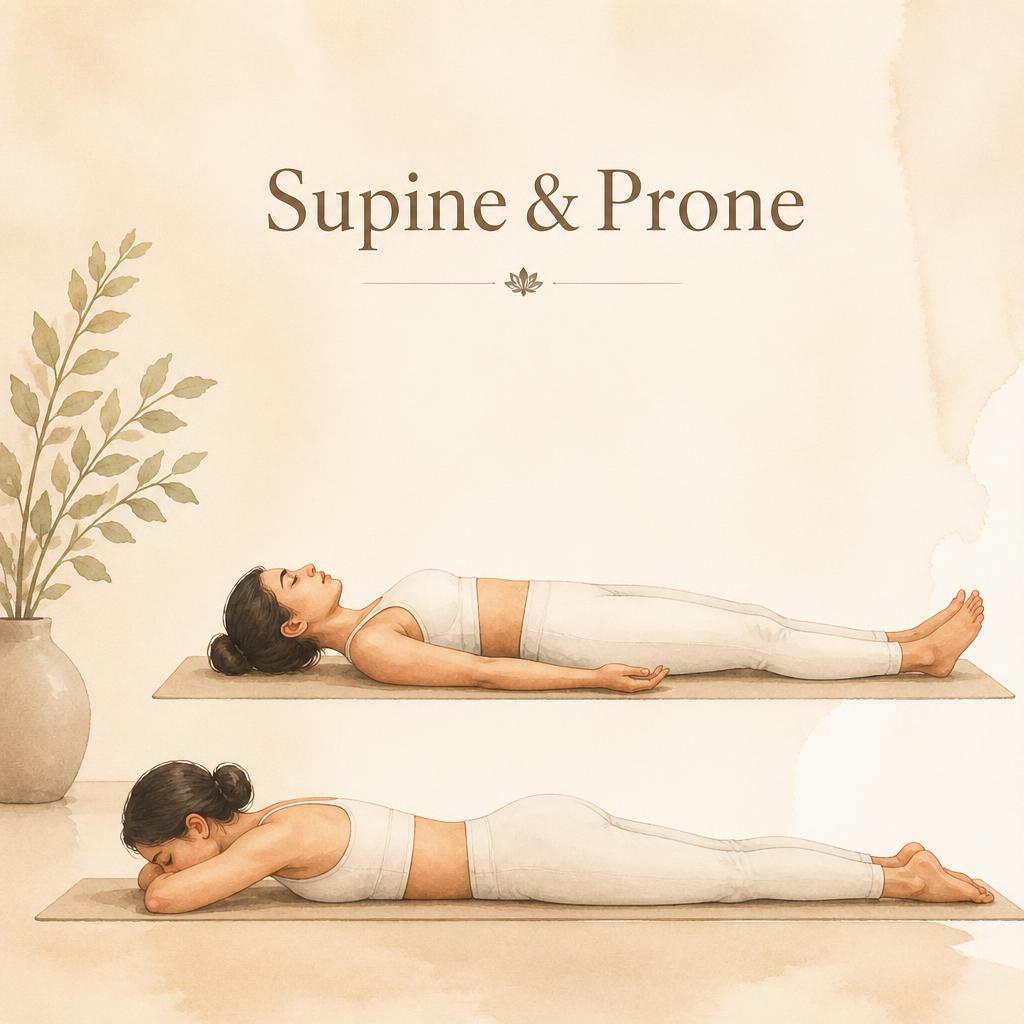
Supine & Prone Asanas bring the body into its most supported relationship with the earth. These shapes invite a sense of grounding that is immediate and unmistakable — the weight of the body resting into the floor, the breath spreading gently through the back, the nervous system softening as effort dissolves.
In supine poses, the back body receives the ground fully. The spine can lengthen without strain, the chest can open without force, and the breath can move with a natural, unhurried rhythm. These shapes create space for release, for recalibration, for quiet awareness.
In prone poses, the front body meets the earth. The belly softens, the back strengthens, and the breath becomes a subtle wave that moves through the entire torso. These shapes awaken stability, resilience, and a deeper connection to the core and spine.
Together, Supine & Prone Asanas form a landscape of grounding and renewal — a place where the body can rest, strengthen, unwind, and reorganize itself with clarity and ease. They remind you that support is always available, and that deep transformation often begins in stillness.
This is the practice of grounding — steady, spacious, and quietly restorative.
What Supine & Prone Asanas Teach
These poses teach you how to release into support without collapsing, how to strengthen without gripping, and how to let the breath guide the body into deeper awareness. They reveal the relationship between the spine, pelvis, and breath — how each responds when the body is fully supported by the ground.
Supine & Prone shapes also cultivate presence. With fewer distractions and less effort, the mind becomes clearer, the breath becomes softer, and the body becomes more receptive. These poses teach patience, grounding, and the art of listening inward.
Key Benefits
- Support spinal decompression and natural alignment
- Strengthen the back body and core
- Release tension in the hips, shoulders, and lower back
- Calm the nervous system and deepen breath awareness
- Improve mobility in the spine and pelvis
- Create a safe foundation for beginners and therapeutic practice
- Prepare the body for meditation, rest, or deeper asanas
Common Mistakes
- Overarching or flattening the lower back
- Holding the breath during transitions
- Collapsing into the shoulders or neck
- Forcing the legs or spine into deeper shapes
- Ignoring props that could create comfort and stability
- Rushing through poses meant to be slow and grounding
How to Approach Supine & Prone Asanas
Move slowly, with a sense of settling.
Let the ground support you fully.
Allow the breath to guide the shape, not ambition.
Use props to create comfort and ease.
Relax the jaw, soften the belly, release unnecessary effort.
These poses are not about depth — they are about presence, grounding, and quiet clarity.
Asanas in This Category
(Each name will be a link to an individual Asana page)
Supine Asanas
- Supta Baddha Konasana — Reclining Bound Angle
- Supta Padangusthasana A/B — Reclining Hand‑to‑Big‑Toe
- Supta Matsyendrasana — Supine Twist
- Apanasana — Knees‑to‑Chest
- Setu Bandhasana — Bridge Pose
- Supta Virasana — Reclining Hero Pose
- Happy Baby — Ananda Balasana
- Supta Ardha Chandrasana — Reclined Half Moon Stretch
Prone Asanas
- Bhujangasana — Cobra Pose
- Salabhasana — Locust Pose
- Makarasana — Crocodile Pose
- Dhanurasana — Bow Pose
- Ardha Bhekasana — Half Frog
- Bhekasana — Frog Pose
- Advasana — Reverse Corpse Pose
Recommended Mini‑Sequences
Grounding & Release (3 minutes)
Knees‑to‑Chest → Supine Twist → Rest
Back Body Strength (5 minutes)
Cobra → Locust → Crocodile → Child’s Pose
Deep Ease (4 minutes)
Reclining Bound Angle → Supported Bridge → Rest
Clips
A short video guide will be posted here in the future.