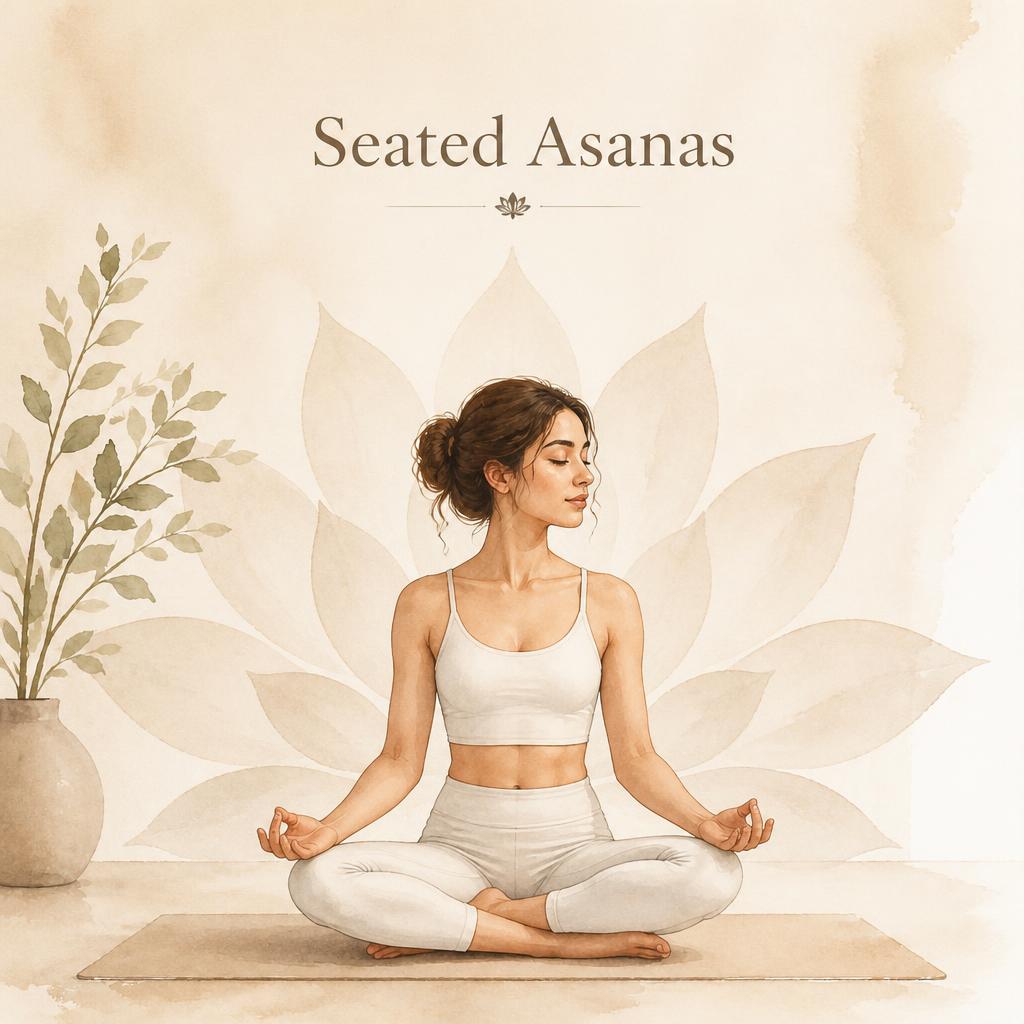
Now is Yoga Time → Asana Compendium → Seated Asanas
Seated Asanas
Seated Asanas invite you into a landscape of stillness — a place where the body settles, the breath deepens, and awareness begins to turn inward. These shapes create a stable base from which the spine can rise naturally, allowing the upper body to soften without collapsing. In seated poses, the legs root gently into the ground, the pelvis finds its neutral center, and the breath becomes a quiet guide that shapes the entire experience.
These asanas are not about doing; they are about being. They offer a moment to pause, to listen, to feel the subtle movements of the breath and the gentle shifts of the spine. Seated shapes teach you how to inhabit your body with ease, how to release unnecessary effort, and how to rest in the simplicity of presence. Over time, they become a sanctuary — a place where the mind can settle, the body can soften, and the inner landscape can open with clarity and calm.
Seated Asanas remind you that stillness is not passive. It is a living, breathing practice of grounding, awareness, and quiet connection.
This is the practice of inner steadiness — spacious, gentle, and deeply centering.
What Seated Asanas Teach
Seated poses teach you how to find alignment without strain, how to lengthen the spine without forcing, and how to let the breath support the shape from within. They reveal the relationship between the hips, pelvis, and spine — how each contributes to a stable, comfortable seat.
These shapes also cultivate introspection. Seated Asanas encourage you to slow down, to observe the subtle rhythms of the body, and to rest in the quiet clarity that arises when movement becomes minimal. They teach patience, presence, and the art of soft attention.
Key Benefits
- Support meditation and breathwork practices
- Improve posture and spinal alignment
- Increase mobility in the hips and lower back
- Calm the nervous system and reduce stress
- Encourage introspection and emotional grounding
- Strengthen the deep stabilizing muscles of the core
- Create a stable foundation for pranayama and stillness
Common Mistakes
- Rounding the spine or collapsing the chest
- Forcing the knees down instead of supporting them
- Tilting the pelvis backward, creating strain in the lower back
- Holding the breath during stillness
- Over‑engaging the shoulders or neck
- Ignoring the need for props to support comfort
How to Approach Seated Asanas
Move slowly and with softness.
Support the hips with blankets or blocks to create ease.
Let the spine rise naturally from the pelvis.
Relax the shoulders and soften the jaw.
Allow the breath to guide the shape, not ambition.
Seated poses are not about flexibility — they are about comfort, clarity, and presence.
Asanas in This Category
(Each name will be a link to an individual Asana page)
- Sukhasana — Easy Pose
- Virasana — Hero Pose
- Padmasana — Lotus Pose
- Ardha Padmasana — Half Lotus
- Dandasana — Staff Pose
- Baddha Konasana — Bound Angle Pose
- Upavistha Konasana — Wide‑Angle Seated Forward Fold
- Janu Sirsasana — Head‑to‑Knee Pose
- Gomukhasana (Full Pose) — Cow Face Pose
- Agnistambhasana — Fire Log Pose
- Seated Twist Variations — Ardha Matsyendrasana Prep
Recommended Mini‑Sequences
Grounded Stillness (3 minutes)
Easy Pose → Gentle Twist → Forward Fold → Easy Pose
Hip & Spine Ease (5 minutes)
Bound Angle → Fire Log → Seated Forward Fold → Rest
Meditative Preparation (4 minutes)
Hero Pose → Staff Pose → Easy Pose → Breath Awareness
Clips
A short video guide will be posted here in the future.