Now is Yoga Time → Asana Compendium → Hip Opener Asanas
Hip Opener Asanas
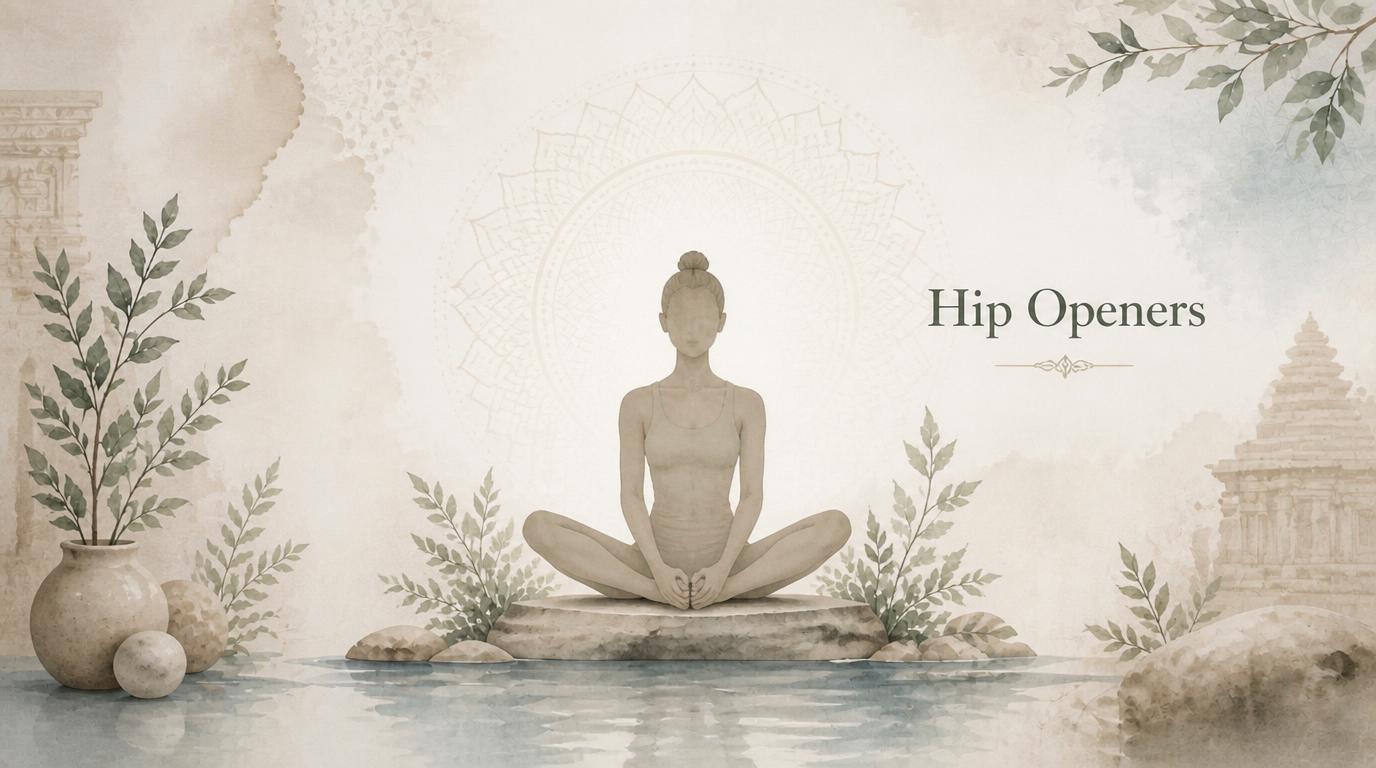
Hip Openers invite you into a space of release — a slow, steady softening of the places where the body tends to hold tension, memory, and emotional weight. These shapes encourage you to move with patience, to breathe into resistance, and to meet the deeper layers of the body with gentleness rather than force. As the hips begin to open, the pelvis finds more freedom, the lower back decompresses, and the breath settles into a calmer, more grounded rhythm.
In Hip Openers, you learn how to approach intensity with softness. The poses reveal where the body grips, where it protects, and where it is ready to let go. They teach you to listen closely — not to push past sensation, but to stay present with it, allowing space to unfold gradually. Over time, these shapes become a practice of emotional clarity: a way to release what feels heavy, to soften what feels rigid, and to reconnect with the quiet spaciousness that lives beneath the surface.
Hip Openers remind you that opening is not a sudden event. It is a slow, honest conversation between breath, body, and awareness — one that unfolds in its own time.
This is the practice of release — grounded, spacious, and deeply restorative.
What Hip Openers Teach
Hip Openers teach patience, humility, and the art of softening. They show you how to work with sensation rather than against it, how to breathe into tightness without collapsing, and how to create space through presence instead of force.
These shapes reveal the interconnectedness of the hips, pelvis, and lower back — how freedom in one area supports ease in the others. They also cultivate emotional awareness, inviting you to meet whatever arises with steadiness and compassion. Hip Openers teach you how to let go, not by pushing, but by allowing.
Key Benefits
- Increase mobility in the hips and pelvis
- Release tension in the lower back and glutes
- Support healthy posture and spinal alignment
- Improve comfort in seated and meditative positions
- Calm the nervous system and reduce stress
- Enhance circulation and joint health
- Encourage emotional release and grounding
Common Mistakes
- Forcing the hips to open too quickly
- Collapsing the spine instead of lengthening
- Holding the breath during intense sensations
- Letting the knees twist or collapse inward
- Ignoring the role of the core in stabilizing the pelvis
- Pushing past the body’s natural boundaries
How to Approach Hip Openers
Move slowly and with curiosity.
Let the breath guide the depth of the pose.
Support the hips with props whenever needed.
Keep the spine long and the pelvis steady.
Stay present with sensation without forcing change.
Hip Openers are not about achieving a shape — they are about creating space, inside and out.
Asanas in This Category
(Each name will be a link to an individual Asana page)
- Baddha Konasana — Bound Angle Pose
- Upavistha Konasana — Wide‑Angle Seated Forward Fold
- Eka Pada Rajakapotasana (Prep) — Pigeon Pose (Preparation)
- Anjaneyasana — Low Lunge
- Lizard Pose — Utthan Pristhasana
- Gomukhasana (Legs) — Cow Face Pose (Legs)
- Frog Pose — Mandukasana
- Half Happy Baby — Ardha Ananda Balasana
- Full Happy Baby — Ananda Balasana
- Garland Pose — Malasana
- Fire Log Pose — Agnistambhasana
Recommended Mini‑Sequences
Gentle Hip Release (3 minutes)
Low Lunge → Half Happy Baby → Bound Angle Pose
Deep Opening Flow (5 minutes)
Lizard Pose → Pigeon (Prep) → Seated Wide‑Angle Fold → Rest
Grounding Sequence (4 minutes)
Garland Pose → Fire Log Pose → Forward Fold → Stillness
Clips
A short video guide will be posted here in the future.
Hip Openers
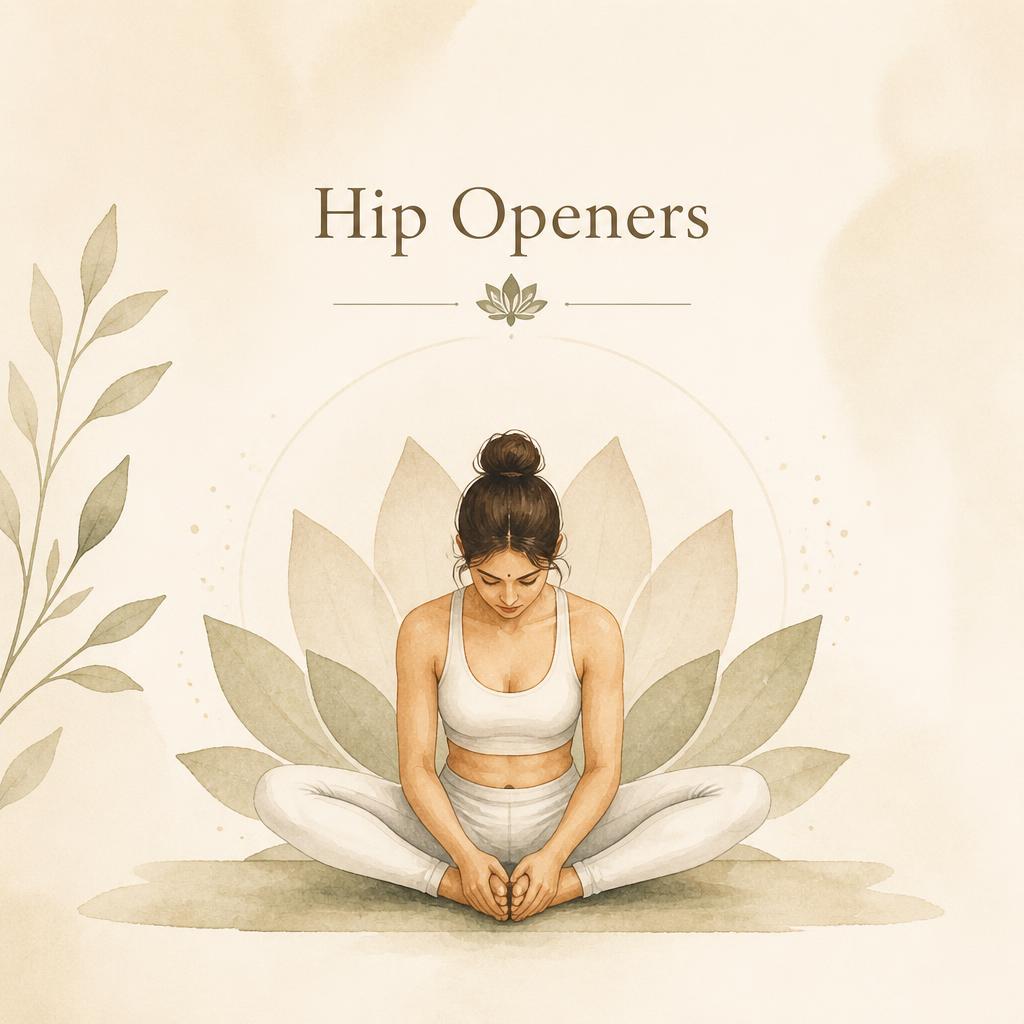
Hip Openers create space where modern bodies need it most. Long hours of sitting, stress, and habitual tension often settle into the hips, making these poses essential for restoring natural mobility. By gently opening the hip joints and lengthening the surrounding muscles, these asanas ease tightness in the lower back, pelvis, and legs. They encourage a slower pace, a softer breath, and a deeper sense of release. Hip openers also support emotional unwinding — the hips often hold subtle patterns of holding and resistance, and these shapes offer a safe way to let some of that go. Practiced with patience and awareness, they bring freedom, grounding, and a renewed sense of ease to the whole body.