Now is Yoga Time → Asana Compendium → Arm Balance Asanas
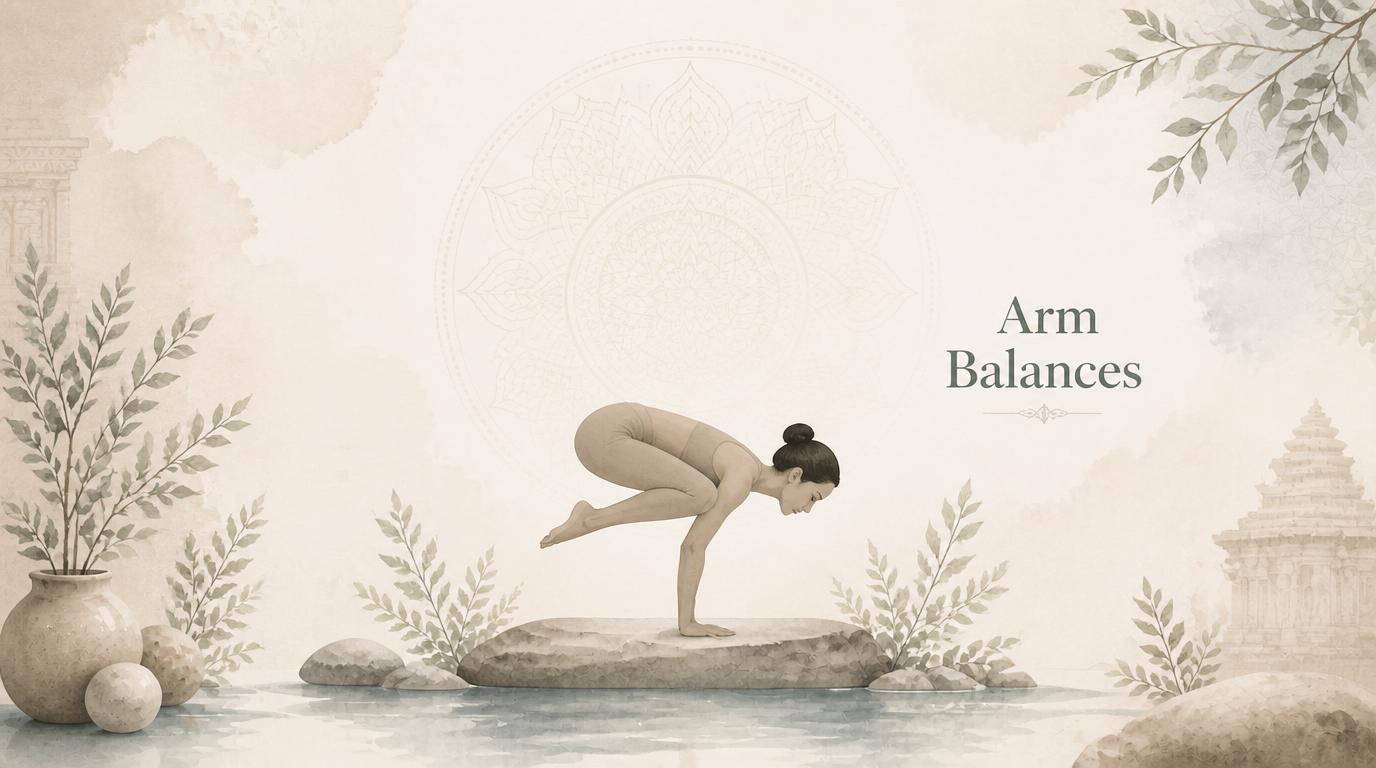
Arm Balance Asanas
Arm Balances invite you into a space where strength meets softness, and where focus becomes just as important as physical ability. These shapes are not about lifting off the ground — they are about discovering the quiet stability that comes from aligning your center, engaging with intention, and trusting the support beneath your hands.
In Arm Balances, the body learns to organize itself around a single point of grounding. The core awakens, the breath sharpens, and the mind becomes steady and clear. These poses reveal how lightness is created not by force, but by integration — when the legs, core, shoulders, and breath work together in a unified, effortless way.
Over time, Arm Balances become a practice of presence. They teach you how to meet challenge without tension, how to stay calm in moments of intensity, and how to rise into a shape not through willpower, but through clarity and connection. These poses remind you that strength is not loud; it is quiet, focused, and deeply rooted.
This is the practice of embodied courage — steady, intentional, and quietly empowering.
What Arm Balances Teach
Arm Balances teach you how to stabilize from the center, how to engage without gripping, and how to move with precision rather than momentum. They reveal the relationship between breath, core, and grounding — how each supports the others in creating lift and balance.
These shapes also cultivate mental clarity. Arm Balances require presence, patience, and a willingness to explore edges without pushing past them. They teach you to trust your foundation, to breathe through challenge, and to find ease even when the body is working.
Key Benefits
- Strengthen the core, shoulders, and wrists
- Improve balance, coordination, and body awareness
- Build confidence and mental focus
- Enhance integration between upper and lower body
- Support transitions in vinyasa and dynamic flows
- Teach calmness and breath control under intensity
- Develop resilience and a sense of inner lightness
Common Mistakes
- Collapsing into the wrists instead of distributing weight
- Trying to “muscle” the pose without core engagement
- Holding the breath during the lift
- Letting the elbows flare or shoulders collapse
- Jumping into the shape instead of setting the foundation
- Ignoring the role of the legs in creating balance
How to Approach Arm Balances
Begin with grounding — hands steady, breath steady.
Engage the core before lifting anything.
Move slowly enough to feel the transition, not just the shape.
Use props or variations to build confidence and clarity.
Let the breath guide the lift, not force.
Arm Balances are not about height or spectacle — they are about integration, presence, and quiet strength.
Asanas in This Category
(Each name will be a link to an individual Asana page)
- Bakasana — Crow Pose
- Parsva Bakasana — Side Crow
- Eka Pada Koundinyasana I — Flying Splits I
- Eka Pada Koundinyasana II — Flying Splits II
- Astavakrasana — Eight‑Angle Pose
- Tittibhasana — Firefly Pose
- Bhujapidasana — Shoulder Pressing Pose
- Lolasana — Pendant Pose
- Kakasana — Crane Pose
- Eka Pada Galavasana — Flying Pigeon
- Mayurasana — Peacock Pose
Recommended Mini‑Sequences
Core & Lift (3 minutes)
Plank → Crow Prep → Crow → Child’s Pose
Side Body Strength (5 minutes)
Side Crow → Flying Splits I → Forward Fold → Rest
Lightness Flow (4 minutes)
Flying Pigeon → Firefly → Seated Forward Fold → Stillness
Clips
A short video guide will be posted here in the future.
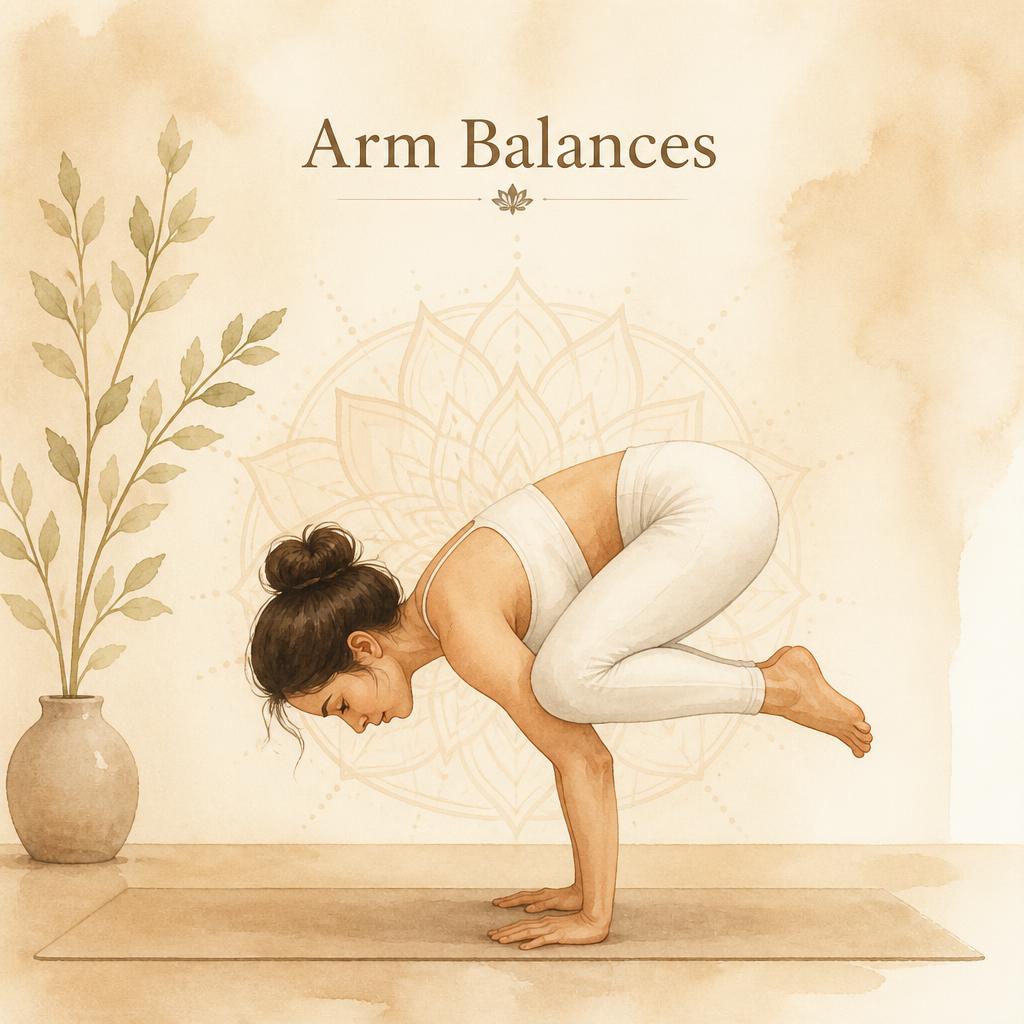
Arm Balances
Arm Balances cultivate steadiness from the inside out. These shapes ask for quiet focus, subtle engagement, and a calm, steady breath. When you balance, the body learns to organize itself around a clear center — the feet or hands root, the core awakens, and the mind becomes fully present. These poses strengthen not only the legs and stabilizing muscles, but also the capacity to stay composed in moments of wobble or uncertainty. Balancing teaches patience, concentration, and the art of returning to equilibrium, making it a powerful bridge between physical alignment and inner stillness.