Now is Yoga Time → 8 Limbs of Yoga → Yama → Brahmacharya
Brahmacharya — The Wisdom of Energy
You have one life. One body. One reserve of vital force.
How you spend it is everything.

Introduction
There is a particular kind of tiredness that has nothing to do with how much you slept.
You wake up after eight hours and still feel depleted. You move through the day doing things — many things, perhaps — and yet arrive at evening feeling that nothing truly happened. That something essential was spent, but you cannot quite name what, or where it went.
This is the experience that Brahmacharya addresses.
The fourth of Patanjali's five Yamas, Brahmacharya is most commonly translated as celibacy — and this translation, while not wrong in a narrow historical sense, has caused more confusion and unnecessary guilt than almost any other concept in yoga philosophy.
Brahmacharya is not primarily about sexuality. It is about energy.
All of our energy. The vital force that animates us — physical, emotional, creative, spiritual. The finite, precious reserve of prana that we bring into each day, and the question that Brahmacharya places at the center of practice:
Where is your energy going? And is that truly where you want it to go?
This article is a quiet invitation to explore what Asteya actually means — and how to bring it into your practice, your body, and your daily life. This article is also part of a greater theme of Yoga Philosophy.
What Is Brahmacharya?
Sanskrit: Brahmacharya (ब्रह्मचर्य) Translation: Right use of energy, walking in the path of Brahma, wise moderation. Category: The fourth of the five Yamas — the outer ethical observances in Patanjali's eight-limbed path
The word Brahmacharya comes from two Sanskrit roots: Brahma — the divine, the universal consciousness, the creative principle — and charya — conduct, behavior, moving toward. Literally: moving in the direction of the divine. Living in alignment with something larger than the personal self.
For the renunciate monks of ancient India, this meant celibacy — the complete conservation of sexual energy for spiritual practice. And for those on that particular path, it remains a valid and powerful practice.
But for the vast majority of modern practitioners — people living full lives, in relationships, with responsibilities, with creative and professional ambitions — Brahmacharya means something both simpler and more demanding: the conscious, intentional, wise direction of vital energy toward what truly matters.
Patanjali tells us that one established in Brahmacharya gains virya — vigor, vitality, strength. Not the dull strength of suppression, but the vibrant aliveness of a life in which energy flows toward its highest purpose rather than leaking away in distraction, excess, and unconscious habit.
Energy as a Finite Resource
Here is the teaching at the heart of Brahmacharya, and one that modern science is increasingly confirming:
Your energy is finite.
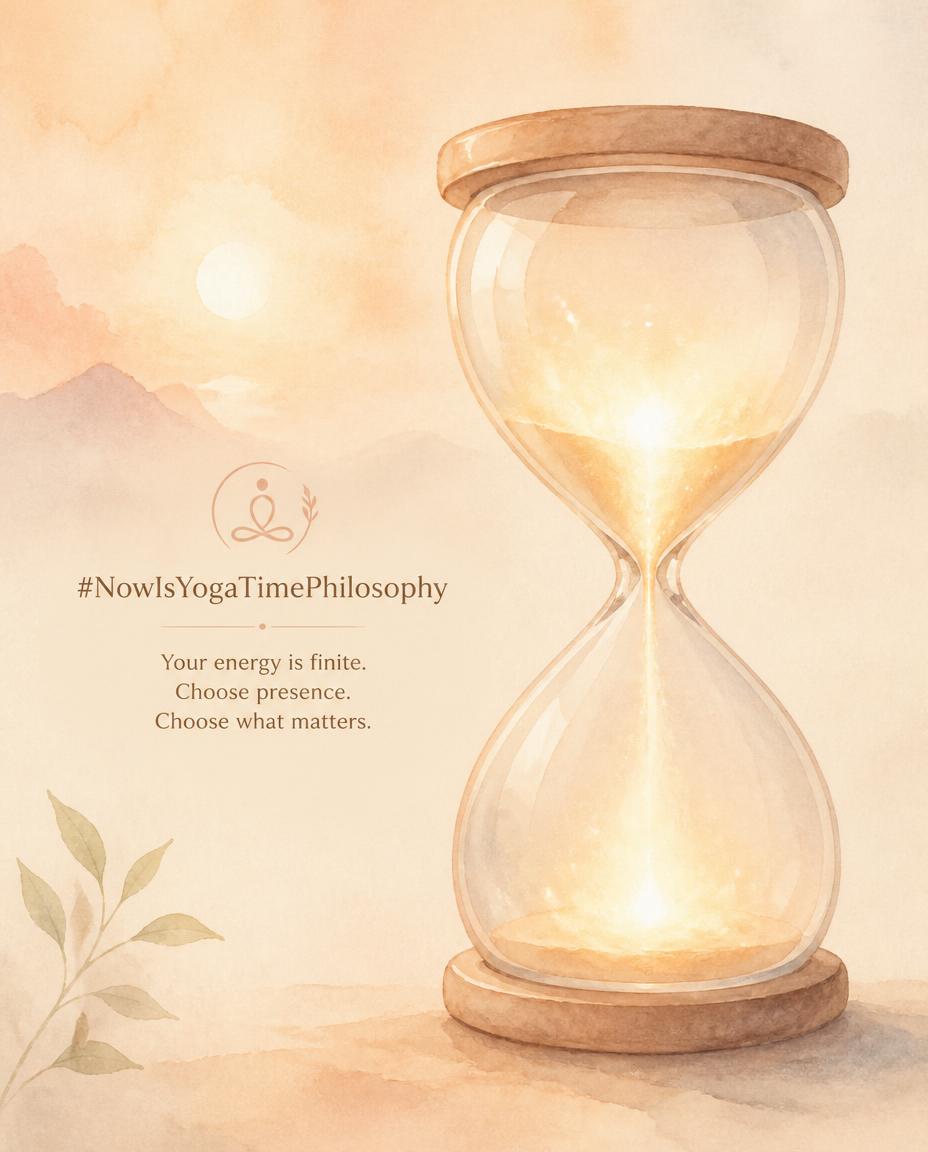
Not unlimited. Not infinitely renewable in the short term. Finite — within any given day, week, season of life. What you spend in one direction is unavailable for another. What drains you leaves less for what matters. What you protect and tend carefully accumulates into something remarkable.
The ancient yogis understood this intuitively. They observed — through their own rigorous practice and inner inquiry — that there is a subtle vital force running through all living things, and that this force can be cultivated, directed, conserved, or scattered, depending on how we live.
They called this force prana. And they understood that how we manage it determines not only our physical health, but the quality of our attention, the depth of our practice, and ultimately the degree to which we can show up fully for the life we are trying to build.
Brahmacharya is the practice of becoming conscious stewards of this force.
The Many Ways Energy Leaks
Before we can direct energy wisely, we need to see honestly where it is going.
Excessive stimulation. Screens, noise, information, entertainment — the modern world offers an endless stream of things to consume. Each one requires a response from the nervous system. Cumulatively, constant stimulation is one of the most significant energy drains most people never examine.
Unconscious reactivity. Every time we react from anger, fear, or anxiety rather than responding from awareness — we spend energy. Often a great deal of it. The practice of pausing before reacting is, among other things, an act of Brahmacharya.
Worry and rumination. The mind that replays the past or rehearses catastrophic futures spends enormous amounts of energy on experiences that are not happening. Brahmacharya invites us to notice this — and to return, again and again, to the only place where energy can be replenished: the present moment.
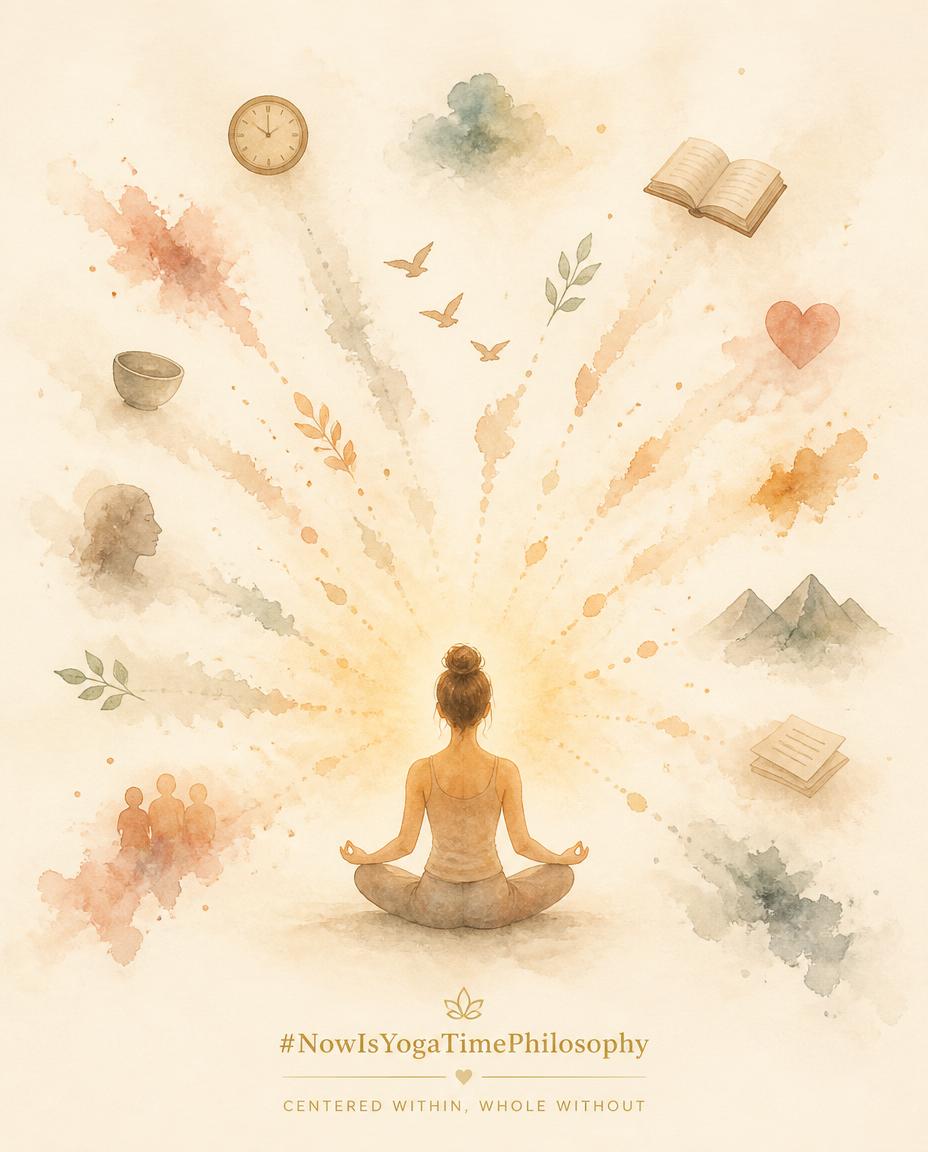
Excessive talking. Speech requires energy. Gossip, complaining, speaking without intention — these quietly drain the reserves. The yogic traditions across cultures have always understood the conservation of speech as a form of energy practice. Not silence for its own sake, but intentional, purposeful communication.
Overcommitment. Saying yes to too many things — out of obligation, guilt, the desire to be needed, the fear of missing out — spreads our energy so thin that nothing receives our full presence. Brahmacharya asks: what are you genuinely here to do? And are you protecting the energy that requires?
Sexual energy. This is where the classical teaching lives, and it deserves honest acknowledgment. Sexual energy is among the most powerful forms of prana we carry. The practice of Brahmacharya does not ask us to deny or suppress it — but to bring it into awareness. To notice where it flows, whether it nourishes us and our relationships, and how we can honor it as a dimension of our full vitality rather than treating it unconsciously.
Brahmacharya in Daily Life
Morning as practice. How you begin the day sets the tone for everything that follows. Moving immediately from sleep to a phone — to news, to social media, to the demands of others — scatters energy before it has gathered. Brahmacharya in the morning means protecting the first moments. Breath. Stillness. Intention. Before the world rushes in.
The art of saying no. Every yes to something that doesn't truly matter is a no to something that does. Brahmacharya asks that we become more selective — not from fear or stinginess, but from genuine clarity about what we are here to do and what deserves our energy.

Digital boundaries. This is perhaps the most pressing form of Brahmacharya for the modern practitioner. Endless scrolling, the constant checking of notifications, the fragmentation of attention across dozens of platforms — these are among the most significant energy leaks of contemporary life. Not because technology is inherently harmful, but because it is designed to take more of our attention than we consciously choose to give.
Food and the body. What we eat is prana. How we eat — rushed, distracted, in front of a screen — affects how that prana is received. Brahmacharya extends to nourishing the body with awareness, choosing food that genuinely supports vitality rather than simply managing hunger or emotion.
Rest as wisdom. In a culture that glorifies busyness and treats rest as laziness, choosing to rest — fully, without guilt, before depletion rather than after collapse — is a radical act of Brahmacharya. Energy conserved through genuine rest is energy available for what matters.

Brahmacharya on the Mat
Every yoga practice is an exercise in energy management.
The impulse to push further, to add more, to extend the practice beyond what the body is genuinely asking for — this is Brahmacharya's invitation to pause. To ask: is this serving the practice, or is this the ego spending energy it doesn't have?
The willingness to do less — to choose a gentler practice on a depleted day, to rest in Savasana for the full time it deserves, to honor the body's genuine needs rather than the mind's ambition — this is Brahmacharya on the mat.
It is also present in the quality of attention we bring. A practice done with full, collected attention for thirty minutes is worth more — in terms of transformation — than ninety minutes of scattered, half-present movement. Brahmacharya teaches us to value depth over duration. Presence over performance.
Brahmacharya and Creativity
Here is something the ancient teachings understood, and that creative people in every tradition have discovered independently:
Conservation of energy is the foundation of creative power.
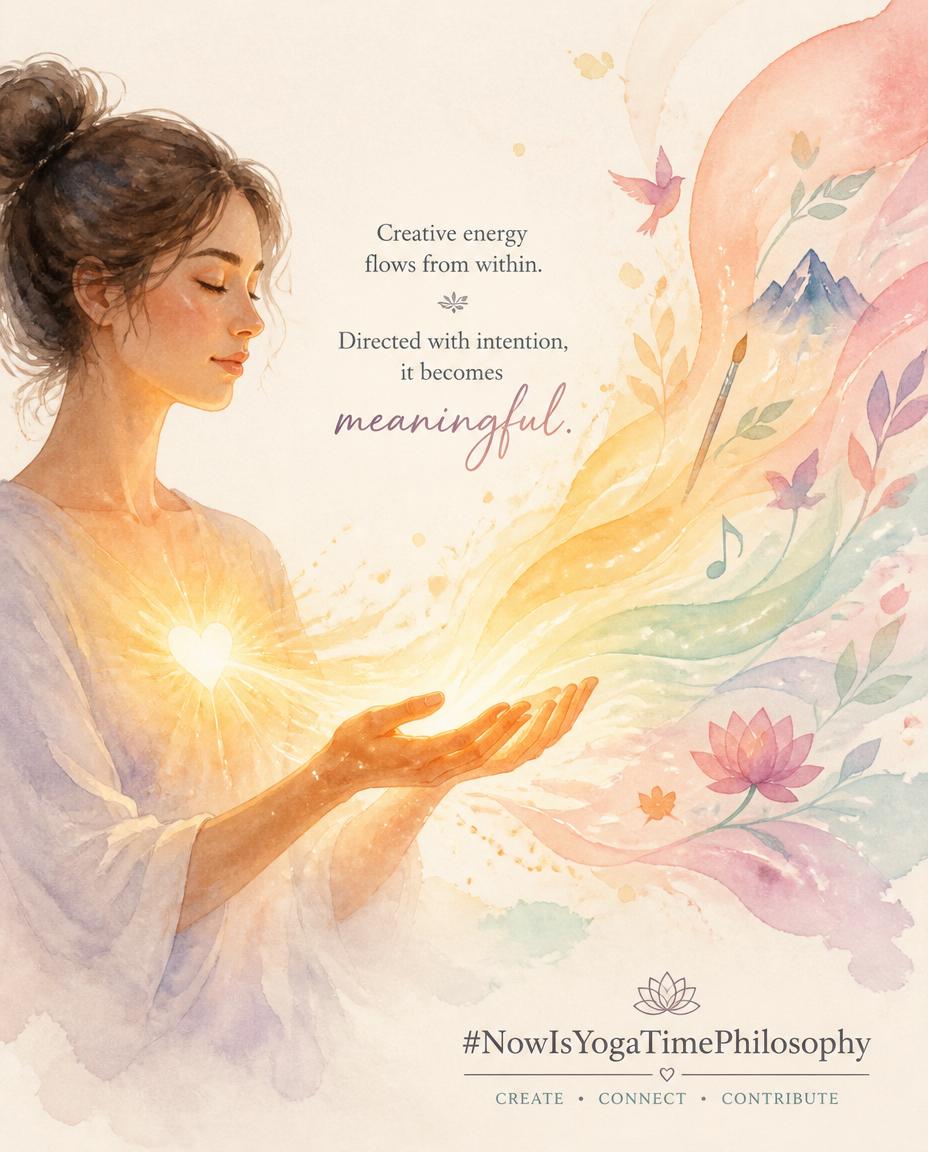
The great artists, writers, musicians, and thinkers who have produced enduring work across history have almost universally had some version of a Brahmacharya practice — whether they called it that or not. Strict routines. Protected mornings. Ruthless prioritization. The deliberate guarding of the inner state from which their best work arose.
This is not coincidence. Creative work requires a particular quality of collected, undivided attention that cannot coexist with scattered, depleted, overstimulated consciousness.
Brahmacharya — the conscious conservation and direction of vital energy — is the practice that makes deep creative work possible.
Whatever you are here to build — a body of work, a teaching, a community, a life of genuine meaning — Brahmacharya is the practice that protects the energy that work requires.

Brahmacharya and Relationships
Brahmacharya does not diminish the possibility of deep, loving relationship. It enriches it.
When we are energetically depleted — spread thin, overstimulated, giving from an empty vessel — our relationships suffer. We are half-present. We have little to offer. We take more than we give, without even intending to.
When we practice Brahmacharya — when we protect and tend our energy with care — we have something real to bring to those we love. Genuine presence. Full attention. The quality of being truly here, rather than physically present but mentally elsewhere.
In this sense, Brahmacharya is one of the most loving practices available to us. Not a withdrawal from relationship, but a preparation for it. A way of showing up fully — because we have not scattered ourselves across a hundred lesser things.

Practices for Cultivating Brahmacharya
The energy audit: For one week, keep a simple record. At the end of each day, ask: what gave me energy today? What took it? What was the single biggest drain? What small thing, if protected, would change everything? Let the data guide you.
Protected mornings: Choose a morning practice — even ten minutes — that belongs entirely to you. Before the phone. Before the demands. Breath, movement, stillness, intention. This one practice, sustained, changes the quality of everything that follows.
Intentional rest: Schedule one genuine rest period this week. Not earned. Not justified. Simply chosen. Let it be complete — without screens, without productivity, without guilt.
One deliberate no: Identify one commitment, habit, or consumption pattern that consistently drains your energy without genuine return. Practice saying no — or less — just once this week. Notice what becomes available.
Evening wind-down: How you end the day affects how you begin the next. Create a simple evening ritual that signals to the nervous system: the day is done. The energy can gather. Tomorrow begins in rest, not depletion.
Benefits of Practicing Brahmacharya
- Sustained, reliable energy throughout the day — not the peaks and crashes of overstimulation
- Deeper creative capacity as attention becomes less scattered and more collected
- Greater presence in relationships — showing up fully rather than half-distracted
- A yoga practice that genuinely transforms rather than simply exhausts
- Clearer priorities — when energy is finite, what truly matters becomes obvious
- Reduced anxiety, as the nervous system is no longer in a constant state of overload
- The natural arising of virya — the vigor and vitality that Patanjali promises to one established in Brahmacharya
Brahmacharya and the Other Yamas
Ahimsa (nonviolence): Depleting ourselves through excess and unconscious living is a subtle form of violence toward the self. Brahmacharya is Ahimsa applied to our own vital force.
Satya (truth): Honest examination of where our energy actually goes — rather than where we tell ourselves it goes — is the foundation of any genuine Brahmacharya practice.
Asteya (non-stealing): Overcommitting, taking on more than we can genuinely give, and then delivering less than we promised — this is both an energy leak and a form of stealing from those who were counting on our full presence.
Aparigraha (non-grasping): The impulse to accumulate — more experiences, more stimulation, more content — is often the impulse that scatters energy most completely. Brahmacharya and Aparigraha together invite us toward a simpler, more concentrated, more alive way of being.
A Moment of Brahmacharya — Mini Practice
Sit comfortably. Close your eyes.
Take a long, slow breath in — gathering energy from the present moment.
Exhale slowly — releasing what has been scattered.
Do this three times. Feel, with each breath, a slight gathering.
A slight collecting of yourself.
Now ask, without pressure:
What is the single most important thing I am here to give my energy to right now? (Breathe.)
What is one thing I can release — one drain, one obligation, one habit — that would free energy for what matters? (Breathe.)
What would it feel like to move through today with my energy gathered rather than scattered? (Breathe.)
Stay here as long as you need.
Let the breath be slow.
Let the body be still.
Let the energy gather.
This is Brahmacharya.
The practice of coming home to yourself — fully, deliberately, with nothing wasted.
Conclusion
Brahmacharya is an invitation to take your energy seriously.
Not out of fear. Not out of deprivation. But out of genuine respect for the fact that you have a finite amount of it, that it matters how you spend it, and that the things you most want to build — in your practice, your relationships, your work, your life — require it.
The world will always offer more to consume, more to react to, more to pursue. It will not slow down and ask whether you have enough left for what truly matters.
That question is yours to ask. And Brahmacharya is the practice of asking it — daily, honestly, with growing clarity and courage.
Where is your energy going?
Is that truly where you want it to go?
And what would become possible if you chose, just a little more deliberately, where to place this one wild and precious life?
Asteya ← Brahmacharya → Aparigraha