Now is Yoga Time → 8 Limbs of Yoga → Yama → Aparigraha
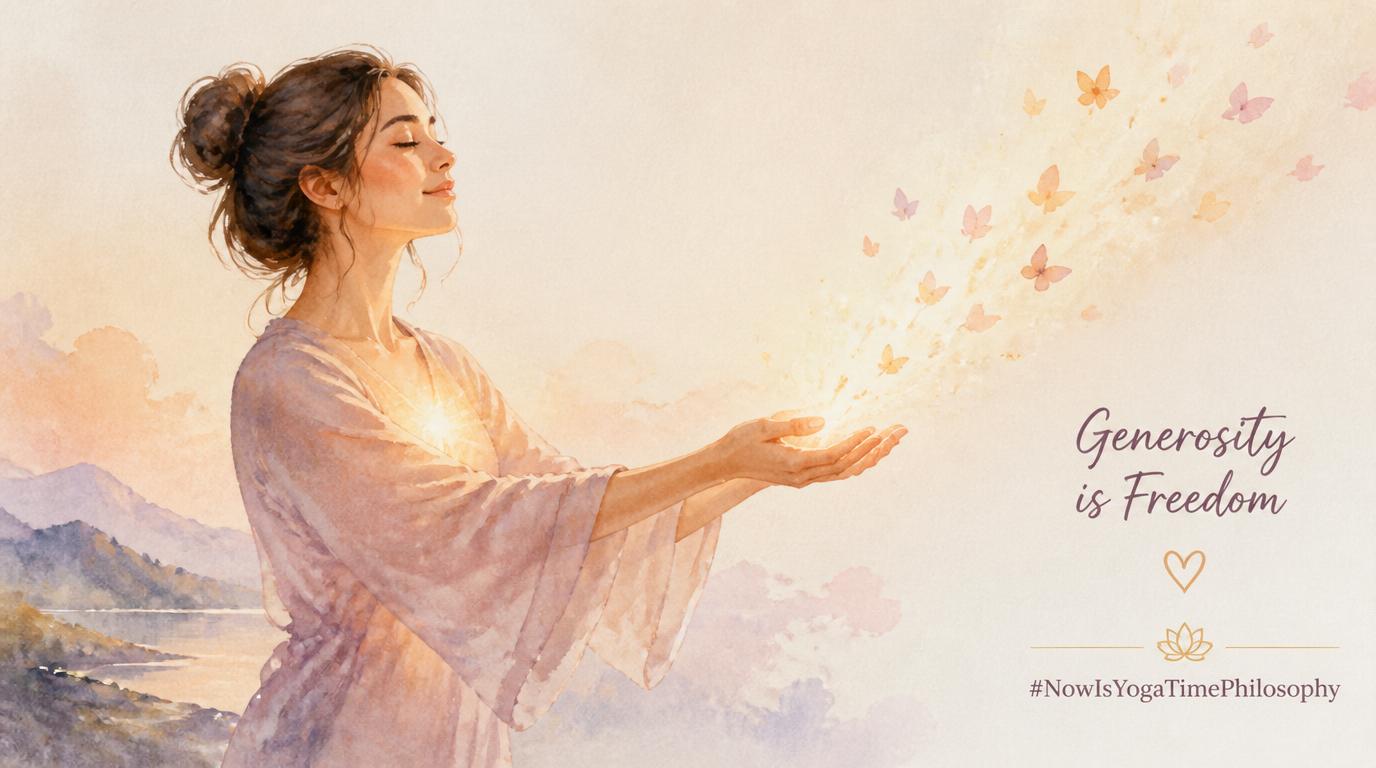
Aparigraha — The Art of Letting Go
What if the thing you are holding onto is the very thing preventing you from being free?
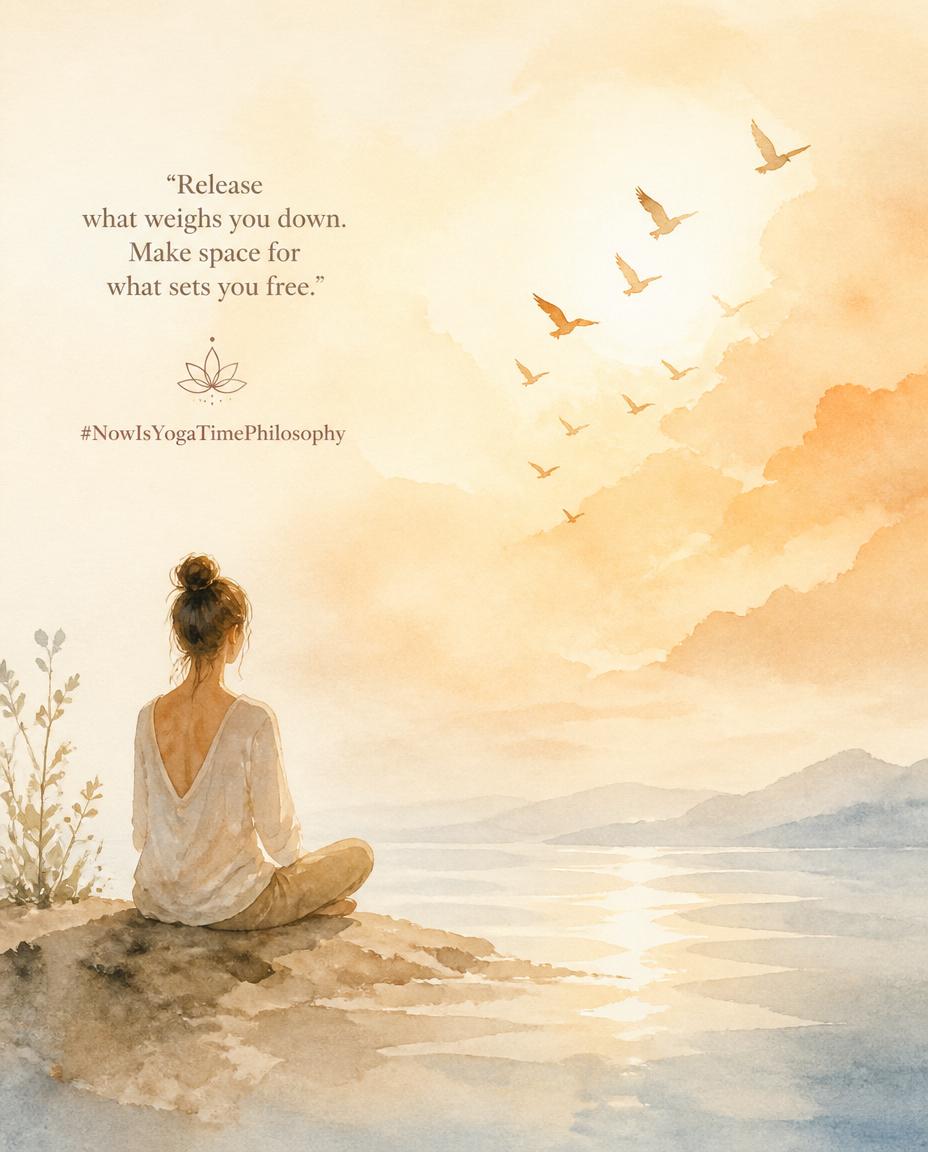
Introduction
There is something we all carry.
Sometimes it is an object — something we no longer use but cannot bring ourselves to release. Sometimes it is a relationship that has run its course, but whose ending feels impossible to accept. Sometimes it is an identity — a story about who we are, built from old experiences, old wounds, old versions of ourselves that we have long since outgrown.
Sometimes it is something subtler still. A grudge. An expectation. A fixed idea of how life should look. A need for things to be different from how they actually are.
We hold. We grip. We clench — in the body, in the mind, in the heart.
And we wonder why we feel so tired.
Aparigraha — the fifth and final of Patanjali's Yamas — is the practice of opening the hand. Of releasing what we do not need. Of learning to receive life without grasping at it, and to let it move through us without the exhausting effort of holding on.
It is, in many ways, the most difficult of all the Yamas. And the most liberating.
This article is a quiet invitation to explore what Asteya actually means — and how to bring it into your practice, your body, and your daily life. This article is also part of a greater theme of Yoga Philosophy.
What Is Aparigraha?
Sanskrit: Aparigraha (अपरिग्रह) Translation: Non-grasping, non-possessiveness, non-hoarding, non-covetousness Category: The fifth and final of the five Yamas — the outer ethical observances in Patanjali's eight-limbed path
The word Aparigraha comes from a (without), pari (on all sides), and graha (to grasp, to take). Without grasping on all sides. Releasing the impulse to seize, cling to, accumulate, or control.
Patanjali offers a remarkable teaching about the fruit of this practice: "Aparigraha sthairye janma kathamta sambodhah" — when established in non-grasping, knowledge of the why and how of existence arises.
When we stop clinging — to things, to outcomes, to identities, to the need to know and control — something opens. Not emptiness, but clarity. The kind of clarity that was always there, beneath the noise of our grasping.
This is the promise of Aparigraha. Not loss. Liberation.
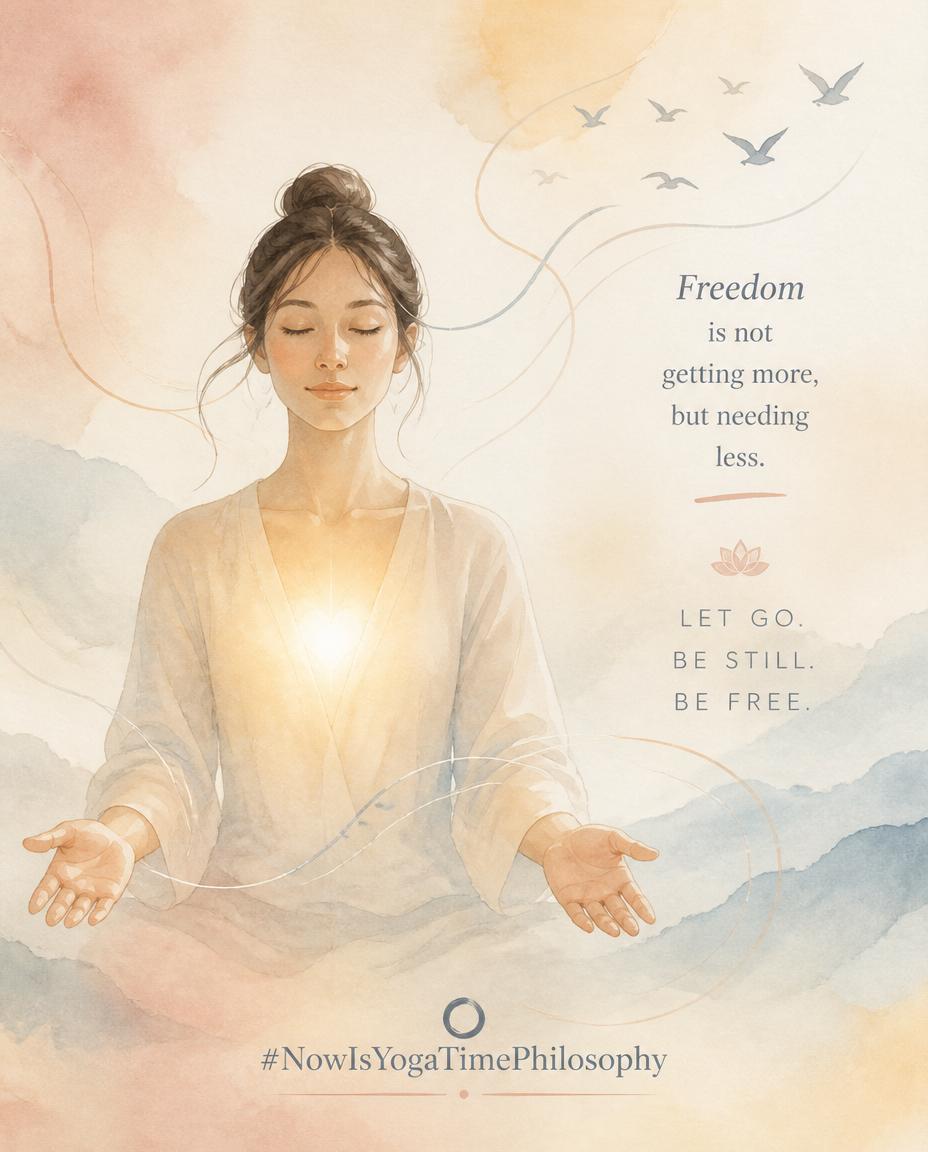
What We Grasp At
Aparigraha begins with honest inventory. What are we actually holding onto?
Possessions. The most obvious. We live in a culture that equates accumulation with success, security, and worth. More things, more options, more stored against an uncertain future. The closet full of clothes we never wear. The digital files we will never open. The accumulation that feels like safety but functions more like weight.
Outcomes. We practice — on the mat, in life — and we grasp at particular results. The perfect pose. The specific career trajectory. The relationship that looks a certain way. The life that matches the vision we created before we knew what living would actually teach us. When reality diverges from the plan, we suffer — not because reality is wrong, but because our grip on the plan is too tight.
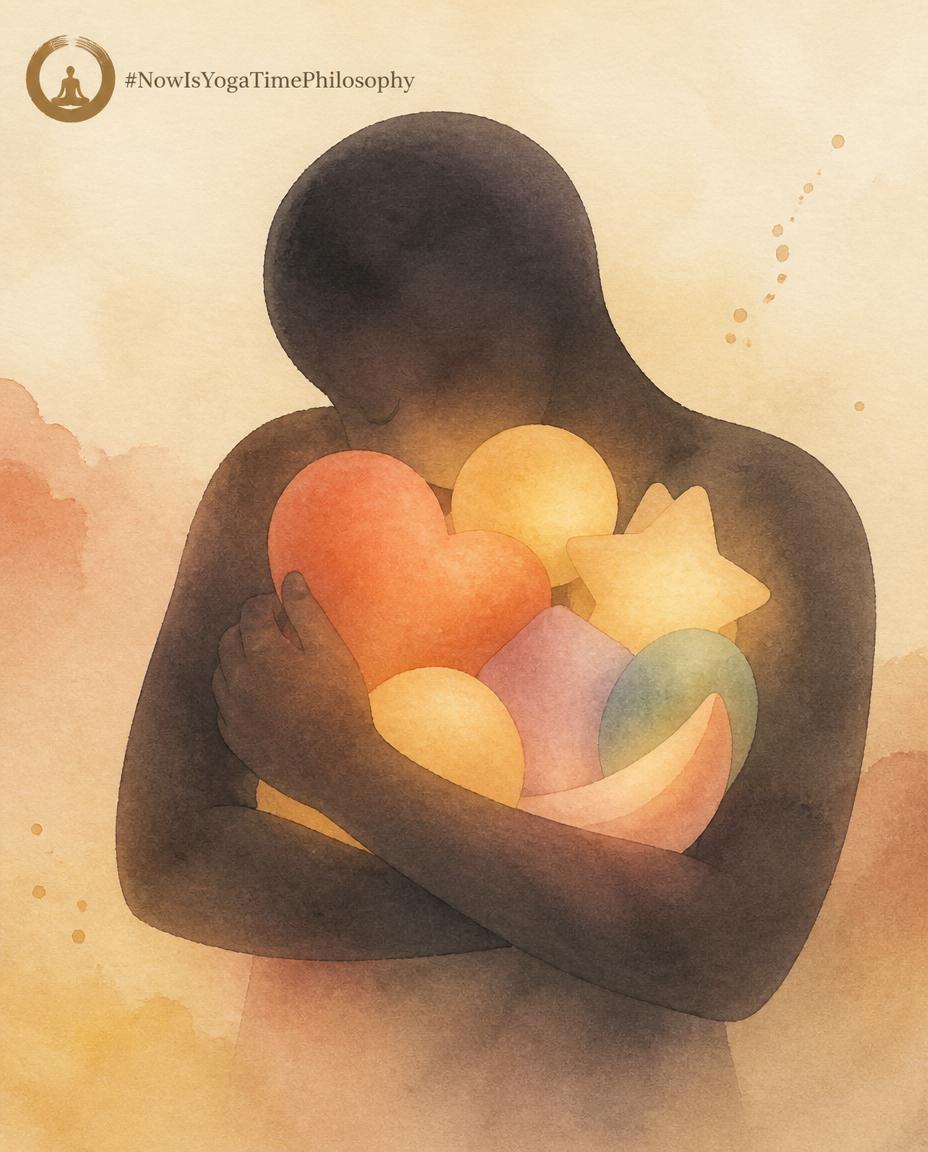
Identities. Perhaps the subtlest and most pervasive form of grasping. The story of who we are — built from our history, our achievements, our wounds, our roles. I am the capable one. I am the one who struggles. I am a yoga practitioner. I am someone who does not do that. These stories serve us, until they don't. Aparigraha asks: are you willing to be surprised by who you are becoming?
Relationships. We hold people in fixed positions — expecting them to remain who they were, to need what they once needed, to love in the way they once loved. But people, like everything alive, change. Grasping at a fixed version of a person prevents us from actually seeing them as they are now.
The past. Memories — especially painful ones — can be held with extraordinary force. The replaying of old injuries. The rehearsal of old grievances. The weight of what happened, carried so carefully that it shapes everything that comes after. Aparigraha does not ask us to forget, or to pretend harm did not happen. It asks whether we are ready, when the time comes, to put it down.
The future. Anxiety is a form of grasping — reaching forward into what has not yet happened, trying to control or predict or protect against outcomes that remain unknown. The clenched mind that cannot rest in the present because it is too busy securing the future.
The Root of Grasping — Fear
Every form of grasping shares a common root.
Fear.
Fear of loss. Fear of not enough. Fear of change. Fear of the unknown. Fear of who we might be if we released the identity we have been so carefully maintaining.
The yoga tradition does not ask us to pretend this fear does not exist. It asks us to see it clearly — to recognize it as the root of suffering, as Patanjali describes in the second chapter of the Yoga Sutras — and to practice, gradually and with compassion, loosening its grip.
Because beneath the fear is something else entirely.
The recognition — quiet, steady, available in every moment of genuine stillness — that we are not actually as fragile as our grasping suggests. That life can be trusted. That we can meet what comes without needing to have controlled it in advance.
This recognition does not arrive through argument or willpower. It arrives through practice. Through the repeated, patient experience of releasing — and discovering that release is not loss, but relief.
Aparigraha and Impermanence
At the heart of Aparigraha is an encounter with one of the most fundamental truths of existence.
Everything changes.
Every possession will pass from our hands. Every relationship will transform. Every version of ourselves will be outgrown. Every experience — the beautiful ones and the painful ones — will move through and beyond us.
This is not a tragedy. It is simply the nature of things.
The Buddhist traditions speak of anicca — impermanence — as one of the three marks of existence. The yoga tradition arrives at the same place through Aparigraha. The suffering we experience is not caused by impermanence itself, but by our resistance to it. By the grasping that tries to make permanent what is by nature temporary.
When we practice Aparigraha — when we hold things lightly, receive them fully while they are here, and release them when they move on — we stop fighting the nature of reality. And in that stopping, something unexpected arises.
Peace. Not the peace of having everything secured. The peace of no longer needing it to be.
Aparigraha in Daily Life
With possessions: Look honestly at what you own. Not to judge yourself, but to see clearly. What do you use? What brings genuine joy or genuine utility? What has become merely weight — the accumulation of old wanting that no longer reflects who you are? Aparigraha is not minimalism as an aesthetic. It is honest relationship with what we own.
With plans and expectations: Hold your intentions firmly, but your expectations lightly. Know what you are moving toward — and remain genuinely open to how it arrives, and whether it arrives in the form you imagined. The plan is a direction, not a contract with reality.
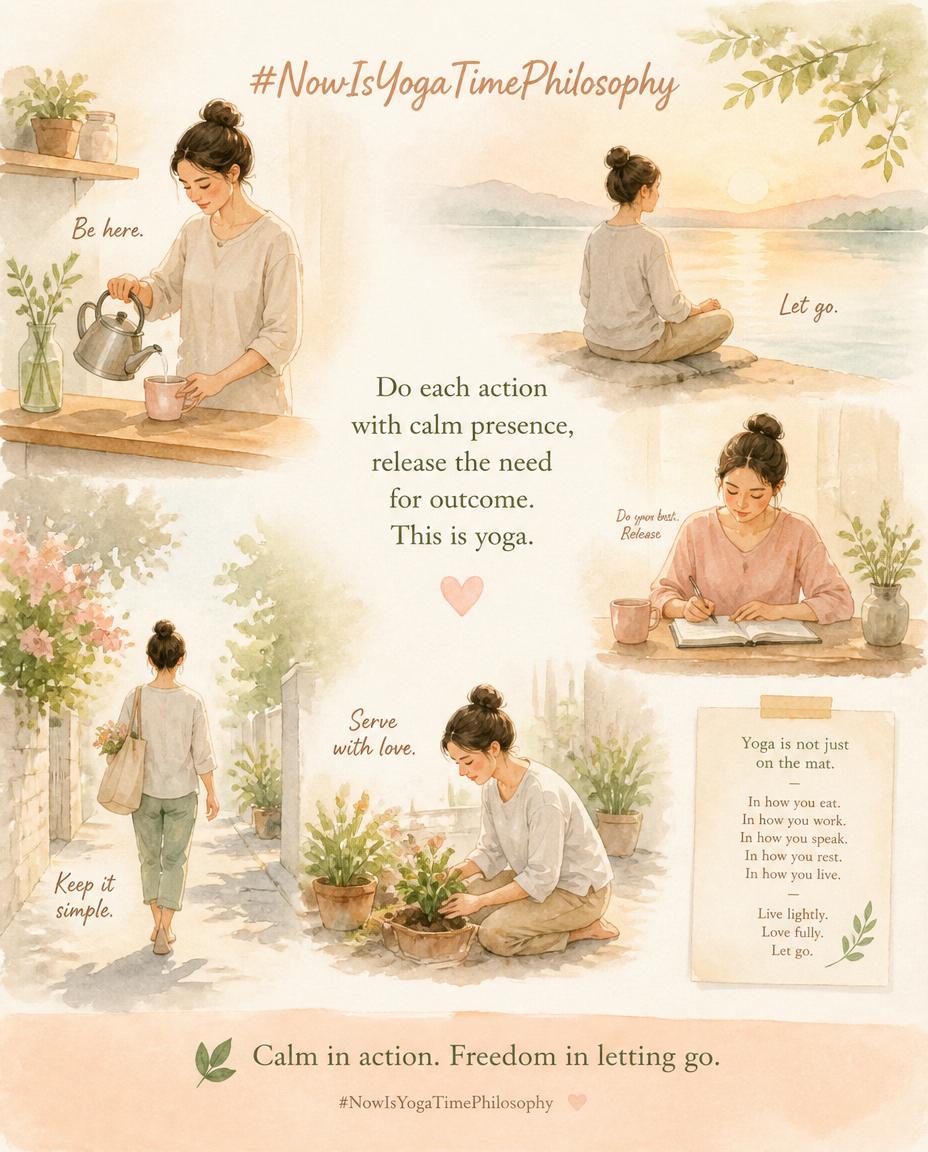
With people: Practice seeing the people you love as they are now — not as they were, not as you need them to be, not as the fixed characters in the story of your life. Let them surprise you. Let them change. Let them be more than your image of them.
With opinions: Notice when you are defending a position not because it is true but because it is yours. The willingness to release a held view — to genuinely consider that you might be wrong, or that the situation has changed — is a profound practice of Aparigraha.
With the day: At the end of each day, put it down. Not every loose end needs to be resolved before sleep. Not every conversation needs to be replayed. Not every worry needs to be carried into tomorrow. The practice of genuinely ending the day — of releasing it completely — is Aparigraha in one of its most practical and restorative forms.
Aparigraha on the Mat
The mat is where we practice everything.
And what we practice on the mat, we gradually learn to live off it.
Aparigraha on the mat looks like this: entering a pose without a fixed idea of how deep it should go today. Meeting the body as it actually is — tighter than last week, or more open, or simply different — without trying to impose yesterday's experience on today's reality.
It looks like releasing the breath rather than controlling it. Trusting the exhale — which requires a genuine letting go — rather than managing every moment of the practice.
It looks like Savasana. The final pose — the one many practitioners quietly resist, or rush through, or fill with thinking. Savasana is the practice of Aparigraha in its purest form. Lying still. Releasing the body to the earth. Letting the practice be complete — without adding to it, without evaluating it, without grasping at what it should have been.
If you want to know your relationship with Aparigraha, notice what happens in Savasana. The quality of that release is the measure of the practice.
Aparigraha and Gratitude
There is a paradox at the heart of Aparigraha that is worth sitting with.
The less we grasp, the more we receive.
Not because grasping drives things away — though it often does. But because genuine openness — the open hand, the undefended heart, the uncluttered mind — creates space for what is actually here to be fully experienced.

When we are not busy managing what we have, we can actually feel it. When we are not bracing against loss, we can actually enjoy what is present. When we are not measuring what we received against what we expected, we can receive it fully — as it is, not as we wished it were.
This is where Aparigraha meets gratitude. Not gratitude as a performance, or a practice of positive thinking, but genuine, open-handed reception of what this moment actually contains.
Aparigraha creates the conditions for gratitude to arise naturally. Not forced. Not manufactured. Simply — the natural response of an open heart to the experience of being alive.
Aparigraha and Yoga Philosophy
Aparigraha does not stand alone in the yoga tradition. It is the culmination of the Yamas — the final principle that makes the others sustainable.
Ahimsa — we cannot truly practice nonviolence while grasping. Grasping creates conflict, competition, the need to protect what we hold. Release is the ground of genuine peace.
Satya — we cannot see clearly while clinging to a particular version of what we wish were true. Aparigraha loosens the grip of wishful thinking and allows the truth to be seen as it is.
Asteya — the impulse to take is rooted in grasping. When we practice Aparigraha — when the sense of lack that drives taking dissolves — Asteya becomes effortless rather than effortful.
Brahmacharya — the energy spent in grasping — holding on, managing, protecting, pursuing — is energy unavailable for practice and creation. Aparigraha frees it.
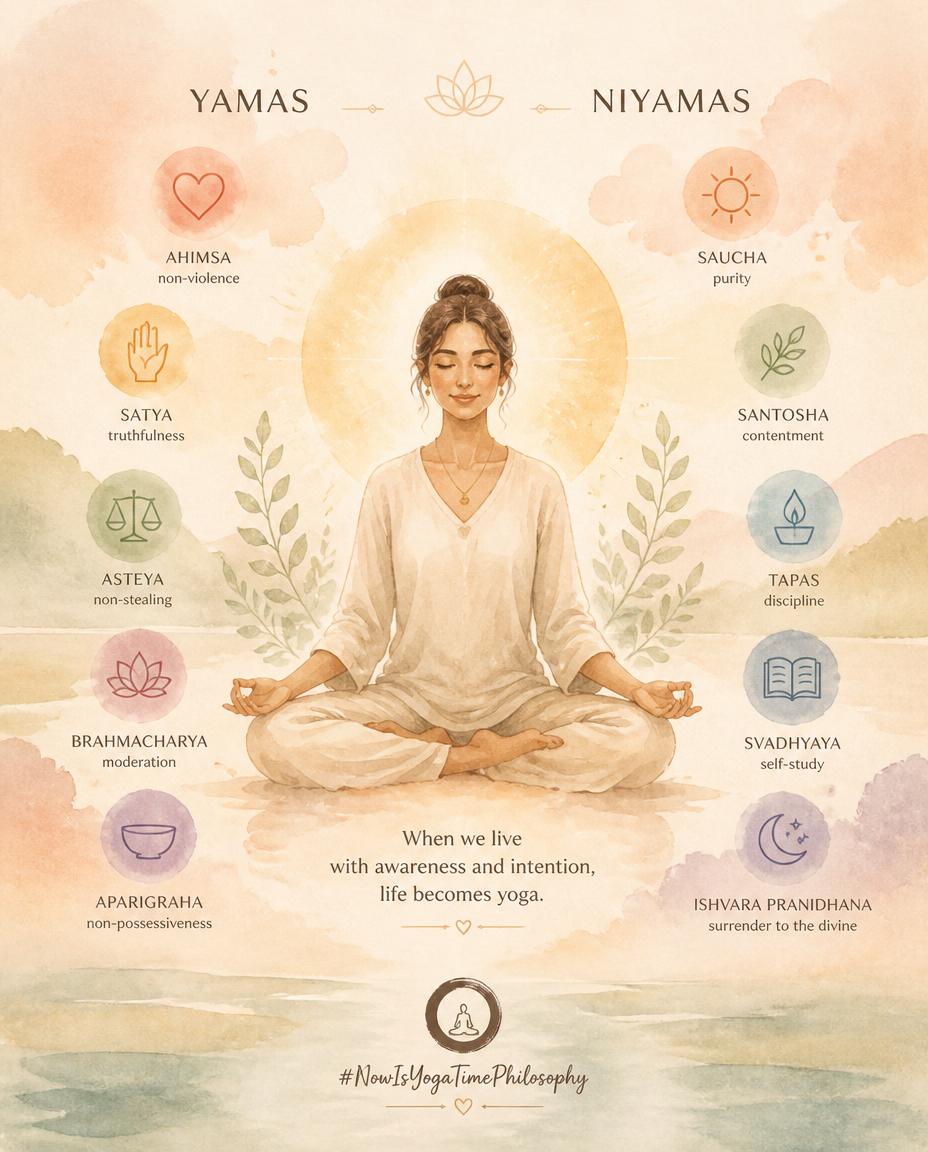
And Aparigraha itself points beyond the Yamas entirely — toward the deeper dimensions of the path. Pratyahara, the withdrawal of the senses. Dharana, the release of scattered attention into single-pointed focus. Dhyana, the dissolution of the boundary between meditator and meditation. Samadhi, the ultimate release of the sense of separate self.
The entire path of yoga is, in a sense, a deepening practice of Aparigraha.
Each limb asks us to let go of something — the compulsive patterns of behavior, the tight grip of the ego on its preferences, the conviction of separation from the whole.
And each releasing reveals something that was there all along — vast, quiet, luminous, and free.
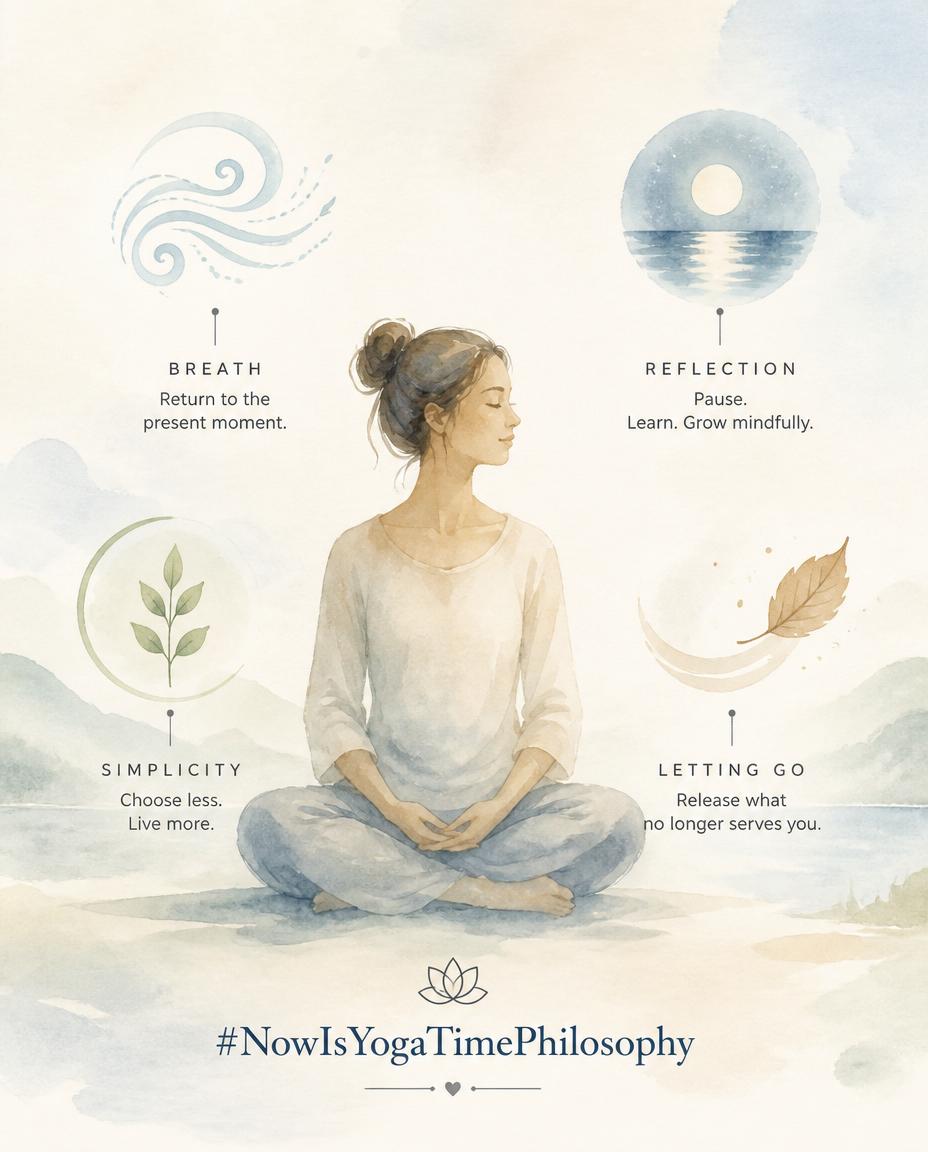
Practices for Cultivating Aparigraha
The release practice: At the end of your yoga practice — or at the end of the day — take three slow exhales. With each one, consciously release something you have been holding. A worry. An expectation. A tension in the body. Let the exhale be a genuine letting go.
One thing: Identify one physical object you have been holding onto past its usefulness. Release it this week. Give it away, recycle it, let it go. Notice what the space feels like.
The open question: Sit with this inquiry for a week — not to answer it, but to let it soften something: What am I most afraid to lose? And what would actually happen if I let it go?
Savasana as full practice: The next time you practice, commit to remaining in Savasana for its full five minutes. No fidgeting. No planning. No reviewing the practice. Simply — releasing. Fully. Completely. Let this be the most important pose of the session.
Evening release: Before sleep, take a moment to consciously put the day down. Not to resolve everything, but to release it. Tomorrow is tomorrow. Tonight — let it be complete.
Benefits of Practicing Aparigraha
- A lighter inner life — less weight carried, more energy available
- Greater adaptability — the capacity to meet change without being destabilized
- Deeper, more genuine relationships — seeing people as they are, not as we need them to be
- Reduced anxiety — less time spent trying to control what cannot be controlled
- Natural gratitude — arising from genuine openness to what is already here
- A yoga practice that deepens rather than stagnates — because each day is met fresh
- The beginning of genuine freedom — not the freedom of having everything secured, but the freedom of needing less to be secured
A Moment of Aparigraha — Mini Practice
Come to a comfortable seat. Close your eyes.
Make fists with both hands — gentle but deliberate.
Feel what it is like to hold. To grip.
Hold for a breath.
And then — slowly, with the exhale — open the hands completely.
Palms facing upward. Fingers soft.
Feel the difference.
The release. The openness.
Do this three times.
And then, with the hands remaining open, ask:
What in my life am I holding with closed hands right now? (Breathe.)
What would it feel like to open — just slightly — just here, just now? (Breathe.)
What is already here, that I have not yet been open enough to receive? (Breathe.)
Let the hands remain open.
Let the breath remain slow.
Let something that has been held — be released.
This is Aparigraha.
The open hand.
The free heart.
The beginning of enough.
Conclusion
Aparigraha is the last of the Yamas. And in many ways, it is the one that makes all the others possible.
Because underneath every form of harm, dishonesty, taking, and excess — is grasping. The fundamental human impulse to hold on against the current of life.
Aparigraha does not ask us to stop caring. It asks us to stop clinging. To love fully while holding lightly. To pursue our lives with genuine commitment while remaining genuinely open to how they unfold.
This is not passivity. It is one of the most active, alive, and demanding practices in the entire yoga tradition.
Because the current of life is strong. And opening the hand — truly, completely, without knowing what comes next — takes everything we have.
But here is what the practice reveals, again and again, to those willing to try:
What comes next, when we stop grasping for it — is usually more beautiful than what we were holding onto.
Open the hand. Trust the current. Let this moment be enough.
Brahmacharya ← Aparigraha → Niyama