What You Focus On You Become
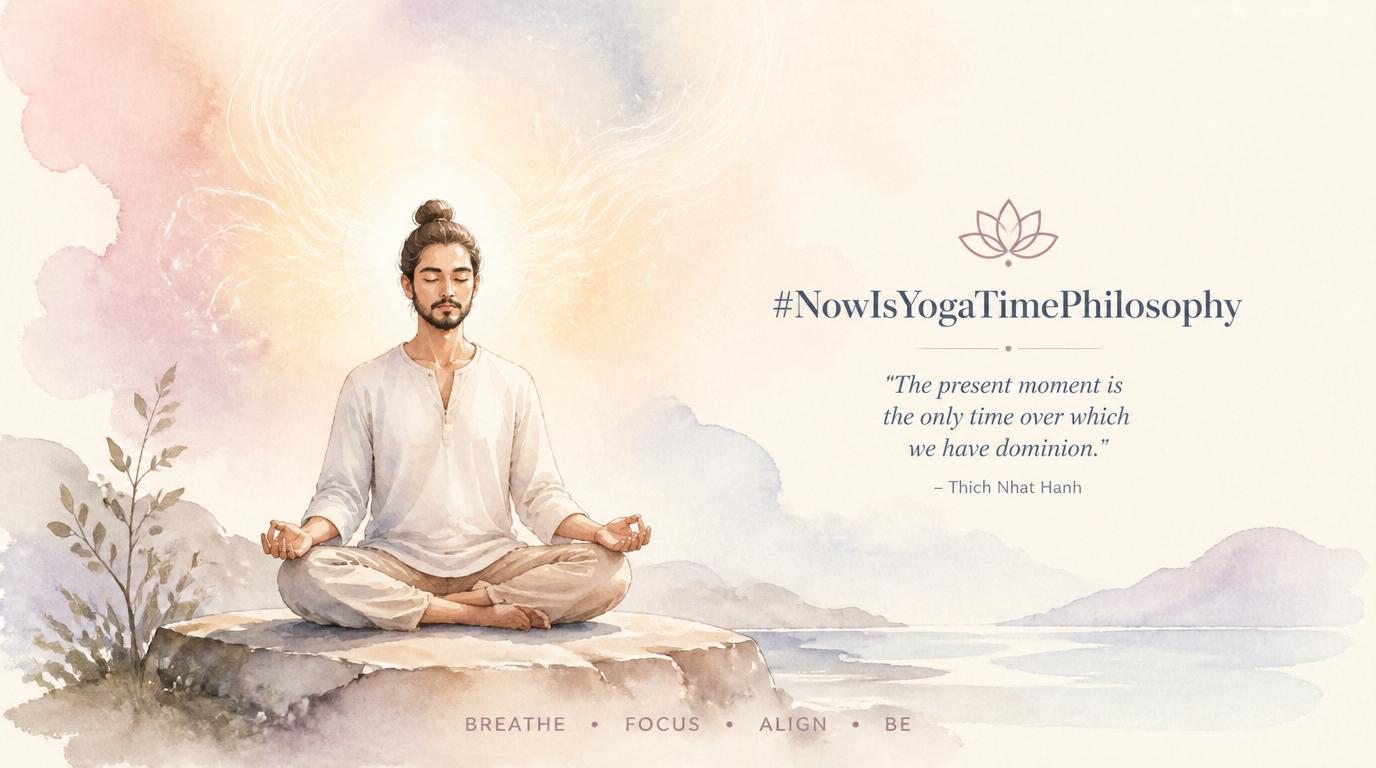
The Question. Why some people?
Think about the people you know who have been practicing yoga for years.
Maybe they go to class every week. Maybe they have the mat, the clothes, the playlist.
And yet — something hasn't shifted. Not really.
And then think about someone who started six months ago — and you can see it in their eyes. Something is different about them. The way they carry themselves. The way they speak. The way they respond to life.
Same practice. Completely different transformation.
The difference isn't the posture.
It isn't the studio.
It isn't even the teacher.
It's something happening in a place much deeper than the body — in the quality of their attention.
The Mental Universe
Here is a question that philosophers have been asking for millennia — and that modern physics is now beginning to take seriously:
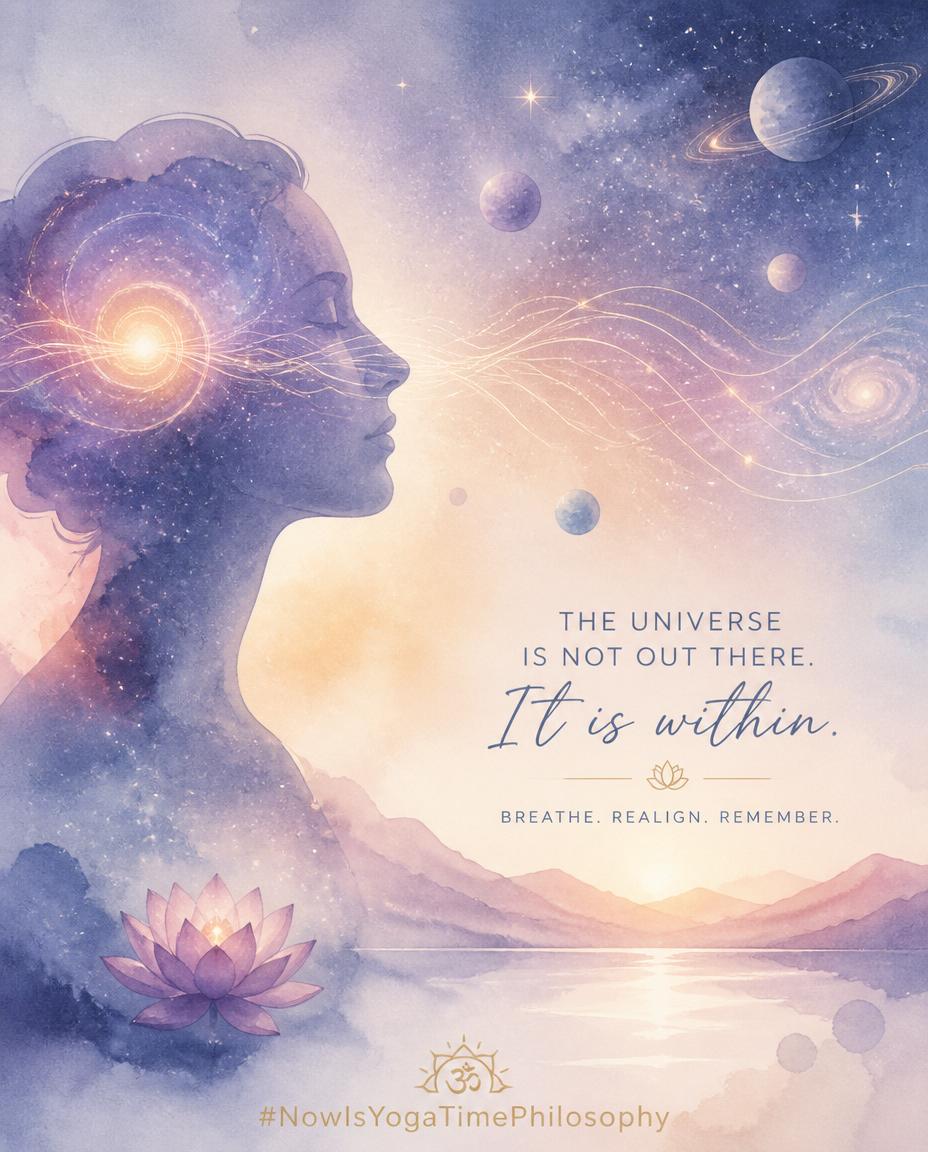
What is the universe made of?
We were taught it's matter.
Atoms. Particles. Physical stuff.
But the deeper science goes into the nature of reality — the more it encounters something unexpected.
At the quantum level, particles behave differently when they are observed.
The act of attention — of consciousness — seems to influence what manifests.
The ancient yogis knew this intuitively.
They called it Chit — pure consciousness — as one of the three fundamental qualities of existence alongside Sat (being) and Ananda (bliss).
The universe, in this view, is not primarily a physical place.
It is a mental place. A field of consciousness expressing itself through infinite forms.
And you — with your mind, with your focus, with your attention — are not a passive observer of this universe.
You are a co-creator of it.
Masaru Emoto: Water & Thought
In the 1990s, a Japanese researcher named Masaru Emoto conducted a series of experiments that, when I first encountered them, stopped me completely.
He took samples of water — ordinary water — and exposed them to different words, intentions, and music.
Then he froze the water and photographed the crystals that formed.
Water exposed to the words "love" and "gratitude" formed breathtaking, symmetrical, snowflake-like crystals.
Beautiful beyond explanation.
Water exposed to words of hatred, fear, and contempt — formed broken, chaotic, asymmetrical structures.
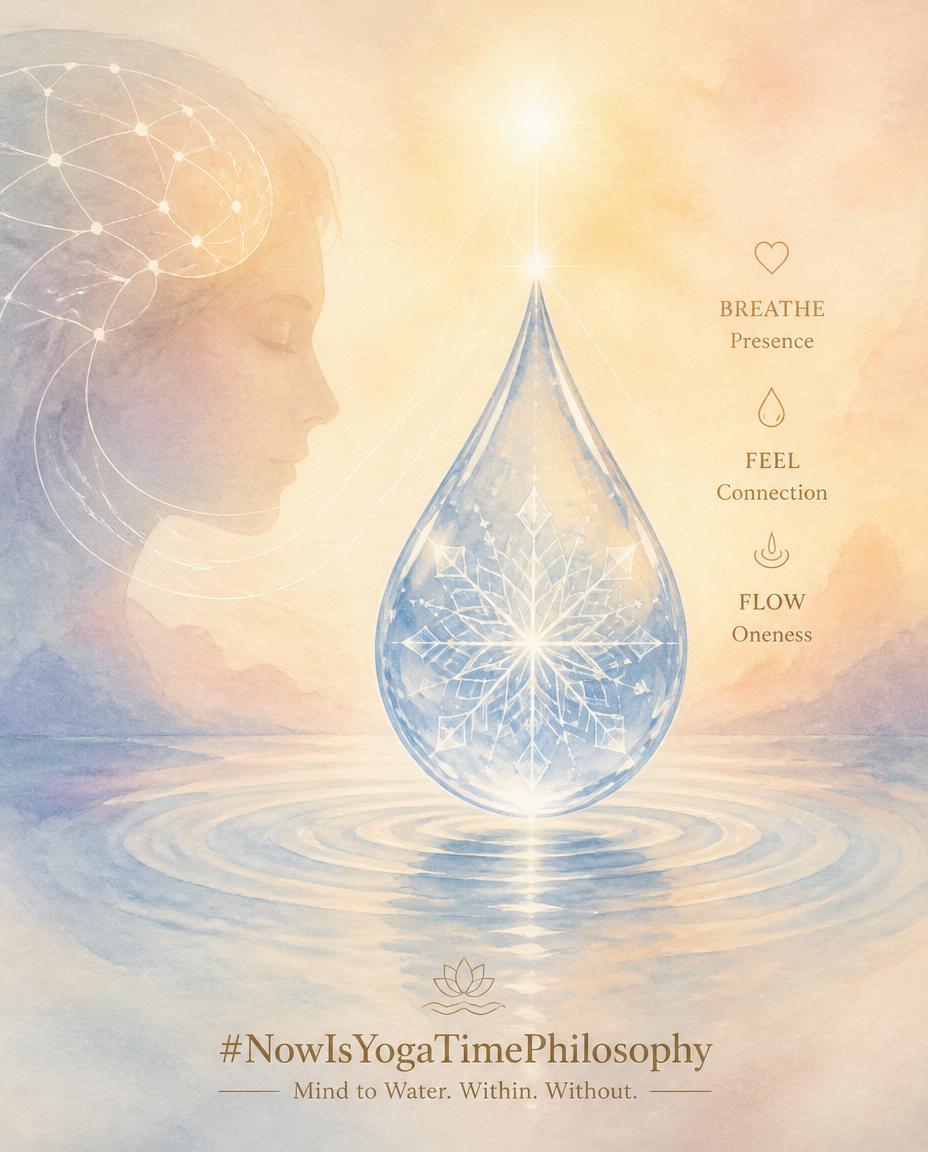
The same water.
Different intention.
Different result.
Now — your body is approximately 60% water.
What are your thoughts doing to you?
Every moment. Every day.
The quality of your inner language, your inner focus, your inner dialogue — is literally shaping the physical structure of your being.
This is not poetry.
This is biology meeting consciousness.
And yoga — at its deepest level — is the practice of learning to choose what we pour into ourselves.
James Allen: The Garden of The Mind
In 1903, a British philosopher named James Allen wrote a small book.
Almost nobody noticed it when it was published.
Today it's considered one of the most important books ever written on the human mind.
It's called "As a Man Thinketh."
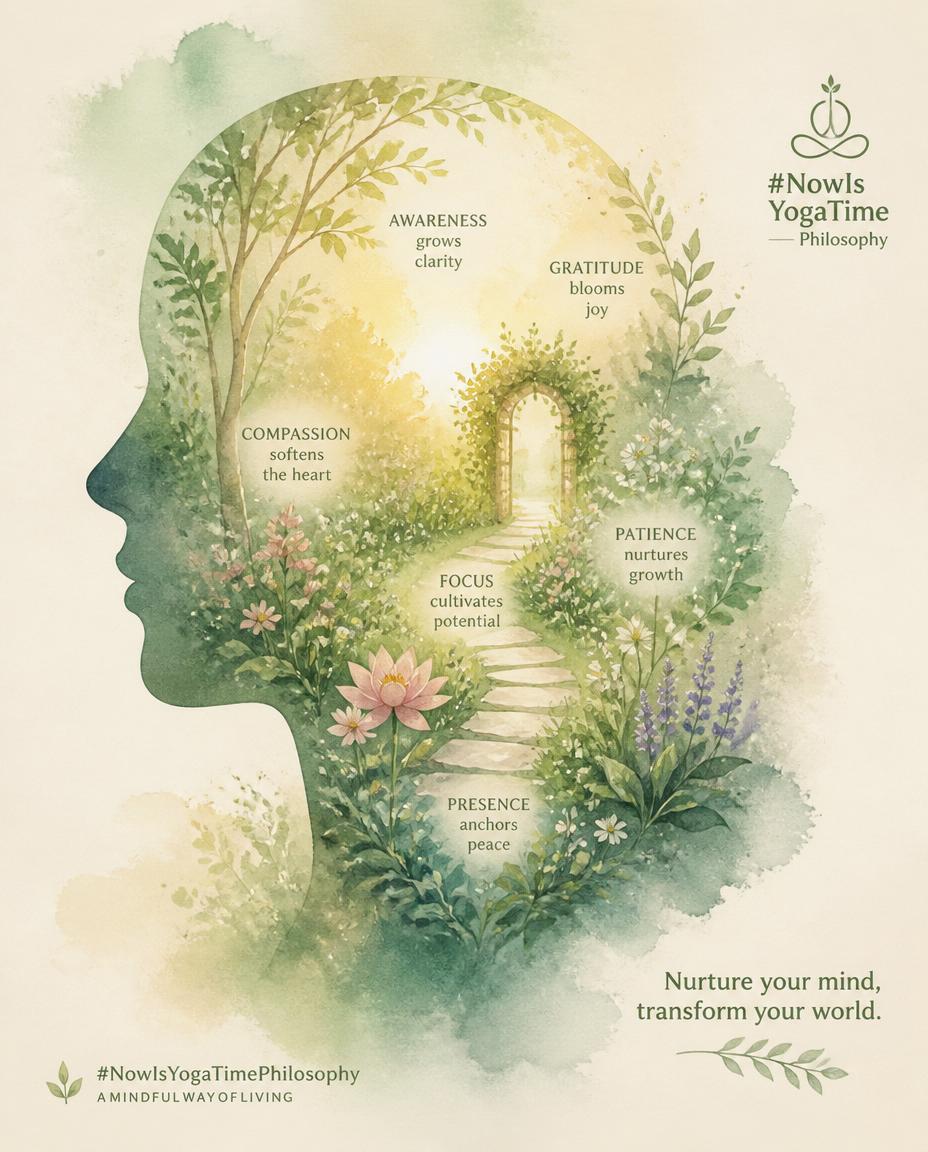
Allen described the mind as a garden.
If you tend a garden with care — choosing what seeds to plant, removing what doesn't serve, watering what you want to grow — it becomes a place of extraordinary beauty and abundance.
If you neglect it — the weeds come. Not because the soil is bad. Because that's what happens to untended earth. Weeds are simply what grows without intention.
Your mind, Allen said, is exactly the same.
Every thought you plant is a seed.
Thoughts of fear, limitation, resentment, self-doubt — these are weeds.
They don't need to be cultivated. They grow on their own, in the absence of attention.
But thoughts of love, possibility, gratitude, purpose — these are flowers.
They need to be chosen. Planted deliberately. Watered daily.
Yoga is the practice of becoming a conscious gardener of your own mind.
Not by forcing positivity. Not by pretending.
But by learning — through breath, through movement, through stillness — to choose where your attention grows.
Garbage in — garbage out.
Beauty in — beauty out.
Science Meets Ancient Wisdom: The Basketball Study
Let me show you that this isn't just philosophy.
In 1984, psychologist Alan Richardson divided basketball players into three groups.
The first group practiced free throws physically every day for 20 days.
The second group did nothing. No practice at all.
The third group only visualized making free throws.
They sat still, closed their eyes, and imagined the ball going in — perfectly, every time.
No gym. No ball. Pure focused attention.
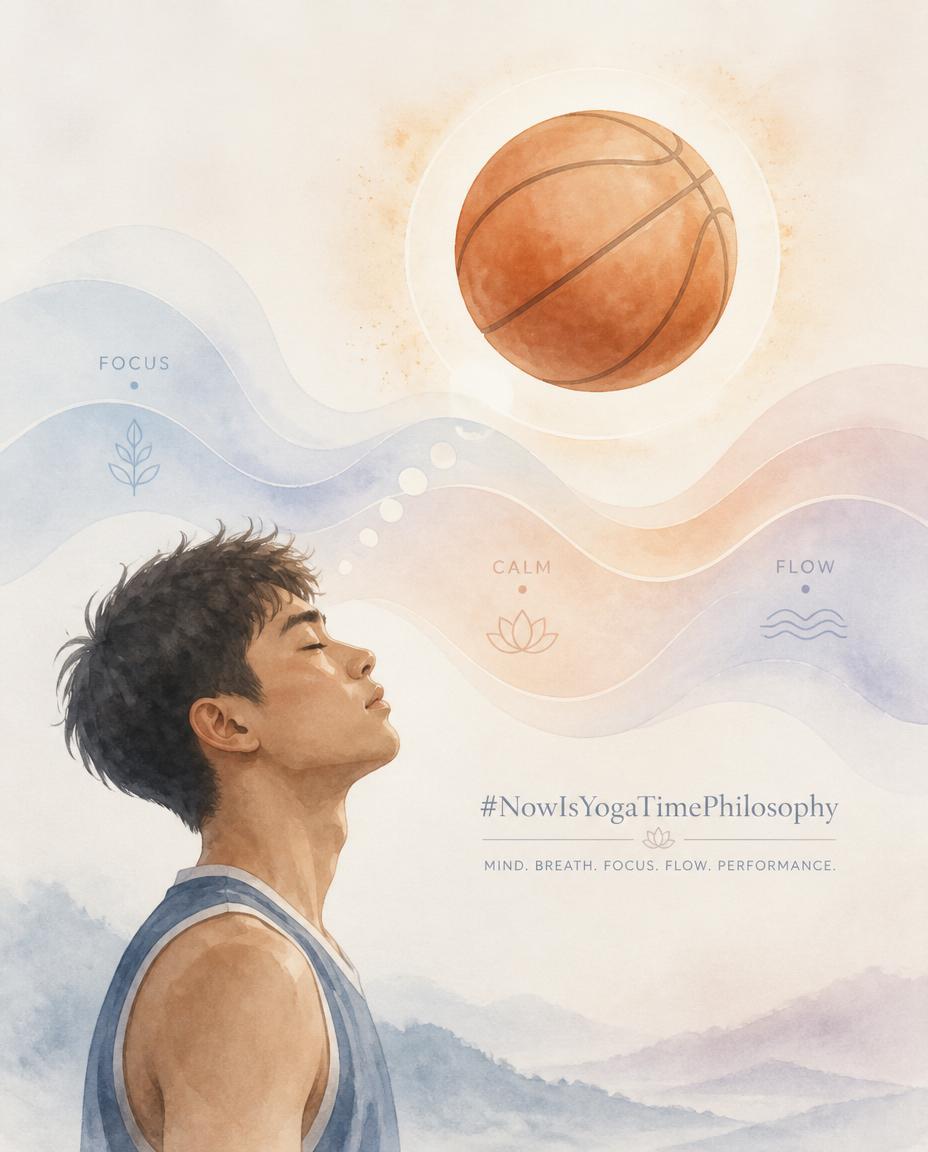
After 20 days: the physical practice group improved by 24%.
The no-practice group — zero.
And the visualization group?
Twenty-three percent!
Almost identical results — without touching a ball.
Your nervous system, your brain, your body — they cannot fully distinguish between a vividly imagined experience and a lived one.
When your focus is total, when your attention is concentrated and intentional — the body responds as if it's real.
This is Dharana. Concentrated focus.
One of the eight limbs of yoga described by Patanjali in the Yoga Sutras.
The ancient yogis weren't doing mental exercises for spiritual reasons only.
They were working with a technology of mind that modern science is only now beginning to validate.
Neuroplasticity. The Rewiring of the Brain
There's a word I want you to remember: neuroplasticity.
For most of human history, scientists believed the adult brain was fixed.
Wired the way it was wired. You couldn't change it — only decline.
That turned out to be completely, fundamentally wrong.
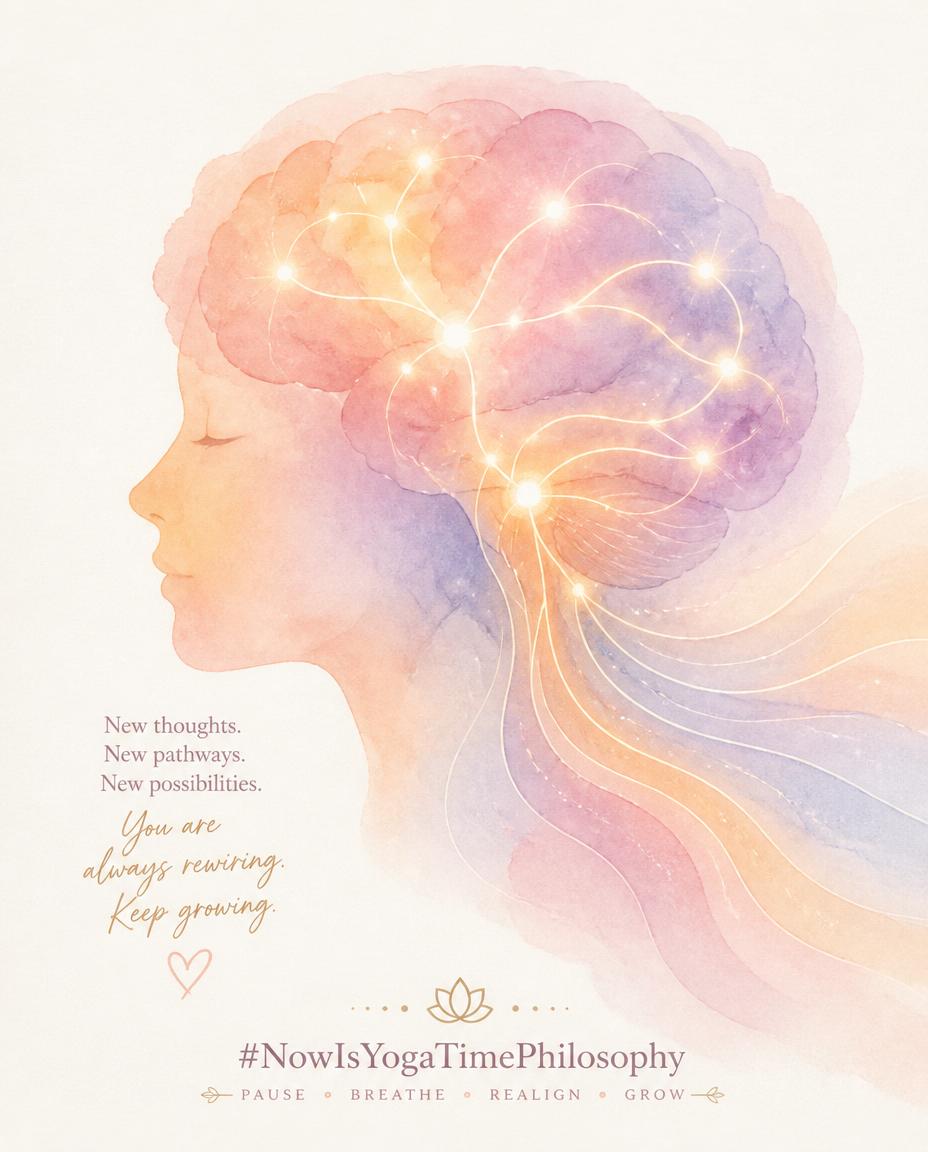
Your brain is constantly reshaping itself based on where you direct your attention.
The pathways you use grow stronger. The ones you neglect, fade.
Every time you return your focus to the breath during meditation — you are physically strengthening a neural pathway.
You are building, literally, a calmer brain. A more focused brain. A more present brain.
Where attention goes — energy flows.
And where energy flows consistently — structure follows.
This is why a daily yoga practice changes people.
Not because the postures are magic.
But because every session is a training in intentional attention.
Returning. Again and again. To this breath. This moment. This body.
You are not just stretching muscles.
You are rewiring your mind.
Where Attention Goes Energy Flows
Let's talk about what this means for your life.
Where you place your attention determines everything.
It determines your goals — because you can only move toward what you can clearly see in your mind.
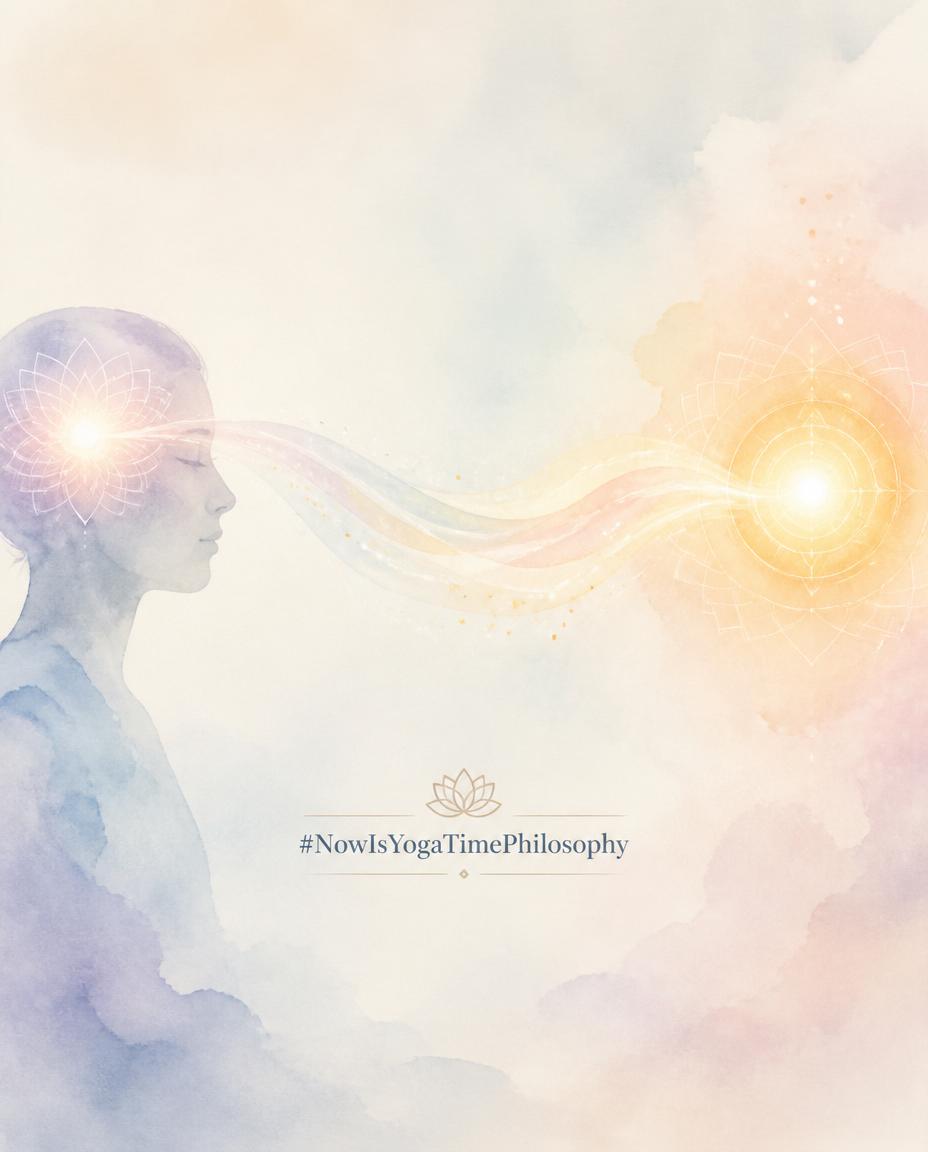
It determines your diet — because when you become conscious, you start asking: what am I feeding this body?
What am I pouring into these 37 trillion living cells?
It determines your relationships — because you attract the energy you embody.
It determines how you spend your time.
Your mornings. Your evenings. What you read. What you watch. What you allow into your mind.
Wayne Dyer said it beautifully:
"When you change the way you look at things — the things you look at change."
This isn't metaphor. This is how perception works.
The moment you shift your focus from what's broken to what's possible — you literally begin to see different things.
Different opportunities. Different people. Different paths.
And yoga is the gymnasium where you train this shift.
Every class. Every practice. Every breath.
The mat is where you practice seeing differently.
The Depth of Yoga
I want to say something that might surprise you.
Yoga is not about flexibility.
Yoga is not about the perfect downward dog.
It is not about touching your toes, or standing on your head, or posting beautiful photos on Instagram.
The word yoga comes from Sanskrit — from the root yuj.
It means union. Connection. The joining of the individual self with the universal self.
And here is something even more fundamental:
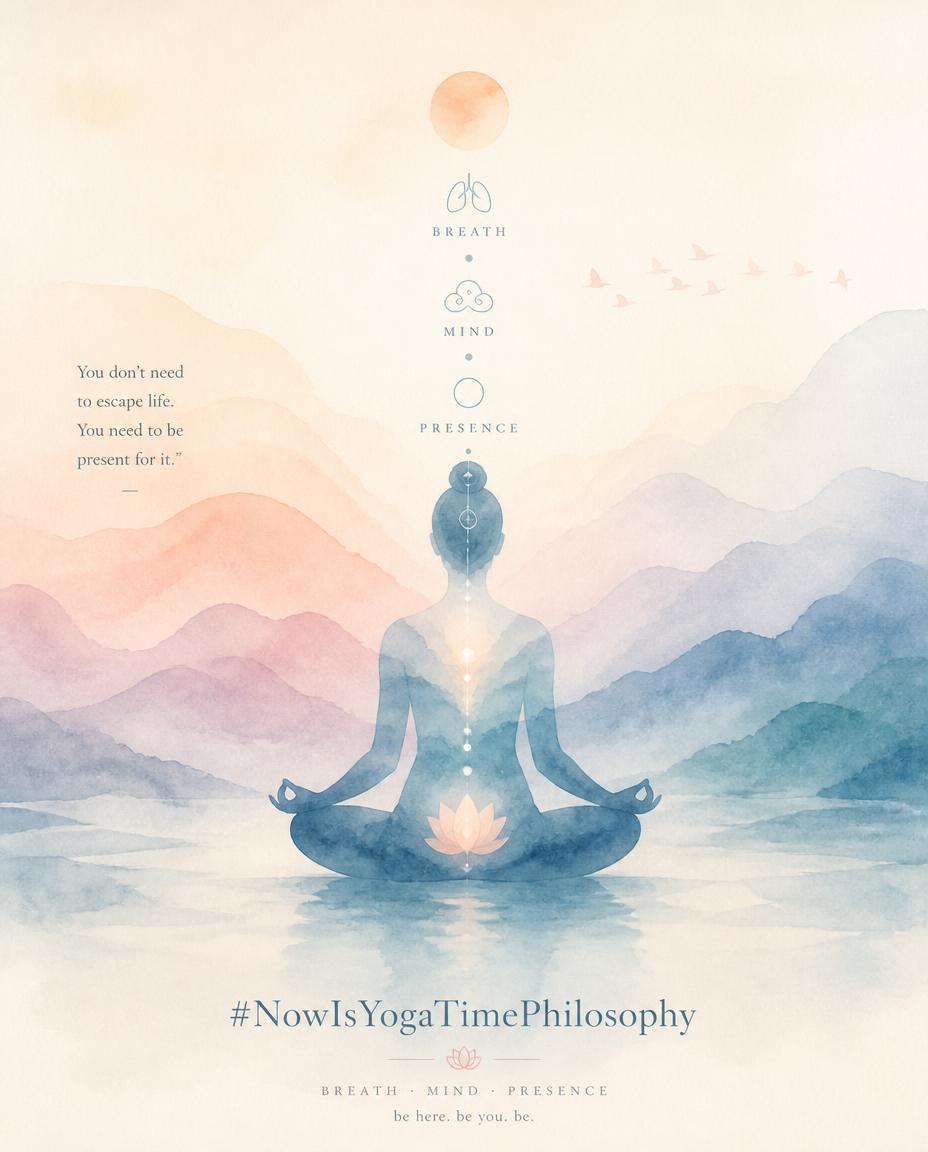
Yoga only exists in the Now.
Not in the memory of yesterday's practice.
Not in the anticipation of tomorrow's class.
Only here. Only this breath. Only this moment of pure, undivided presence.
Patanjali defined yoga in four words:
"Yogas chitta vritti nirodha."
Yoga is the cessation of the fluctuations of the mind.
The mind that is always racing — to the past, to the future, to judgment, to comparison, to worry — that mind cannot experience yoga.
But the mind that is here — fully, completely, without reservation — that mind is already in union.
That is yoga. And it's available to you right now, in this moment, wherever you are.
Om, Mantras & Consciousness Ascension
The ancient masters discovered something extraordinary about sound.
Not just music. Not just words.
But specific vibrations — crafted over thousands of years to resonate with the deepest layers of consciousness.
Om
This single syllable — when chanted with full attention — is said to contain the sound of the entire universe.
The vibration of creation itself.
When you chant Om, or when you sit in stillness and allow it to resonate inside you, something shifts.
The mind slows. The nervous system settles.
The gap between thoughts — that space of pure presence — begins to widen.
This is not mysticism.
Neurological studies on mantra repetition show measurable changes in brain wave activity — a shift from beta waves (ordinary thinking mind) toward alpha and theta states (deep relaxation, creativity, presence).
And this is what the yogis called consciousness ascension.
Not floating off the earth. Not abandoning ordinary life.
But the gradual expansion of awareness — from the noise of the surface mind — to the stillness underneath.
Layer by layer. Practice by practice.
Until you arrive at what Patanjali called Samadhi.
The state of complete absorption.
Pure consciousness without object.
The mind so still, so focused, so present — that the boundary between self and universe dissolves.
This is the ultimate fruit of what you focus on.
Focus on noise — you get noise.
Focus on stillness — and eventually, you become stillness itself.
The Divine Spark. Your True Heritage
I want to share something with you that is at the foundation of everything I teach.
In the yogic tradition — and in the great wisdom traditions across the world — there is a teaching that goes like this: You are not a human being having a spiritual experience. You are a spiritual being having a human experience.
Within you — within every single person — there is what the Vedas call Atman.
The individual soul. A spark of the divine.
A fragment of something infinite, clothed in a human body for this brief, beautiful lifetime.
This is your true heritage.
Not your fears. Not your failures. Not your limitations.
Not what anyone has ever told you that you cannot do or be or have.
You carry within you the light of the divine.
And when you practice yoga — when you sit in stillness, when you breathe with intention, when you move with presence — you are not trying to achieve something outside yourself. You are remembering something inside yourself.
Trust that.
Trust the intelligence that beats your heart without your instruction.
That breathes you while you sleep. That holds the universe in its laws and its beauty.
Trust God.
Trust Life.
Trust the current that is always moving through you.
Yoga is not about earning your worth.
You already have it.
It's about removing everything that made you forget.
Your Body, a Universe of Living Beings
Let me ask you something.
How do you speak to your body?
Not out loud, necessarily. But in the quiet of your mind — what do you say?
Many people carry a constant background noise of judgment about their bodies.
Too heavy. Too weak. Too old.
Not flexible enough. Not strong enough. Not enough.
I want to offer you a different perspective.
Right now, in this moment, your body contains approximately 37 trillion living cells.
Each one is a complete, intelligent life — breathing, communicating, working in perfect coordination with the others.
An entire universe of living beings — all of them dedicated to your experience of being alive.
They need love.
Not performance. Not punishment. Not impossible standards.
They need the same thing every living being needs — to be seen, to be appreciated, to be cared for with kindness.
And this begins with what you feed them — not just the food on your plate, but the thoughts in your mind.
The words you speak about yourself. The energy you bring to your practice.
Garbage in — garbage out.
But love in — love out.
Presence in — transformation out.
Yoga begins the moment you decide to tend to this body — not as an object to be improved — but as a living temple deserving of reverence.
My Personal Story
I want to share something personal.
When I first came to yoga, I didn't fully understand what I was looking for.
I was restless. My mind was loud. I had goals — big ones — but something kept pulling me away from them.
Some invisible weight. What I eventually realized was this: I had been focusing on everything that was wrong.
Everything that was difficult. Everything I didn't have yet. And so I kept experiencing more difficulty, more distance from what I wanted.
Not because life was against me.
But because that's what I was training my attention to see.
The practice of yoga — slowly, over months and then years — began to teach me something different.
To notice where my focus was going. To return, again and again, to what mattered.
To breathe through the resistance instead of fighting it.
And things began to shift. Not overnight. The way water shapes stone — slowly, steadily, with patient persistence.
My relationship with my body changed.
My relationship with my goals changed.
The way I moved through uncertainty changed.
I'm still on this path. I'll always be on this path.
Now is Yoga Time — is how I share it with you.
And one day, the school I'm building — should exists because of exactly this principle.
What you focus on, you become.
I focused on the possibility of a life built around this practice.
And that life is unfolding, step by step, breath by breath.
The Journey & The Goal
Before I leave you with a question, I want to say something about goals and the path.
We live in a world obsessed with destinations. Results. Achievements. The finish line.
And goals matter — I believe in them deeply. Without direction, attention scatters.
But yoga teaches something that our culture often forgets: The journey is not the price you pay to reach the goal.
The journey IS the practice. Every day you show up on the mat — whether you feel inspired or exhausted, flexible or stiff, certain or lost — that showing up is not preparation for something else.
That is the thing.
And here's what I've noticed: the people who transform most deeply are not the ones most desperate for the outcome. They're the ones who fall in love with the process. With the daily breath. The daily return. The daily choice of where to place their attention.
Because when you make peace with the journey — when you stop treating the present moment as an obstacle between you and your life — something extraordinary happens.
You begin to arrive. Right here. Right now.
In the only place transformation has ever happened.
The Closing Question
So we've traveled together today through neuroscience and ancient wisdom.
Through the mathematics of the mind and the mysteries of consciousness.
Through the garden of your thoughts and the temple of your body.
Through the idea that what you give your attention to — consistently, daily, with intention — you become.
In your goals. In your body. In your relationships. In your relationship with the divine.
In the quality of your presence. In the depth of your stillness. In the breadth of your love.
And so I want to leave you with a question.
Not a question to answer quickly. A question to sit with.
To breathe with. To carry with you on and off the mat.
So what, in the end — is yoga for you, my dear yogi?
Is it a workout? A philosophy? A spiritual path? A way of healing? A way of becoming?
Is it the asanas? The breath? The stillness between the breaths?
Or is it simply — the practice of coming home?
Whatever your answer — I honor it.
And I invite you to keep asking.
Because the question itself is the practice.
If This Resonated With You
If this resonated with you — if something here touched something you already knew but needed to hear — I want to give you something.
I've just finished writing a guide — 49 pages — that goes even deeper into what we explored today.
It's called "Yama & Niyama: Foundations of Conscious Living" — a gentle introduction to the first two limbs of yoga according to Patanjali.
Inside, you'll find the ethical roots of the practice.
The philosophy of Karma.
And the difference between the goal of yoga — and the path toward it.
It's free. Because I believe this knowledge belongs to everyone who is ready for it.
If you have a friend on this path — or searching for it without knowing it — share this page with them.
It might be exactly what they need.
Until next time — breathe well. Move with presence. And remember:
Where your attention goes — your life follows.
Namaste. 🙏