Now is Yoga Time → 8 Limbs of Yoga → Yama → Asteya

Asteya — The Freedom of Non-Stealing
You already have enough. You already are enough.
Asteya is the practice of remembering this.

Introduction
We think of stealing as something obvious.
Taking what belongs to someone else. A wallet, a possession, something tangible and visible. And of course — this is stealing. But the yoga tradition sees far more clearly, and far more honestly, than that.
Asteya — the third of Patanjali's five Yamas — means non-stealing. And once you begin to look at it honestly, you start to see how many ways there are to take what isn't yours.
Taking more food than you need. Taking credit for someone else's idea. Taking time from people who didn't freely offer it. Taking from the future — consuming resources, accumulating debt, depleting what belongs to the next generation. Taking from yourself — denying your own needs, stealing rest, stealing joy, stealing the present moment by living perpetually in the past or the future.
Asteya is not a simple principle. It is a deep and searching inquiry into our relationship with wanting, with enough, and with the quiet anxiety that drives us to take more than we truly need.
And at its heart is one of the most liberating recognitions in the entire yoga tradition:
You already have enough. You already are enough.
This article is a quiet invitation to explore what Asteya actually means — and how to bring it into your practice, your body, and your daily life. This article is also part of a greater theme of Yoga Philosophy.
What Is Asteya?
Sanskrit: Asteya (अस्तेय) Translation: Non-stealing, non-covetousness, not taking what is not freely given Category: The third of the five Yamas — the outer ethical observances in Patanjali's eight-limbed path
The word Asteya comes from a (without) and steya (stealing). Its opposite — steya — refers not only to the act of theft but to the impulse behind it: the sense that what we have is not enough, and that what someone else has would fill the gap.
Patanjali offers a remarkable teaching about one who is fully established in Asteya: "Asteya pratishthayam sarva ratna upasthanam" — for one established in non-stealing, all jewels, all riches, present themselves. Not because such a person accumulates more, but because they have discovered that the sense of lack — the fundamental feeling of not-enough that drives all stealing — has dissolved.
When you stop trying to take, you discover you were never truly lacking.
This is the paradox at the heart of Asteya.

The Many Forms of Stealing
The obvious form is the least interesting. What Asteya invites us to examine are the subtler, more pervasive ways we take what isn't freely given.
Stealing time. Arriving late consistently. Taking more of someone's attention than they offered. Extending a conversation beyond what the other person has energy for. Time is perhaps the most precious thing another person can give us — and it can be taken as carelessly as anything else.
Stealing energy. Relationships where we consistently drain without replenishing. Conversations that leave others exhausted. The unconscious habit of making our needs the center of every exchange. This too is a form of taking.
Stealing credit. Presenting borrowed ideas as our own. Minimizing the contributions of others. Taking recognition for work that was shared or inspired by someone else. In a culture obsessed with originality and individual achievement, this form of Asteya is quietly pervasive.
Stealing presence. Being physically present but mentally elsewhere — in conversation with someone who deserves our full attention. The phone on the table. The half-listening. The nod while thinking of something else. We steal the quality of connection that was possible.
Stealing from the future. Consuming beyond our share. Accumulating more than we can use. Borrowing against tomorrow — financially, ecologically, energetically — without a genuine plan to return what was taken.
Stealing from ourselves. This is the one we most rarely examine. Stealing rest by filling every quiet moment with noise. Stealing joy by postponing it until conditions are perfect. Stealing the present moment by living perpetually in regret about the past or anxiety about the future.
Asteya, looked at honestly, is a practice for a lifetime.
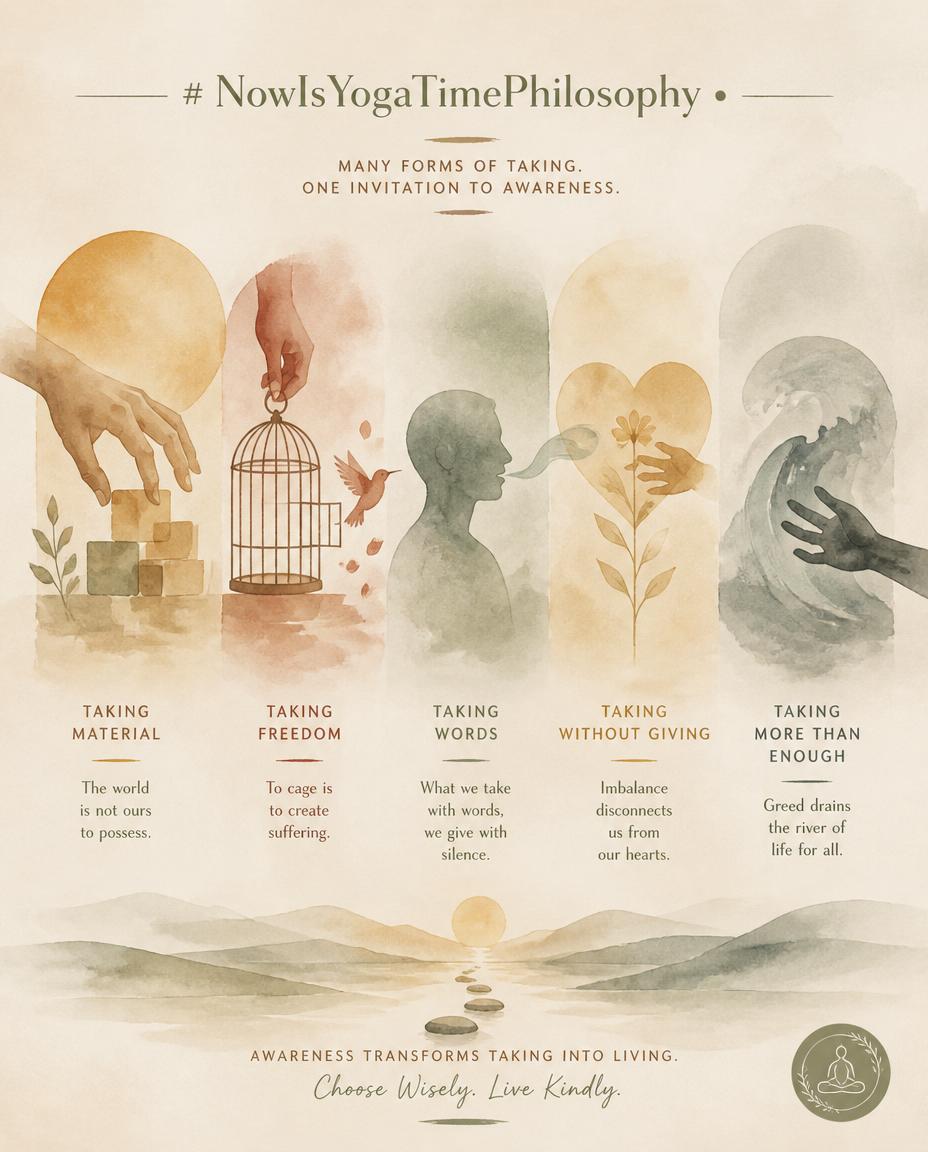
The Root of Stealing — The Feeling of Not Enough
Every act of taking — in all its forms — shares a common root.
The feeling that what we have is not enough. That we are not enough. That if we just had a little more — more money, more recognition, more security, more love, more time — then we would finally be okay.
This feeling is extraordinarily common. And it is almost never satisfied by the things we use to fill it.
The yoga tradition calls this avidya — ignorance. Not stupidity, but a fundamental misperception about the nature of the self and the nature of reality. The belief that we are separate, isolated, incomplete — and that completion must come from outside.
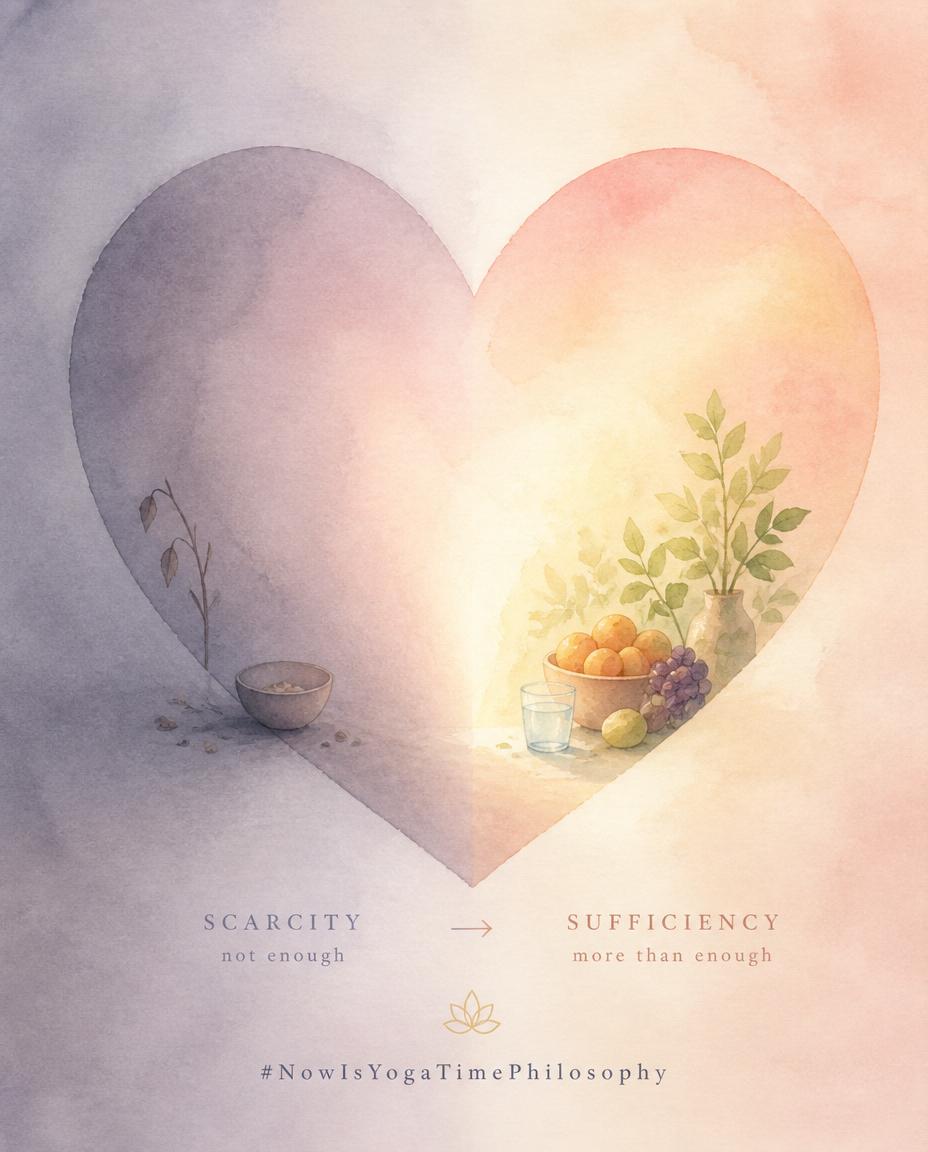
Asteya is the practice that directly challenges this belief.
Every time we choose not to take — not to grasp, not to accumulate beyond our need, not to claim what isn't truly ours — we are practicing the recognition that we are already whole. Already enough. Already, in some essential sense, complete.
This recognition does not arrive all at once. It deepens slowly, through practice, through repetition, through the accumulated experience of choosing sufficiency over grasping.
But it arrives. And when it does, something fundamental shifts.

Asteya in Daily Life
With possessions: Examine what you own. What do you use? What sits unused — not because it is special, but because you took it without real need? Asteya is not about deprivation. It is about conscious consumption. Taking what you genuinely use and need, and letting the rest circulate.
With money: Financial honesty is a form of Asteya. Paying fairly. Not exploiting loopholes that shift burden onto others. Tipping properly. Acknowledging the labor behind the things we consume.
With digital life: Downloading without paying. Using ad-blockers on sites whose content you value. Taking the fruit of someone's creative work without acknowledgment or compensation. These are the modern forms of Asteya that rarely get named.
With attention: Before taking someone's time, ask — have they freely offered it? In conversation, practice giving as much as you receive. Listen as fully as you speak.
With the natural world: Asteya extends to our relationship with the earth — taking only what can be replenished, consuming in ways that leave something for those who come after.
With yourself: Schedule rest before you are exhausted. Take breaks before you are depleted. Allow joy before you have "earned" it. These small acts of self-sufficiency are Asteya turned inward.
Asteya on the Mat
The yoga mat, as always, is a mirror.
Where do you steal on the mat?
Pushing into a pose before the body is ready — stealing the body's honest process of opening. Comparing yourself to the practitioner beside you and adjusting your practice to match theirs — stealing your own authentic experience. Holding onto a peak pose past the point where it serves — stealing from the next moment to remain in this one.
Asteya on the mat looks like presence. Like honesty. Like trusting the pace of your own unfolding — without rushing it, without forcing it, without taking from tomorrow to feel successful today.
It also looks like receiving. Allowing the practice to give you what it gives — without grabbing for more, without dismissing what is offered as insufficient.
Sometimes the most radical act of Asteya on the mat is simply resting in Child's Pose when you need to. Taking nothing from the practice except what is genuinely available to you in this moment.

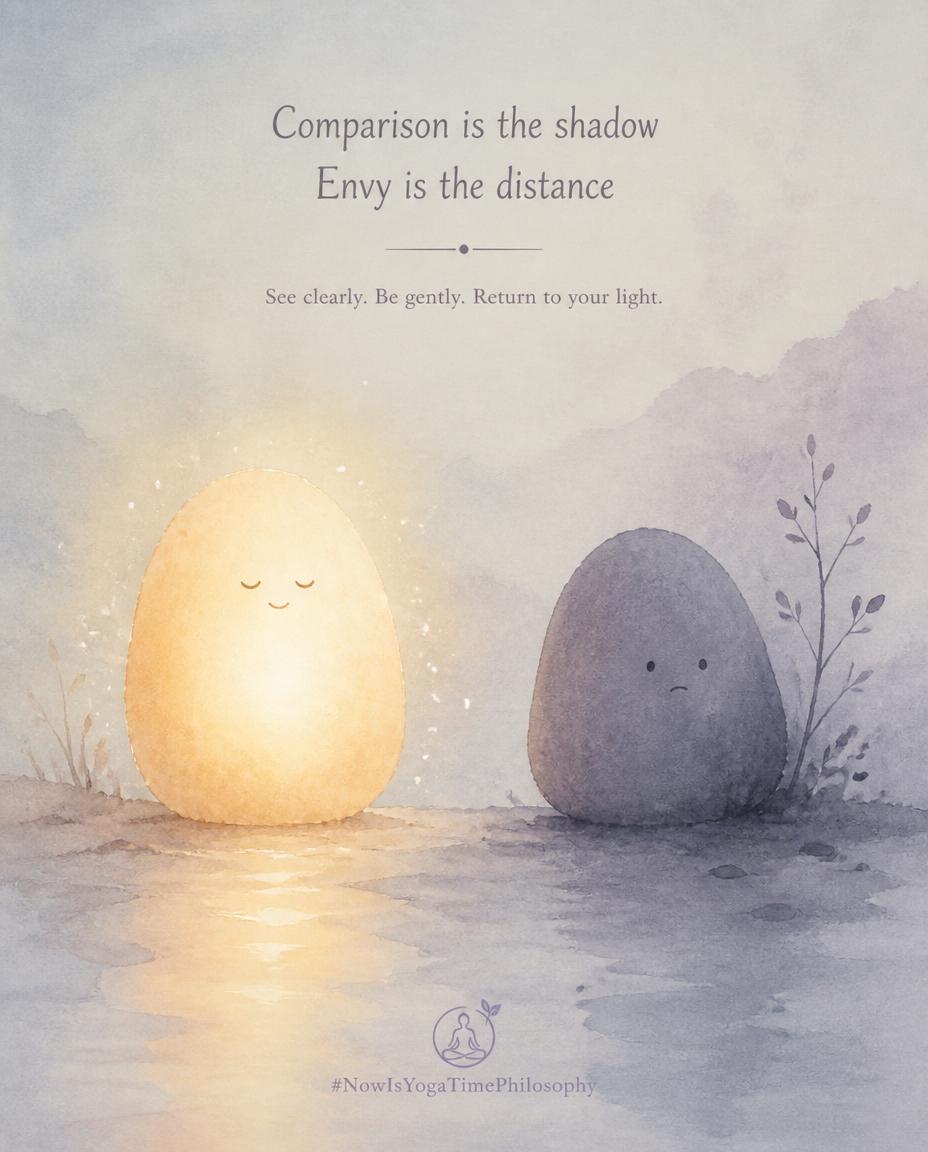
Asteya and Envy
Envy is the emotional signature of Asteya-in-reverse.
When we see someone with something we want — a quality, an achievement, a relationship, a body, a life — and feel the pull toward resentment or comparison, we are experiencing the impulse that gives rise to stealing.
The yogic response to envy is not to suppress it or judge it. It is to get curious about it.
What is this telling me about what I want? Is this something I am genuinely moving toward in my own life? Or am I using comparison as a substitute for my own honest growth?
Envy, examined with honesty, often reveals desire that hasn't been acknowledged. It points toward what we actually want to create — and invites us to pursue it directly, through our own honest effort, rather than through the unconscious impulse to diminish or take from others.
This is Asteya meeting Satya. The practice of seeing clearly, and choosing integrity.
Asteya and Gratitude
There is a natural companion to Asteya — one that grows in the same soil.
Gratitude.
When we truly practice non-stealing, we begin to see with fresh eyes what we already have. The relationships we take for granted. The health we don't notice until it falters. The small daily gifts — light through a window, a warm meal, a moment of quiet — that pass unseen when the mind is busy chasing more.
Gratitude is the natural flowering of Asteya. It is what happens when the grasping loosens, even briefly, and we are able to receive what is already here.
And what is already here, it turns out, is quite a lot.

Practices for Cultivating Asteya
The enough inquiry: Once a day, ask yourself — what do I already have that is enough? Not as an affirmation, but as a genuine question. Let the answer be honest. Let it surprise you.
Conscious consumption: Before purchasing, taking, or accumulating — pause. Ask: do I genuinely need this? Will I genuinely use it? Or am I filling a different kind of hunger?
Credit and acknowledgment: This week, actively name the sources of your ideas, the people who helped you, the teachers and thinkers who shaped your thinking. Practice generosity with acknowledgment.
Time audit: Look honestly at where you take time without offering it — in conversation, in relationships, in the pace you move through shared spaces. Choose one area to adjust.
Rest as practice: Schedule one genuine rest this week — not earned, not justified, simply taken because rest is a need and not a luxury. This is Asteya toward yourself.

Benefits of Practicing Asteya
- A quieter, less anxious relationship with wanting and having
- Deeper trust in relationships built on genuine exchange rather than taking
- Reduced clutter — physical, mental, and emotional — as accumulation slows
- Greater creativity, as energy previously spent on grasping becomes available for genuine creation
- A more grounded sense of self-worth — not dependent on external validation or accumulation
- Natural contentment — the beginning of Santosha, the fourth Niyama
- A lighter ecological footprint, as conscious consumption becomes a way of life
Asteya and the Other Yamas
Ahimsa (nonviolence): Stealing causes harm — to the one taken from, and subtly to the one who takes, who reinforces their own belief in lack. Asteya is Ahimsa applied to the realm of having and getting.
Satya (truth): Honest acknowledgment of what we have — and what is truly enough — is the foundation of Asteya. We cannot practice non-stealing without first telling the truth about our actual needs versus our conditioned wants.
Aparigraha (non-grasping): The natural continuation of Asteya. Where Asteya addresses the taking of what isn't ours, Aparigraha addresses the clinging to what once was. Together they form a complete practice of sufficiency and release.
A Moment of Asteya — Mini Practice
Sit quietly. Let the body settle.
Take a slow breath in — receiving what is freely given.
Exhale — releasing what you have been holding onto.
Place your hands open in your lap. Palms facing upward.
This is the gesture of Asteya.
Not grasping. Not clutching.
Open. Receptive. Trusting.
Breathe here for a moment and ask:
What am I taking that isn't truly mine? (Breathe.)
What am I holding onto that is ready to be released? (Breathe.)
What do I already have that I have not yet fully received? (Breathe.)
Let the hands remain open.
Let the breath remain steady.
Let enough be enough — just for this moment.
This is Asteya.
Conclusion
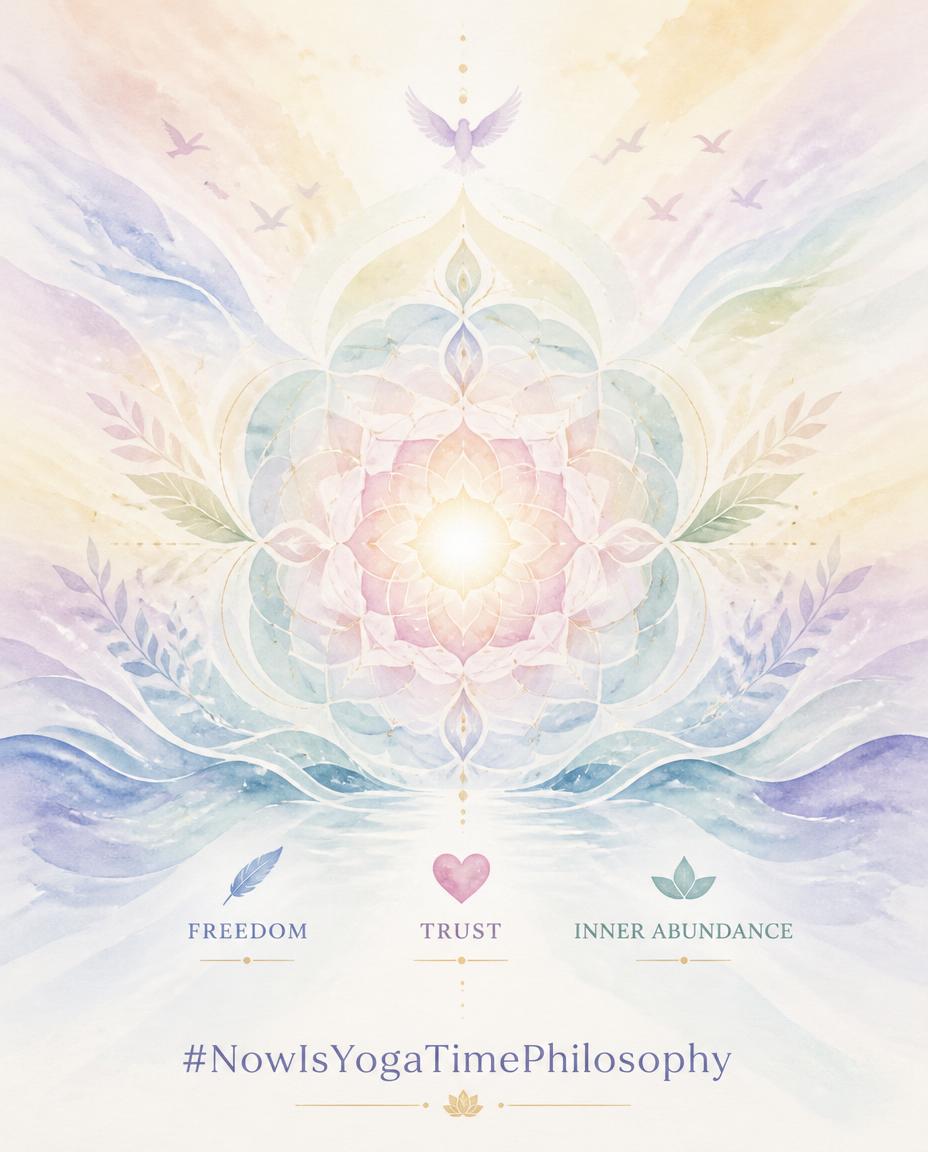
Asteya is, at its deepest level, a practice of trust.
Trust that there is enough. Trust that what you need will come — through honest effort, through genuine relationship, through the natural abundance of a life lived with integrity.
This trust does not arrive easily in a world that relentlessly communicates scarcity. That measures worth in accumulation. That whispers, constantly, that what you have is not quite enough.
But every time you choose not to take — not to grasp, not to hoard, not to consume beyond your need — you practice trusting that voice a little less.
And every time you practice that trust, the world becomes a little more generous.
Not because more arrives. But because you finally have eyes to see what was always already here.
You have enough. You are enough. Begin here.

Satya ← Asteya → Brahmacharya