Where Emotion Lives in the Body
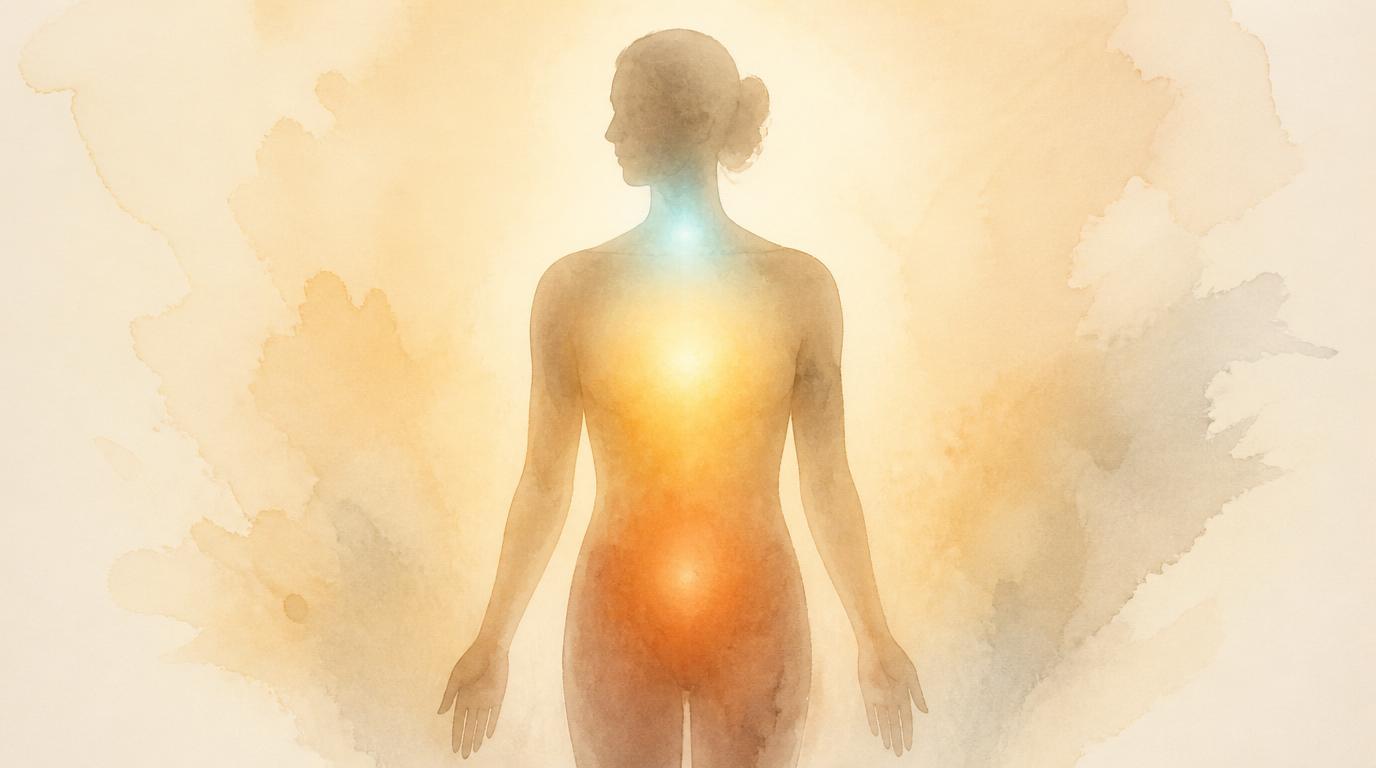
Emotion is not abstract. It is not a concept. It is not something that happens “in your head.”
Emotion is physical. It lives in the body — in tissues, breath, posture, temperature, and subtle shifts that happen before you even name what you feel.
This reflection is part of the larger theme explored in The Body as a Map: Somatic Awareness & Embodiment, where I write about the body as a living landscape of truth. When you learn where emotion lives in your body, you begin to understand yourself in a deeper, more grounded way.
Emotion is sensation. Emotion is movement. Emotion is the body speaking.
Emotion Arrives as Sensation First
Before you say “I’m anxious,” your body has already reacted. Before you say “I’m sad,” your chest has already softened. Before you say “I’m angry,” your jaw has already tightened.
Emotion begins as:
- heat
- pressure
- tightness
- expansion
- trembling
- heaviness
- lightness
- movement
The mind interprets. The body reports.
Somatic awareness is learning to read the report.
Where Different Emotions Tend to Live
Every body is unique — but there are patterns shared by most people.
Anxiety — chest & breath
- tight chest
- shallow breath
- fluttering belly
- lifted shoulders
Anxiety is upward, fast, airy.
Sadness — chest & throat
- heaviness in the chest
- softening in the belly
- lump in the throat
- slower breath
Sadness is downward, soft, heavy.
Anger — jaw, hands, belly
- heat in the face
- clenched jaw
- tight belly
- activated hands
Anger is fiery, sharp, mobilizing.
Fear — belly & spine
- cold belly
- contraction around the ribs
- frozen breath
- tension along the spine
Fear is contracting, protective.
Joy — chest & face
- warmth in the chest
- expansion
- lifted posture
- spontaneous breath
Joy is expansive, rising, open.
These are not rules — they are invitations to notice.
Why Emotion Lives in the Body
Emotion is a physiological event. It changes:
- breath
- heart rate
- muscle tone
- posture
- temperature
- micro‑movements
The body reacts before the mind understands.
This is why somatic awareness is so powerful — it lets you feel the emotion before the story forms around it.
This connects beautifully with the somatic listening I explore in Listening to the Body: The First Layer of Somatic Awareness.
A Practice: Mapping Emotion in Real Time
Here is a gentle practice you can use anytime emotion rises.
1. Pause for one breath.
Let the body settle enough to feel.
2. Ask: “Where do I feel this?”
Not “why.” Not “what does it mean.” Just “where.”
3. Name the sensation.
“My chest feels tight.” “My belly feels warm.” “My throat feels narrow.”
4. Stay with it for one soft exhale.
Not to fix it — to witness it.
5. Let the sensation shift naturally.
Emotion moves when it is felt.
This practice pairs beautifully with the somatic “yes/no” signals from The Body’s ‘Yes’ and ‘No’.
Emotion Moves When You Feel It
Emotion becomes stuck when:
- you avoid it
- you analyze it
- you suppress it
- you override it
Emotion moves when:
- you feel it
- you breathe with it
- you give it space
- you stay present
The body does not need you to understand the emotion. It needs you to feel it.
Feeling is what completes the emotional cycle.
Emotion in Daily Life
You can map emotion in the body:
- during a conversation
- while reading a message
- before making a decision
- when you feel overwhelmed
- when you feel grateful
- when you feel nothing at all
Emotion is always present — sometimes loud, sometimes quiet.
The body is always speaking.
A Soft Reminder
Emotion is not a problem. Emotion is movement.
Emotion is not chaos. Emotion is communication.
Emotion is not something to control. It is something to feel.
Your body knows where emotion lives. Your job is to listen.
If you want to explore the foundations of conscious living more deeply, you can download my free ebook Yama & Niyama. It’s a soft, practical introduction to presence, simplicity, and inner alignment.