Now is Yoga Time → 8 Limbs of Yoga → Yama → Ahimsa
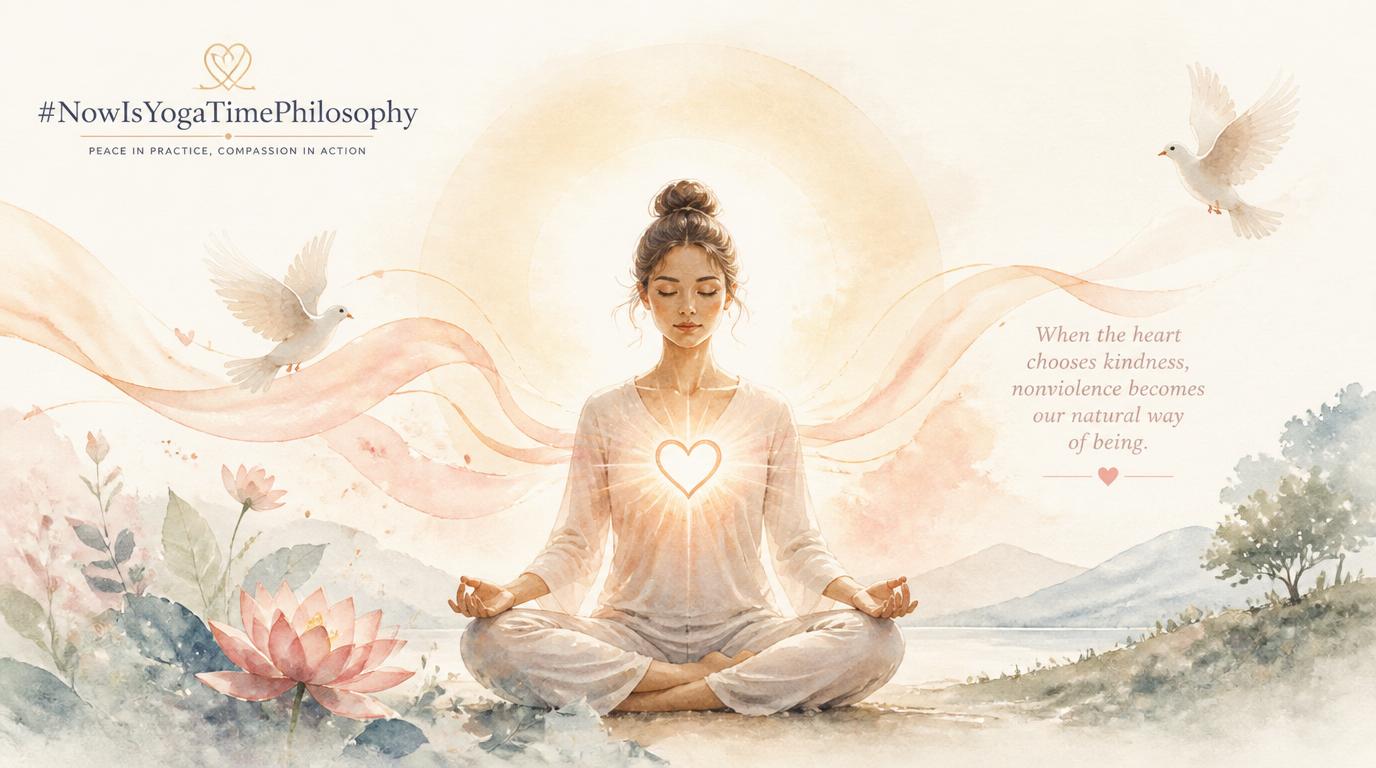
Ahimsa — The Practice of Nonviolence That Begins Within
The first and most fundamental principle of yoga — a path back to gentleness with yourself and the world.

Introduction
There is a violence we rarely speak about.
Not the kind that makes the news. Something quieter. The voice inside that says you are not enough, not flexible enough, not consistent enough, not far enough along on the path. The way we push the body past its limits, hold the breath too tight, measure ourselves against others on the mat.
Ahimsa — nonviolence — is the first of Patanjali's Yamas, the ethical foundations of yoga. And it begins not with how we treat the world, but with how we treat ourselves.
To practice Ahimsa is to choose kindness as a way of moving through life. In thought. In word. In action. Toward others — and with equal seriousness, toward yourself.
This is not passivity. It is not weakness. It is one of the most demanding practices in yoga.
Because choosing gentleness, in a world that rewards hardness, takes courage.
This article is a quiet invitation to explore what Ahimsa actually means — and how to bring it into your practice, your body, and your daily life. This article is also part of a greater theme of Yoga Philosophy.
What is Ahimsa?
Sanskrit: Ahimsa (अहिंसा) Translation: Non-harm, nonviolence, non-injury Category: The first of the five Yamas — the outer ethical observances in Patanjali's eight-limbed path
Ahimsa comes from the Sanskrit root himsa, meaning harm or injury, preceded by the prefix a, meaning without. Literally: without harm.
In the yoga tradition, Ahimsa is considered the foundation upon which all other ethical principles rest. Without it, the other Yamas lose their ground.
It extends in three directions: toward others, toward all living beings, and — perhaps most importantly for the modern practitioner — toward oneself.
Ahimsa is not only about avoiding harm. It is the active cultivation of kindness, compassion, and care as a daily practice.
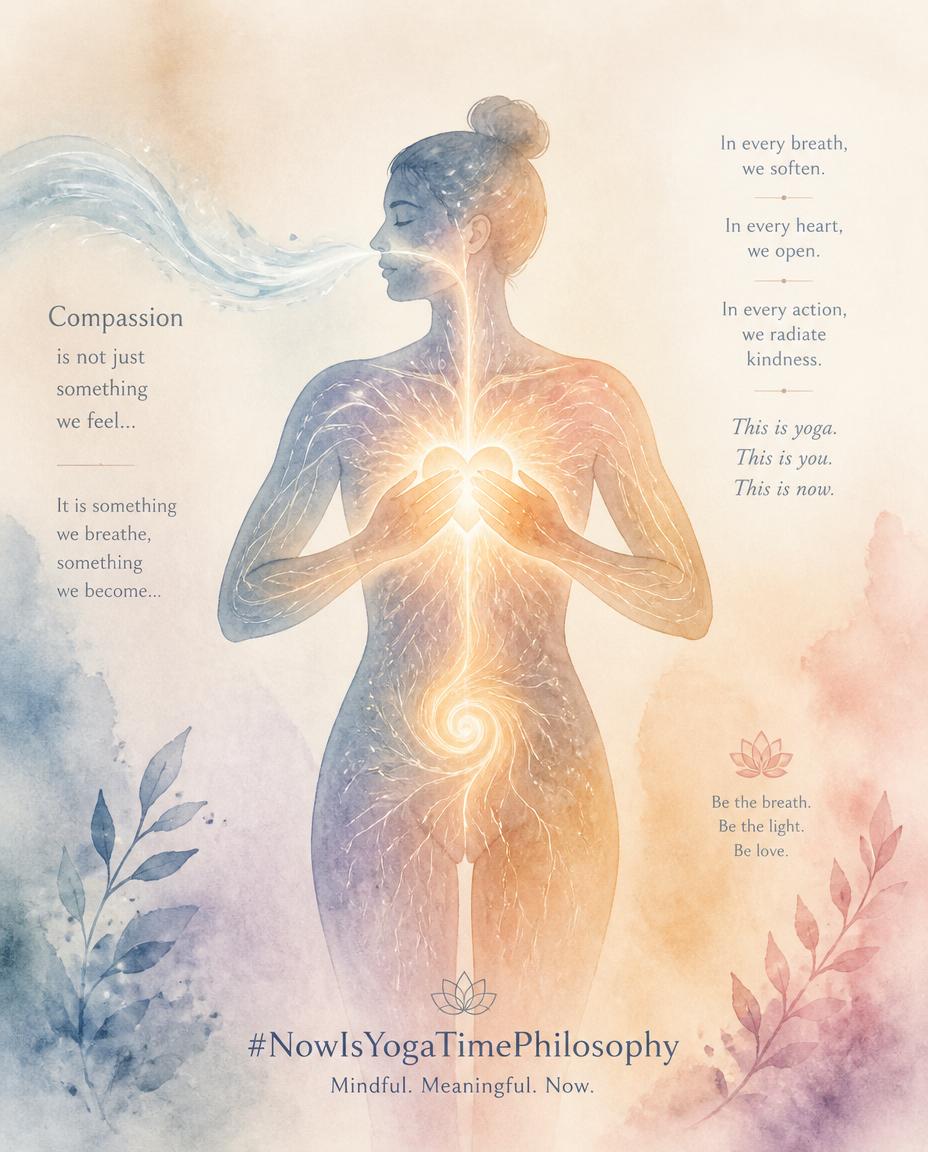
Ahimsa in the Body — Where Philosophy Becomes Physical
Yoga is where philosophy becomes lived. And Ahimsa is felt most directly in how we inhabit the practice.
Every time you push through sharp pain to hold a pose longer — that is himsa. Every time you compare yourself to the practitioner beside you — that is himsa. Every time you leave the mat feeling worse about your body than when you arrived — that is himsa.
Ahimsa asks something different.
It asks you to listen before you push. To breathe before you force. To ask the body: what do you need right now? — and to trust the answer, even when the answer is rest.
This is the physical practice of Ahimsa. Not the absence of effort, but effort guided by awareness and kindness.

Ahimsa in Daily Life
The practice does not end when you roll up the mat.
In thought: Notice the quality of your inner dialogue. Toward yourself — are your thoughts kind? Toward others — are you quick to judge, to criticise, to project? Thought is action at a subtle level. Ahimsa begins in the mind.
In speech: Words carry weight. What we say to others, how we say it, what remains unsaid — all of it is part of the practice. Speaking with honesty and gentleness is one of the great arts of conscious living.
In action: How do we treat the people around us — especially when it is difficult? How do we treat our body — with the food we eat, the sleep we give ourselves, the pace we keep? How do we move through the world — gently or carelessly?
Ahimsa is not a rule. It is a relationship. A daily practice of asking: is this kind? Is this necessary? Is this true?
This connects beautifully with Presence as a Daily Practice.
Ahimsa and the Nervous System
This is something the ancient yogis understood intuitively, and modern science is now confirming.
Chronic self-criticism, inner violence, and unrelenting self-judgment activate the sympathetic nervous system — the fight-or-flight response. The body lives in a state of low-grade stress, bracing against itself.
Self-compassion — which is Ahimsa in its most personal form — does the opposite. It activates the parasympathetic nervous system. The breath deepens. The muscles soften. The body returns to a state where healing, learning, and genuine transformation become possible.
You cannot grow from a place of war with yourself.
Ahimsa is not just a philosophy. It is the physiological foundation for a practice that actually works.
Common Misunderstandings
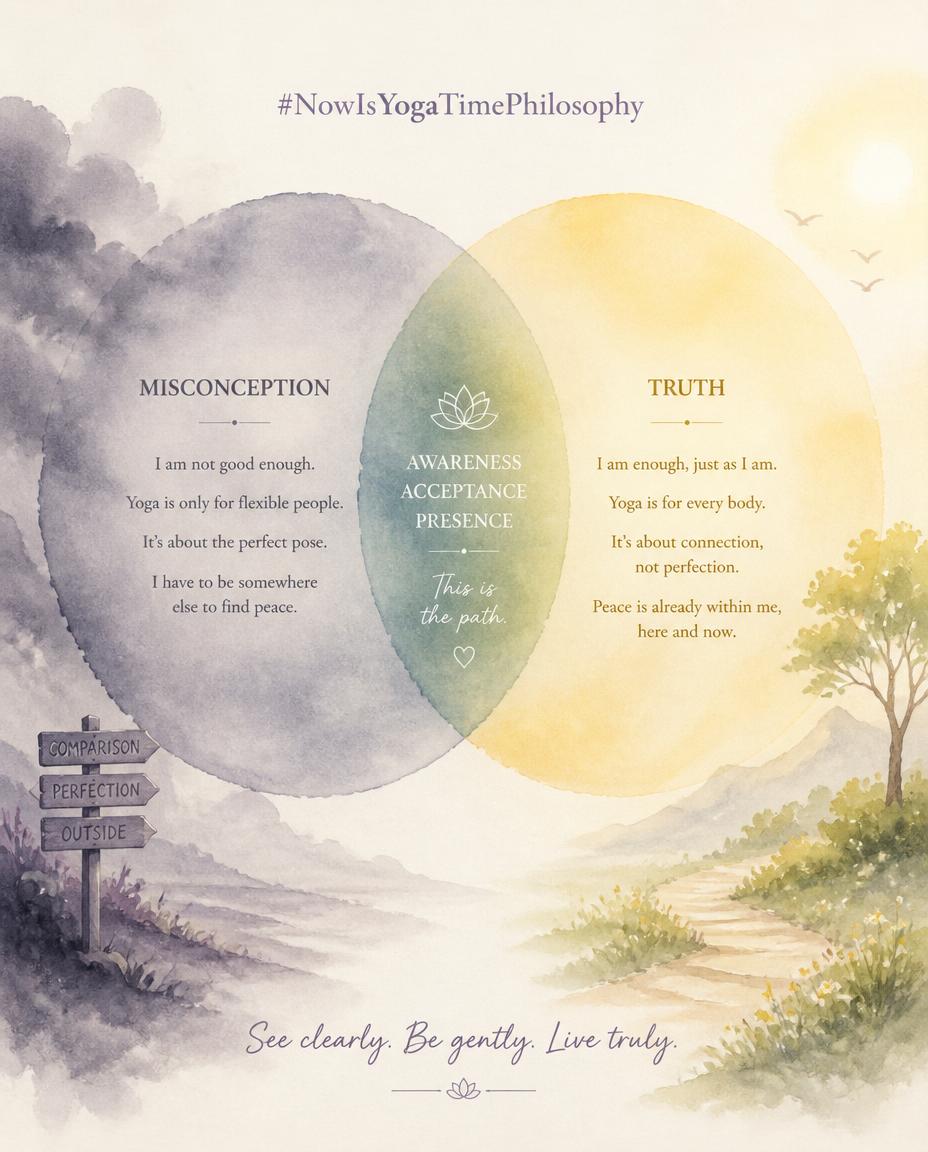
"Ahimsa means avoiding all discomfort." No. Yoga involves effort, challenge, and sometimes difficulty. Ahimsa is not about avoiding discomfort — it is about not causing harm. The line between productive challenge and injury or self-punishment requires honest, ongoing self-inquiry. That discernment is itself a practice.
"Ahimsa means being passive or never setting boundaries." No. Protecting yourself — your time, your energy, your wellbeing — is an act of Ahimsa. Saying no, with clarity and without anger, is often the most nonviolent thing you can do.
"Ahimsa is only about other people." This is perhaps the most common misunderstanding. The practice toward others is impossible to sustain if it is not first cultivated toward oneself.
Practices for Cultivating Ahimsa
On the mat:
- Before each practice, set an intention of kindness toward your body. Not performance — care.
- When you reach the edge of a pose, pause. Breathe. Ask: is this effort or harm?
- Replace the inner critic with a gentle observer. Notice — without judgment.
- Let the breath be your guide. When the breath becomes tight or held, the body is asking you to soften.
Off the mat:
- Notice your inner dialogue for one day — without trying to change it, just observe. What patterns do you find?
- Choose one relationship — with a person, with food, with your phone — and ask: how can I bring more gentleness here?
- Rest without guilt. Sleep without shame. Stillness is not laziness. It is Ahimsa in action.
Benefits of Practicing Ahimsa
- Calms the nervous system and reduces chronic stress held in the body
- Creates a safer, more honest relationship with your physical practice
- Reduces the risk of injury by developing body awareness and honest self-assessment
- Deepens compassion — for yourself first, then naturally for others
- Builds a more sustainable yoga practice over months and years
- Cultivates psychological safety — the inner environment where genuine change happens
- Opens the heart — physically and energetically — as armoring and self-protection relax
Ahimsa invites us to look at our bodies as The First Gate to Presence.
Ahimsa and the Other Yamas
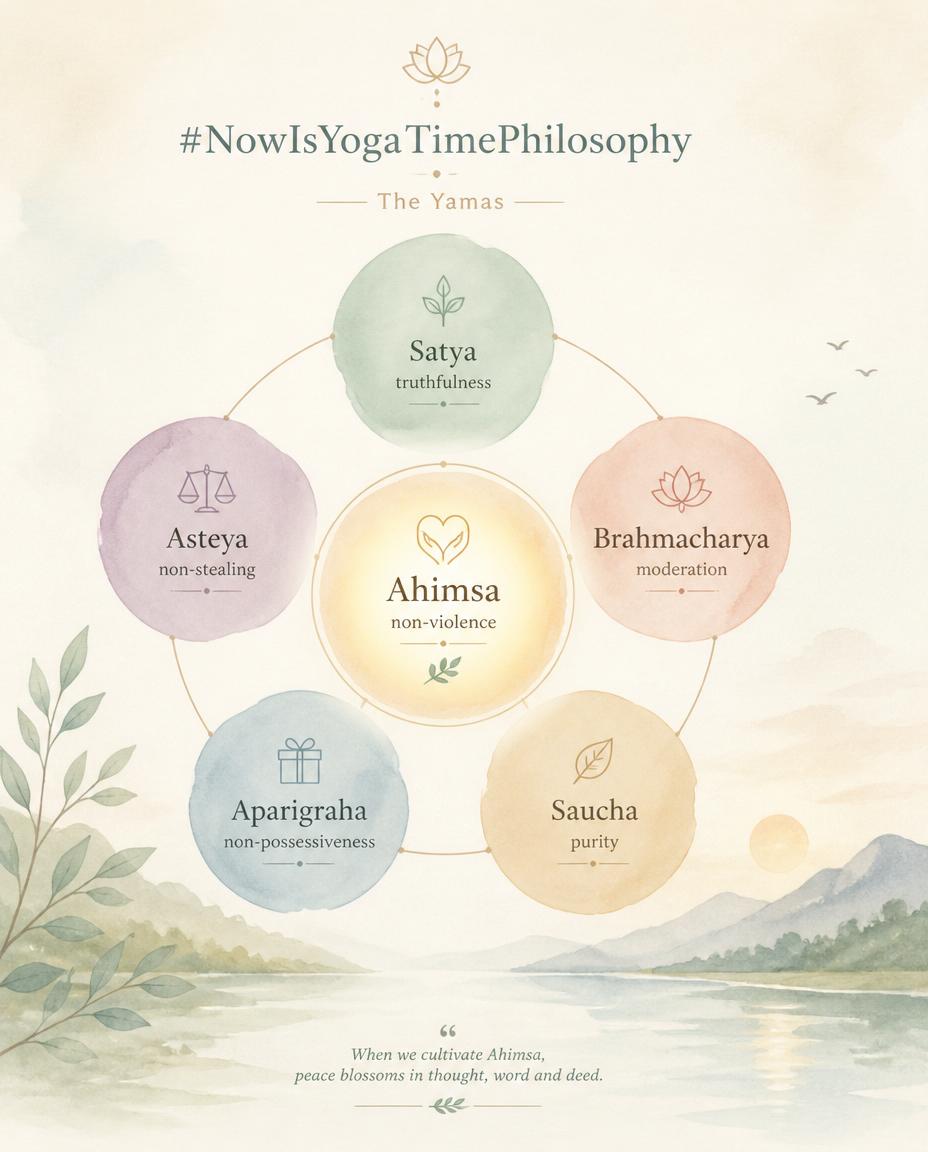
Ahimsa does not stand alone. It weaves through every other principle.
Satya (truth): Speaking the truth with kindness is the union of Ahimsa and Satya. Truth without compassion can cause harm. Ahimsa without honesty can become avoidance.
Aparigraha (non-grasping): Clinging to a particular shape, a past version of your body, or an idea of how your practice "should" look — this is a subtle form of violence against the present moment.
Santosha (contentment): To be content with where you are today — with this body, this breath, this practice — is one of the most beautiful expressions of Ahimsa.
A Moment of Ahimsa — Mini-Practice
Find a comfortable seat. Close your eyes, or soften your gaze.
Inhale — lengthen through the spine, creating space.
Exhale — let the shoulders soften.
Release anything you've been holding.
Inhale — bring awareness to the heart center.
Exhale — silently offer yourself kindness.
As you would a dear friend.
Inhale — feel the breath as nourishment.
Exhale — let the body be exactly as it is, right now, without needing it to be different.
Stay here for five breaths.
This is Ahimsa.
Teaching Cues
Opening a class or session with Ahimsa:
- "Before we begin, take a moment to set an intention of kindness. Toward the body. Toward the breath. Toward wherever you are today."
- "Today we practice not with the goal of achieving a shape — but with the quality of care."
- "Let the first breath be an act of Ahimsa. Inhale, and receive it fully."
During practice:
- "When you reach your edge — pause here. Breathe. Notice the difference between challenge and harm."
- "Soften the jaw. Soften the brow. Even in effort, we can find gentleness."
- "You don't need to go further. Where you are is enough."
- "Let the breath guide you — when it becomes tight or held, that is the body's signal to soften, not push."
- "This shape is not a test. It is a conversation between you and your body."
Closing:
- "As you rest, carry this quality of nonviolence with you. Back into your day. Into your words. Into the way you speak to yourself."
- "The practice ends here on the mat. The practice of Ahimsa continues everywhere."
Yamas & Niyamas Woven Through This Topic
Ahimsa (non-harm): This is the article's living heart. To study Ahimsa is to practice it — by reading slowly, by applying it honestly, by returning to it again when you forget.
Satya (truth): Ahimsa and Satya are inseparable companions. Practicing nonviolence requires honest self-observation — seeing clearly where we cause harm without self-blame, and where we have room to grow without self-punishment.
Santosha (contentment): The deepest act of Ahimsa toward yourself may be the practice of contentment — the gentle acceptance of this body, this practice, this moment, exactly as they are.
Conclusion
Ahimsa is not a destination.
It is a direction. A constant returning — to softness, to care, to the simple practice of doing less harm today than yesterday.
On the mat, it looks like breathing through difficulty rather than forcing through it. Off the mat, it looks like speaking to yourself the way you would speak to someone you love.
It is the recognition that how we treat ourselves is inseparable from how we treat the world.
And that the practice of yoga — in its deepest sense — begins with this: a single, quiet, radical act of kindness toward yourself.
Come back to the breath.
Come back to gentleness.
This is always the beginning.