Coming Back Into the Body: A Gentle Return to Yourself
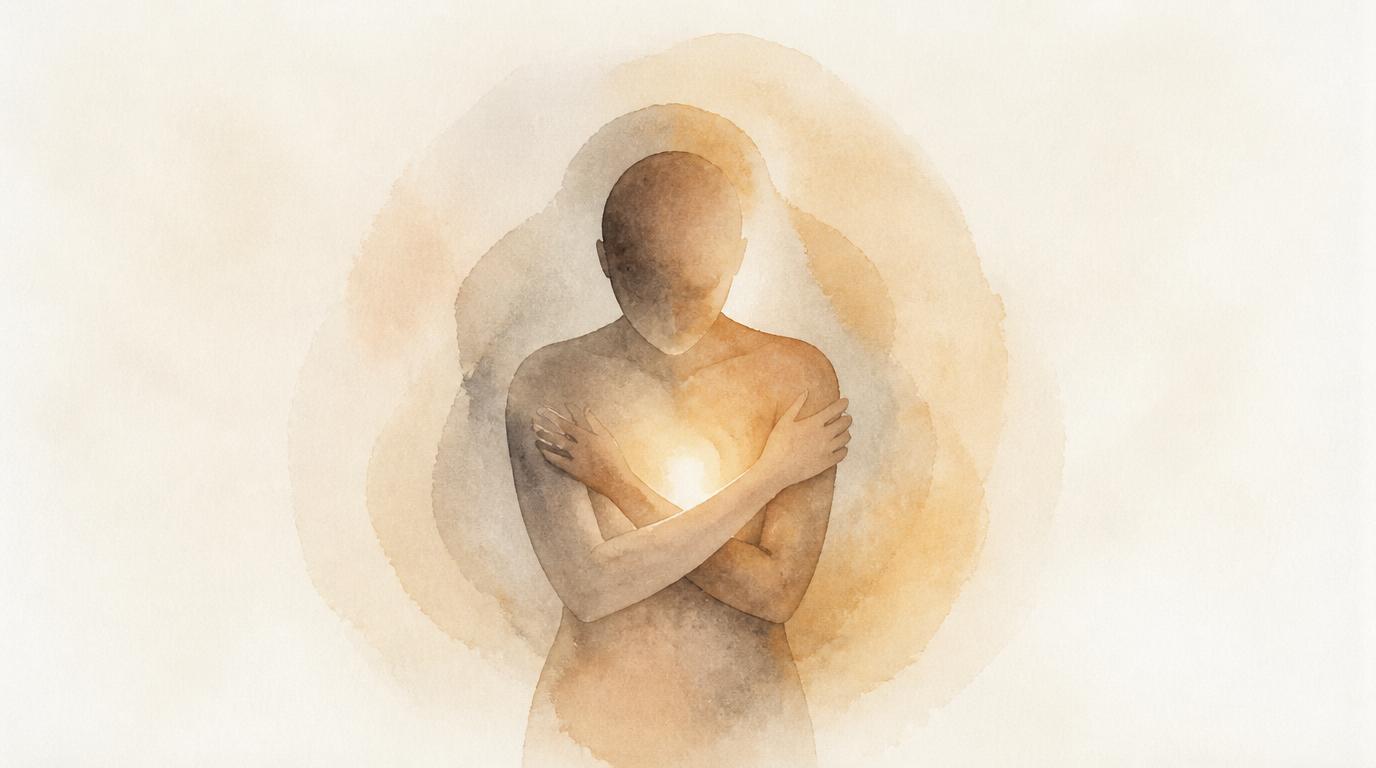
There are moments when you drift away from yourself. Not dramatically — quietly. You get lost in thought. You move on autopilot. You disconnect from sensation. You leave the body without noticing you’ve left.
This drifting is natural. It happens when life becomes fast, demanding, or emotionally full. The body waits patiently. It never punishes. It simply waits for your return.
This reflection is part of the larger theme explored in The Body as a Map: Somatic Awareness & Embodiment, where I write about the body as a home — a place you can return to at any moment, no matter how far you’ve wandered.
Coming back into the body is not a technique. It is a gentle return.
Disconnection Happens Quietly
You don’t always notice when you leave the body.
It happens when:
- you rush
- you multitask
- you overthink
- you override your needs
- you push through fatigue
- you avoid emotion
- you stay in your head
Disconnection is not failure. It is a protective response — the body’s way of giving you distance when something feels too much.
But distance becomes habit. And habit becomes disembodiment.
The return begins with noticing.
The Body Is Always Here, Even When You’re Not
Your body does not hold grudges. It does not demand perfection. It does not shame you for leaving.
It simply waits.
It waits with:
- breath
- warmth
- sensation
- rhythm
- truth
The body is the most patient companion you will ever have.
This connects beautifully with the somatic listening I explore in Listening to the Body: The First Layer of Somatic Awareness.
A Gentle Return Is Always Available
You don’t need a yoga mat. You don’t need silence. You don’t need a long practice.
You only need one moment of noticing.
A gentle return can happen:
- while standing in line
- while washing your hands
- while waiting for a message
- while sitting at your desk
- while breathing through tension
- while waking up
- while falling asleep
The return is not dramatic. It is subtle, quiet, human.
A Practice: The Gentle Return (30 Seconds)
Here is a simple practice you can use anytime you feel disconnected.
1. Pause for one breath.
Not to change anything — to arrive.
2. Feel your feet.
The ground beneath you. The weight of your body.
3. Feel your breath.
The rise. The fall. The pause.
4. Feel one sensation.
Warmth. Tightness. Softness. Movement. Stillness.
5. Stay for one soft exhale.
This is the return.
This practice pairs beautifully with the somatic mapping from Where Emotion Lives in the Body.
Why Returning to the Body Matters
When you return to the body, you return to:
- presence
- clarity
- truth
- emotional capacity
- groundedness
- inner rhythm
The body brings you back to what is real. Not the story. Not the fear. Not the projection.
Just the moment you are in.
Embodiment is not about staying in the body all the time. It is about returning — again and again — with gentleness.
The Return Softens Everything
When you come back into the body:
- the breath deepens
- the shoulders drop
- the jaw loosens
- the belly softens
- the mind slows
- the nervous system settles
The return is not a fix. It is a shift.
A shift from thinking to sensing. From effort to presence. From fragmentation to wholeness.
A Soft Reminder
You don’t need to force yourself into the body. You don’t need to stay embodied all day. You don’t need to be perfect.
You only need to return.
One breath. One sensation. One moment of noticing.
The body is home. And you can always come back.
If you want to explore the foundations of conscious living more deeply, you can download my free ebook Yama & Niyama. It’s a soft, practical introduction to presence, simplicity, and inner alignment.