Why the Mind Calms When You Slow Your Movement
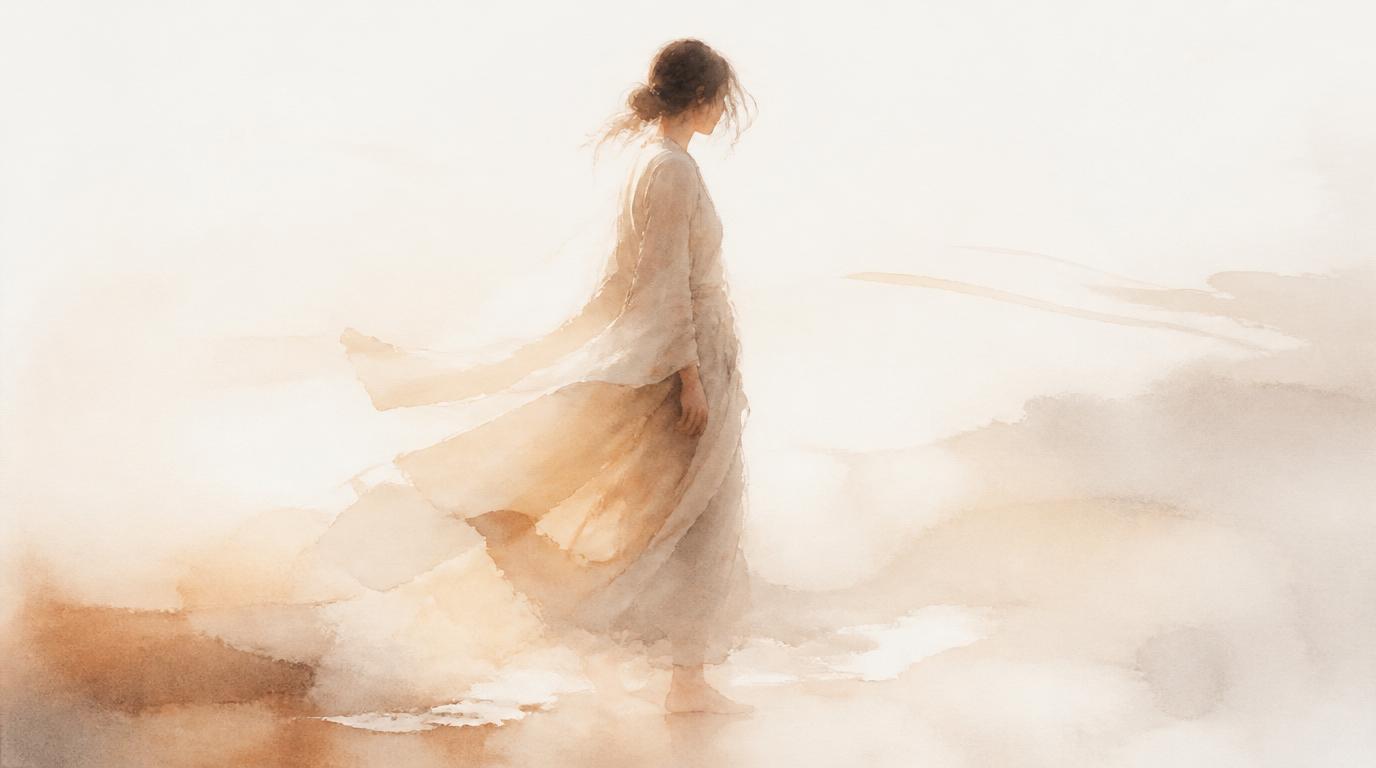
There is a quiet truth woven into the way the body moves: when you slow down, the mind follows.
This reflection is part of the larger theme explored in Presence as a Daily Practice, where I write about presence not as a technique, but as a way of meeting life with softness and awareness.
We often try to calm the mind by working directly with thoughts — analyzing them, challenging them, replacing them, or trying to silence them. But the mind is not always the easiest place to begin. It is fast, layered, and full of momentum.
The body, however, is simpler. It responds to rhythm. It responds to pace. It responds to softness.
And when the body slows, the mind receives a signal: “You are safe. You can soften too.”
The Nervous System Lives in the Body, Not the Mind
The reason slow movement calms the mind is not mystical — it is biological.
Your nervous system is constantly scanning for cues of safety or danger. This happens below thought, below language, below conscious awareness.
When your movements are fast, sharp, or rushed, the nervous system interprets this as urgency. It prepares you for action. It tightens the muscles. It speeds the breath. It narrows attention.
When your movements are slow, fluid, and intentional, the nervous system interprets this as safety. It softens the muscles. It deepens the breath. It widens attention. It quiets the mind.
Slow movement is not just physical. It is somatic communication.
You are telling your body: “It’s okay. You can rest.”
And the mind listens.
Slowness Interrupts Autopilot
Most of the time, we move without noticing. We walk quickly. We reach quickly. We type quickly. We transition quickly.
This speed is not wrong — but it is unconscious.
When you slow your movement, even slightly, you interrupt autopilot. You bring awareness back into the body. You return to the moment you are actually living.
Slowness is a doorway. It brings you from doing into being.
This connects beautifully with the idea of the body as the first gate to presence, which I explore in The Body as the First Gate to Presence.
A Practice: Slow One Thing
Here is a simple practice you can use anytime — especially when the mind feels scattered or tense.
1. Choose one movement.
Walking. Reaching for a cup. Opening a door. Standing up. Sitting down.
2. Slow it down by 20%.
Not dramatically. Just enough to feel it.
3. Notice the breath.
It will naturally deepen. You don’t need to control it.
4. Notice the body.
The weight. The texture. The shift. The sensation.
5. Let the mind follow.
It will soften on its own.
This is presence in motion. Simple. Human. Accessible.
Slowness Creates Space
When you slow your movement, you create space — not just in the body, but in the mind.
Space between thoughts. Space between reactions. Space between impulses. Space between breaths.
This space is where clarity lives. This space is where presence breathes. This space is where you return to yourself.
Slowness is not the opposite of productivity. Slowness is the opposite of unconsciousness.
When you move slowly, you move with intention. And intention is the foundation of mindful living.
The Mind Learns From the Body
The mind is not separate from the body. It is shaped by it.
When the body is tense, the mind becomes narrow. When the body is soft, the mind becomes spacious. When the body is rushed, the mind becomes chaotic. When the body is slow, the mind becomes calm.
This is why mindful movement practices — yoga, tai chi, slow walking, somatic flow — have such a profound effect on mental clarity.
They teach the mind through the body. They regulate the nervous system through rhythm. They restore presence through slowness.
If you want to explore this further, you may enjoy Morning Rituals That Open the Day, where I share simple ways to bring presence into your morning rhythm.
A Soft Reminder
You don’t need to slow your entire life. You don’t need to move like a monk. You don’t need to turn every action into a ritual.
You only need to slow one thing. One movement. One breath. One moment.
Presence grows from these small choices. Slowness is not a performance. It is a return.
A return to the body. A return to the breath. A return to yourself.
If you want to explore the foundations of conscious living more deeply, you can download my free ebook Yama & Niyama. It's a soft, practical introduction to presence, simplicity, and inner alignment.