The Soft Exhale: How One Breath Changes Your State
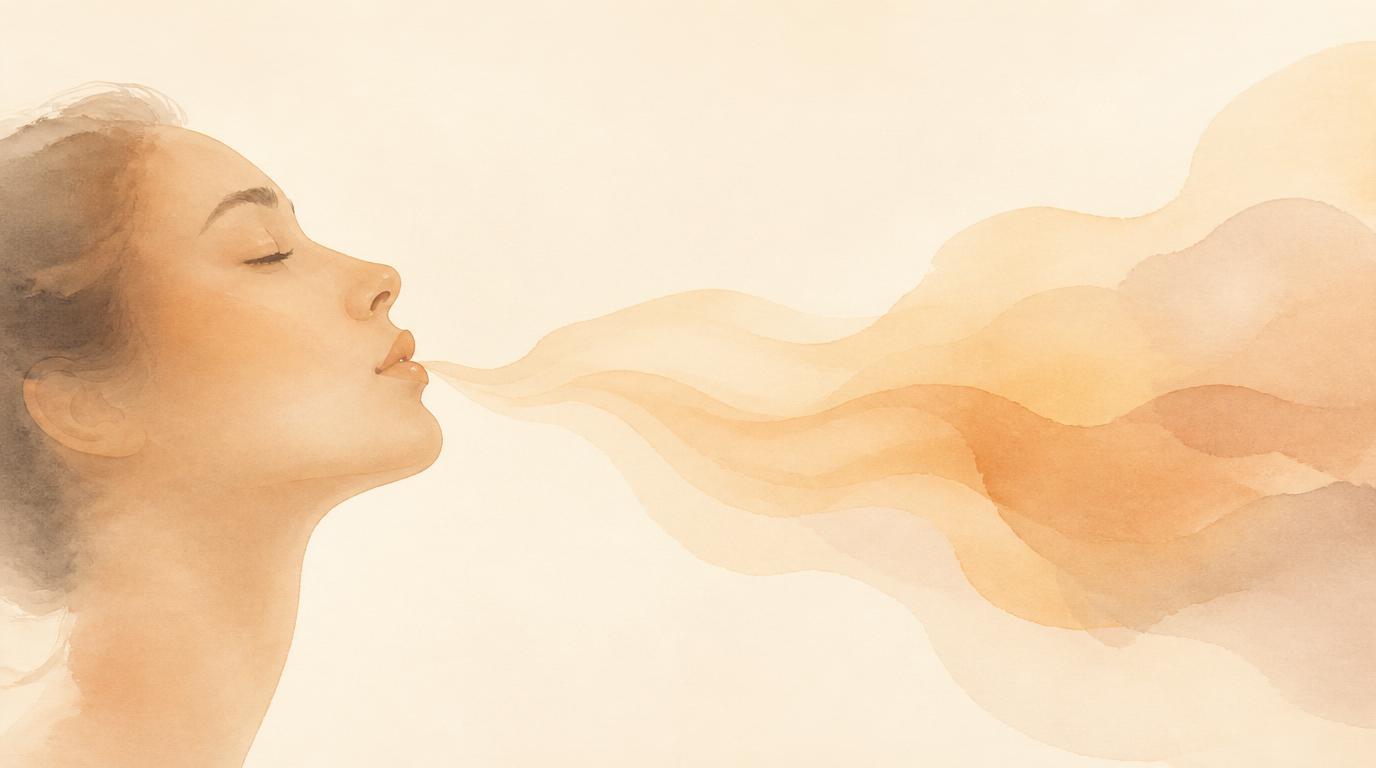
There is a moment — subtle, almost imperceptible — when the exhale softens. A moment when the breath leaves the body not as a push, but as a release. This moment is small, but it changes everything.
This reflection is part of the larger theme explored in The Breath as a Tool for Everyday Change, where I write about the breath not as a technique, but as a relationship — a quiet companion that shapes your inner world.
The soft exhale is one of the simplest and most powerful tools you have. It requires no effort. No training. No special posture. No perfect environment.
It is available in the middle of your day, in the middle of a conversation, in the middle of a difficult moment.
The soft exhale is a doorway — a way of telling your nervous system: “You can soften now.”
Why the Exhale Matters More Than the Inhale
Most people focus on the inhale. They try to “take a deep breath,” “breathe in more,” “fill the lungs.”
But the exhale is where the shift happens.
The exhale is the body’s natural release. It activates the parasympathetic nervous system — the part responsible for rest, digestion, clarity, and emotional regulation.
When the exhale lengthens, even slightly:
- the heart rate slows
- the muscles loosen
- the mind widens
- the body feels safe
The inhale energizes. The exhale restores.
This is why the soft exhale is so powerful — it is the body’s built‑in mechanism for returning to balance.
The Soft Exhale as a Signal of Safety
Your nervous system is always listening. Not to your thoughts — but to your breath.
A slow, gentle exhale communicates safety. A rushed, sharp exhale communicates urgency.
When you soften your exhale, you are not just breathing differently — you are speaking to your body in its own language.
This connects beautifully with the somatic awareness I explore in The Body as the First Gate to Presence. The body responds to softness. The breath is the messenger.
A Practice: The Soft Exhale (30 Seconds)
Here is a simple practice you can use anytime — especially when you feel tension rising.
1. Inhale naturally.
No need to deepen it. Just let the breath come.
2. Exhale softly through the nose.
Imagine the breath melting out of the body. No force. No control. Just release.
3. Make the exhale slightly longer than the inhale.
Not dramatically. Just enough to feel the shift.
4. Notice the body respond.
The shoulders drop. The jaw softens. The belly loosens. The mind quiets.
5. Repeat 3–5 times.
Let each exhale be softer than the last.
This practice pairs beautifully with the gentle slowness I explore in Why the Mind Calms When You Slow Your Movement.
The Soft Exhale in Daily Life
The beauty of the soft exhale is that it fits into the smallest spaces of your day.
You can use it:
- before answering a message
- during a difficult conversation
- while waiting in line
- before opening your laptop
- after receiving unexpected news
- when you feel overwhelmed
- when you feel grateful
The soft exhale is not a technique — it is a return.
A return to the body. A return to the breath. A return to yourself.
The Soft Exhale and Emotion
Emotions rise in the body as sensations — heat, pressure, tightness, movement. The soft exhale gives these sensations space.
You are not trying to calm the emotion. You are not trying to change it. You are not trying to understand it.
You are simply meeting it with breath.
The soft exhale says: “I am here. I am listening. I am not resisting.”
This is emotional presence — gentle, grounded, human.
A Soft Reminder
You don’t need to breathe perfectly. You don’t need to count. You don’t need to perform.
You only need to soften the exhale.
The soft exhale is not a technique to master. It is a relationship to cultivate.
A relationship with your breath. A relationship with your body. A relationship with the moment you are in.
One soft exhale can change your state. Many soft exhales can change your life.
If you want to explore the foundations of conscious living more deeply, you can download my free ebook Yama & Niyama. It’s a soft, practical introduction to presence, simplicity, and inner alignment.