Breath as Emotional First Aid
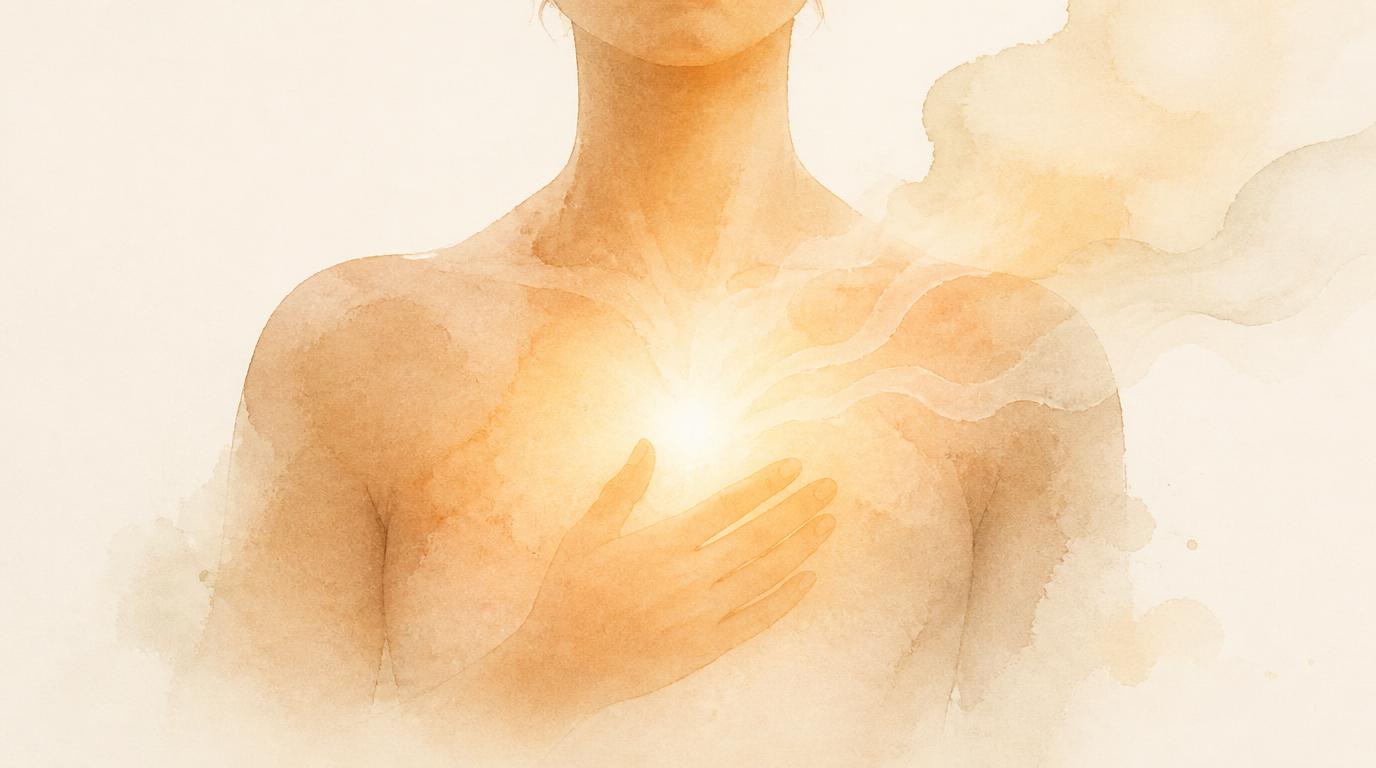
Emotions rise quickly. Sometimes faster than thought, faster than awareness, faster than your ability to understand what is happening. One moment you feel steady, and the next — a wave arrives. Tightness in the chest. Heat in the face. A knot in the belly. A sudden rush of energy or collapse.
This reflection is part of the larger theme explored in The Breath as a Tool for Everyday Change, where I write about the breath as a companion — a quiet, stabilizing presence that stays with you through every emotional shift.
Breath is not a cure for emotion. It is a way of meeting emotion. A way of staying with yourself when the wave rises.
Breath is emotional first aid — gentle, immediate, human.
Emotion Lives in the Body First
Before you name an emotion, you feel it. Before you understand it, your body responds.
Emotion begins as sensation:
- pressure
- heat
- tightness
- trembling
- heaviness
- expansion
The mind interprets. The body experiences.
This is why breath is so powerful — it meets emotion where it begins.
This connects beautifully with the somatic awareness I explore in Breathing Through Tension: A Somatic Approach.
Why Breath Helps in Emotional Moments
When emotion rises, the nervous system shifts instantly. The breath follows.
Fast breath → activation Shallow breath → anxiety Held breath → overwhelm Chaotic breath → emotional flooding
But the opposite is also true:
Slow breath → safety Soft exhale → grounding Noticing the pause → clarity Gentle rhythm → emotional regulation
Breath is the only tool that can shift your state from the inside, in real time, without needing to think, analyze, or explain.
Breath is the body’s built‑in stabilizer.
A Practice: Emotional First Aid in 3 Breaths
Here is a simple practice you can use in the exact moment emotion rises — whether it’s anger, fear, sadness, shame, or overwhelm.
1. Breath One — Acknowledgment
Inhale naturally. Exhale softly.
Say inwardly: “This is what I’m feeling.”
No judgment. No story. Just recognition.
2. Breath Two — Softening
Inhale gently. Exhale longer than the inhale.
Let the exhale melt downward. Let the shoulders drop. Let the jaw soften.
This is the same principle I explore in The Soft Exhale: How One Breath Changes Your State.
3. Breath Three — Space
Inhale naturally. Notice the pause after the exhale.
This pause — the stillness — is where clarity begins. It is the same pause I explore in The Pause Between Breaths: Finding Clarity in Stillness.
Three breaths. Three moments of presence. Three steps back into yourself.
Breath Helps You Feel Without Being Overwhelmed
Breath does not remove emotion. It creates space around it.
Space to feel. Space to listen. Space to stay with yourself.
Emotion becomes overwhelming when there is no space — when the body tightens, the breath shortens, and the mind spirals.
Breath widens the space. It gives the emotion room to move, soften, and complete its cycle.
Breath is not control. Breath is support.
Breath as a Way of Staying Present With Yourself
Emotional first aid is not about calming down. It is about staying connected.
Staying connected to:
- your body
- your breath
- your experience
- your truth
When you breathe through emotion, you are saying: “I am here with myself.” “I am not abandoning myself.” “I can feel this and stay present.”
This is emotional maturity — gentle, grounded, embodied.
Using Breath in Real‑Life Emotional Moments
You can use breath as emotional first aid:
- during conflict
- after receiving difficult news
- when you feel misunderstood
- when shame rises
- when fear tightens the chest
- when sadness softens the belly
- when anger heats the face
- when anxiety speeds the breath
Breath does not fix the situation. It stabilizes you so you can meet the situation with clarity.
Breath is the anchor. Emotion is the wave. Presence is the shore.
A Soft Reminder
You don’t need to breathe perfectly. You don’t need to calm yourself instantly. You don’t need to “get over” the emotion.
You only need to breathe with yourself.
One soft exhale. One gentle pause. One moment of presence.
Breath is emotional first aid — not because it removes emotion, but because it keeps you connected to yourself while you feel it.
If you want to explore the foundations of conscious living more deeply, you can download my free ebook Yama & Niyama. It’s a soft, practical introduction to presence, simplicity, and inner alignment.